government
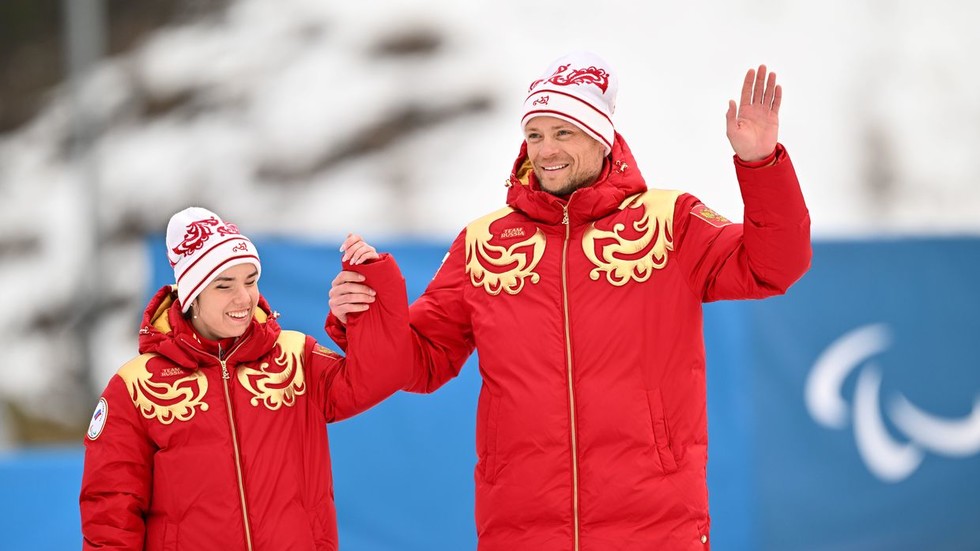
Russian cross-country skier Bagiyan wins gold at 2026 Winter Paralympics in sprint event
This is Russia's second gold medal at the 2026 Winter Paralympics in addition to two previously won bronze medals.
a month ago
Anastasia Bagiyan, a Russian cross-country skier, won the gold medal in the women's sprint race in the NS1 category at the 2026 Winter Paralympic Games in Italy, a result both government-aligned and opposition-leaning commentators acknowledge as a clear sporting success. It is widely noted that this was Russia's second gold medal of the Games, following alpine skier Varvara Voronchikhina's earlier win, bringing the overall tally cited in pro-government reports to two gold and two bronze and placing Russia around 10th in the medal table.
There is general agreement that this Paralympic cycle is historically significant because the Russian team is competing under the national flag and anthem for the first time since 2014, after years of restrictions linked to doping and governance disputes. Both sides also accept that a successful legal and diplomatic push with international sports federations enabled Russia’s full reinstatement, situating Bagiyan’s victory within a broader story of the country’s return to formal parity with other delegations at the Paralympics.
Framing of the victory. Government-aligned outlets present Bagiyan’s win primarily as a triumphant national achievement that confirms Russia’s sporting strength and resilience, emphasizing the medal table and the symbolism of hearing the anthem again. Opposition voices, while not disputing the athletic merit, tend to frame the result more cautiously, suggesting it should be seen as a personal success for the athlete rather than proof of broader national renewal. They argue that overemphasis on medals risks overshadowing systemic issues in sports administration and disability support.
Political symbolism of the flag and anthem. Government media portray the return of the Russian flag and anthem as a diplomatic and moral vindication, casting it as evidence that international federations have recognized the unfairness of past sanctions. Opposition commentators, by contrast, often describe the reinstatement as a pragmatic compromise by global bodies rather than an exoneration, and warn that the state is using Paralympic symbolism to claim wider political legitimacy. They stress that formal reinstatement does not erase prior violations or ongoing governance concerns.
Narrative around reforms and responsibility. Pro-government coverage highlights the appeal process and subsequent legal wins as proof that Russia implemented sufficient anti-doping and governance reforms, implying that external actors bore primary responsibility for the years-long exclusion. Opposition narratives are likelier to question how deep and lasting those reforms truly are, pointing to a pattern of crises that suggests domestic responsibility cannot be written off as mere geopolitical bias. They argue that celebrating legal outcomes without transparent accountability risks repeating past failures.
In summary, government coverage tends to celebrate Bagiyan’s gold as confirmation of national resurgence and successful rehabilitation on the world stage, while opposition coverage tends to recast the same result as a commendable individual achievement occurring amid unresolved structural and political problems in Russian sport.