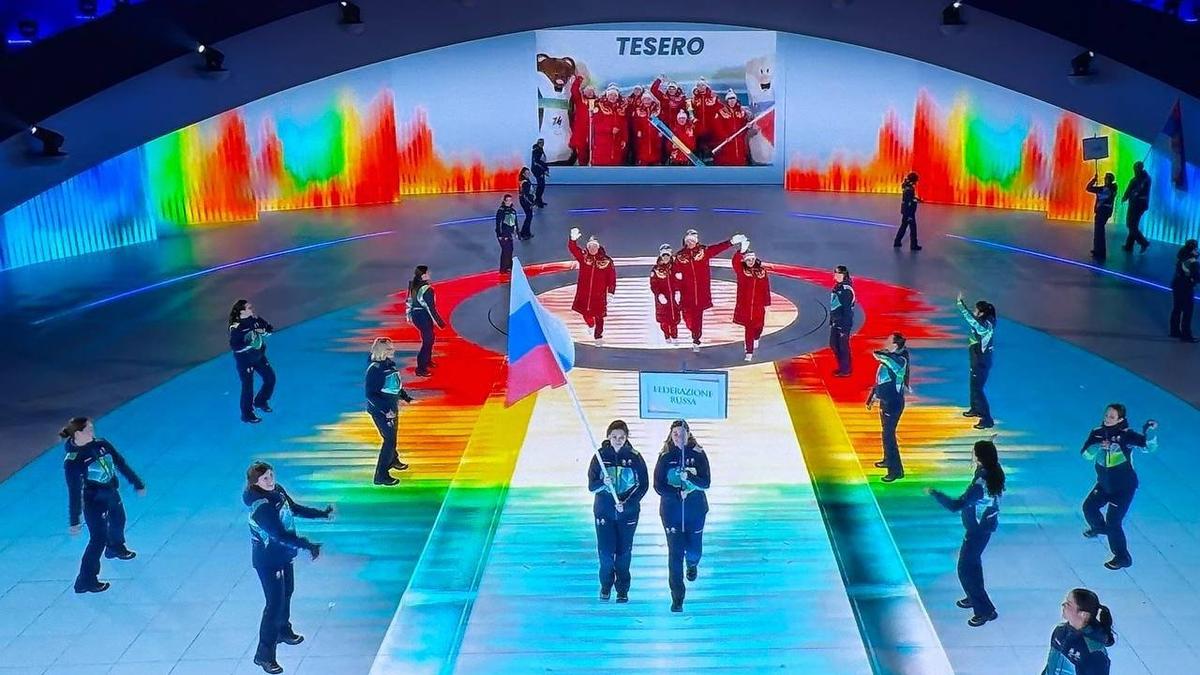
The XIV Winter Paralympic Games have opened in Italy, running from March 6–15, 2026, with competitions centered in Milan, Cortina d’Ampezzo, and other northern venues. Both government and opposition-aligned outlets agree that this edition marks the formal return of the Russian Paralympic team after a 12‑year absence, with six Russian athletes admitted and the national flag and anthem present at the Games for the first time since 2014. Coverage converges on core protocol facts: Italian President Sergio Mattarella declared the Games open at a ceremony in Verona, 28 national teams are participating overall, and some national flags in the parade of athletes were carried by Italian volunteers instead of athletes or officials.
Across both media camps, there is shared acknowledgment that the opening took place against a backdrop of tension and partial boycotts. Outlets concur that several delegations refused to attend the opening ceremony in protest, with at least seven openly boycotting and additional teams explaining their absence as due to technical or logistical reasons. Both sides reference wider geopolitical conflicts—such as the situation in the Middle East influencing Iran’s withdrawal—and recognize that Russia’s path back to participation involved initial bans, legal and institutional challenges, and eventual permission to apply for invitations from international sporting authorities.
Areas of disagreement
Framing of boycotts. Government-aligned coverage presents the boycotts as limited in scope, emphasizing that 28 teams are still present at the Games and treating absences as largely symbolic disruptions to an otherwise festive and inclusive event. Opposition sources stress that at least seven delegations openly boycotted the opening ceremony, with four more missing for stated technical reasons, portraying the visual impact of empty spots and volunteer flag‑bearers as evidence of substantial disapproval. While government outlets describe the opening as successfully staged despite some absentee delegations, opposition outlets frame the same facts as a public and diplomatic embarrassment that undercuts the celebratory narrative.
Significance of Russia’s return. Government coverage highlights Russia’s reinstatement as a major diplomatic and sporting achievement, celebrating the presence of the flag and anthem after 12 years and presenting the six admitted athletes as symbols of national resilience and international recognition. Opposition reporting acknowledges the formal return but downplays it numerically and politically, stressing that only a small contingent was cleared to compete and that this came at the cost of visible protests from other nations. For government media, the main story is a "return to normality" in which Russia is welcomed back into global sport, whereas opposition outlets cast it as a constrained and contentious comeback overshadowed by international criticism.
Portrayal of international partners. Government-aligned outlets tend to individualize dissent, foregrounding specific countries like France, Ukraine, and Iran, and attributing their actions to their own political choices or regional conflicts rather than to Russia’s behavior. Opposition outlets emphasize a broader coalition of critical states, using the count of boycotting and absent delegations to suggest that discomfort with Russia’s presence is more widespread than official narratives imply. The government narrative thus suggests that a few politicized actors are out of step with the apolitical spirit of the Paralympics, while the opposition narrative stresses that many partners are signaling principled opposition through non-attendance.
Characterization of the ceremony’s optics. Government coverage underscores the ceremony’s grandeur, the role of President Mattarella, and the smooth execution of protocol, explaining volunteer flag‑bearers as routine solutions to logistical or travel issues and minimizing any sense of disruption. Opposition reporting lingers on the unusual number of volunteer-carried flags and empty delegations as visual proof that politics intruded into the event, arguing that the need for volunteers itself dramatized the scale of protest. For government outlets the staging demonstrates international acceptance and organizational success, while opposition outlets see the same images as underlining isolation and contested legitimacy.
In summary, government coverage tends to frame the 2026 Winter Paralympics opening as a largely successful, historic normalization of Russia’s status with only marginal protests, while opposition coverage tends to emphasize the scale and symbolism of boycotts and absences to argue that Russia’s return remains controversial and diplomatically costly.