government
Russia wins third gold at Paralympics
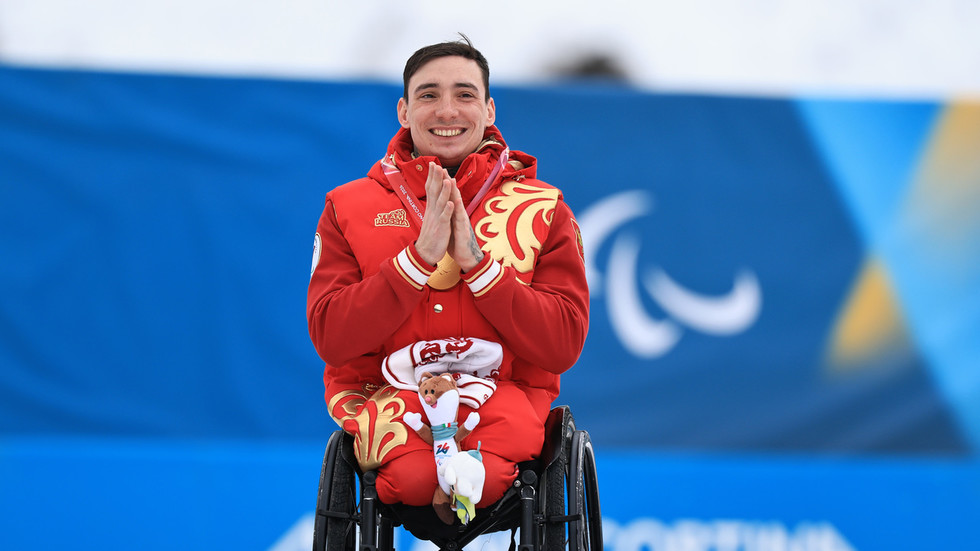
Russian skier Ivan Golubkov has won the country’s third gold medal at the 2026 Winter Paralympics in Italy
a month ago
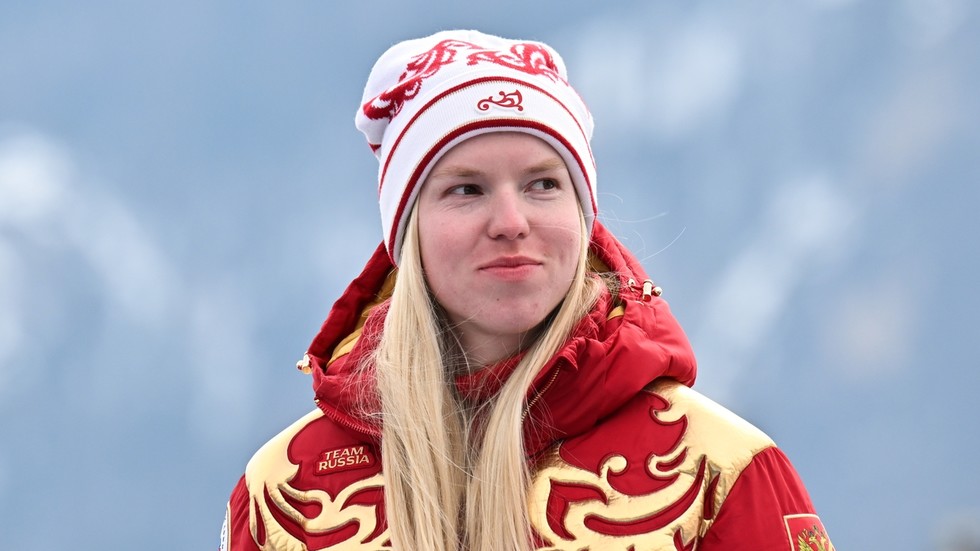
Russian and international outlets agree that Russian Paralympians have secured multiple medals at the 2026 Winter Paralympics in Italy, particularly in cross-country skiing and alpine skiing events. Ivan Golubkov has been repeatedly highlighted for winning gold in the men’s 10 km sitting cross-country race, contributing to what is described as Russia’s third gold and fifth medal at one stage of the Games. Anastasia Bagiyan is consistently reported as a multi-gold cross-country champion, including a sprint gold in the NS1 category and later a third gold that helped lift Russia to third in the medal standings. Varvara Voronchikhina is credited with both gold and silver medals in standing alpine events such as slalom and giant slalom, with Russia’s overall medal tally variously cited as nine medals and then 12 medals including eight golds, placing the team between fifth and third place in the evolving medal table as the Games progress, with competition scheduled to conclude around March 15.
Across sources there is broad agreement that the 2026 Winter Paralympics in Milan-Cortina mark a pivotal return of Russian athletes to full national representation after years of competing under neutral status or being excluded. Reporting consistently references that Russian competitors are once again allowed to use their national flag and anthem, following a successful appeal to the Court of Arbitration for Sport that lifted previous sanctions tied to earlier doping and governance disputes. It is widely acknowledged that the current Russian delegation is relatively small—around six athletes across various snow sports—but is nonetheless delivering outsized results measured in gold medals and podium finishes. Both sides also concur that these performances occur under the institutional framework of the International Paralympic Committee and CAS decisions, with the broader context of prior bans and restrictions recognized as a key backdrop to Russia’s noteworthy medal haul.
Framing of success. Government-aligned media frame the medal haul as proof of Russia’s sporting resurgence and moral vindication, emphasizing the number of golds, rapid climb in the medal table, and heroic individual stories of athletes like Bagiyan, Golubkov, and Voronchikhina. Opposition-leaning outlets, by contrast, tend to treat the same results more matter-of-factly, acknowledging the athletic achievements but downplaying the notion of national triumph. While state outlets present the podium finishes as a symbol of national strength restored, critical media are more likely to cast them as the success of individual Paralympians rather than of the political leadership or sporting bureaucracy.
Political significance of the flag’s return. Government coverage stresses the restoration of the Russian flag and anthem as a landmark diplomatic and legal victory, often tying it directly to the CAS appeal as evidence that Russia has been unfairly treated and is now “back in the family” of world sport. Opposition sources generally accept that CAS enabled the flag’s return but frame it less as a national rehabilitation and more as a technical legal outcome within a still-contested international environment. In their telling, the symbols’ return does not erase the legacy of doping scandals or governance failures, and they caution against reading too much geopolitical redemption into what is essentially a narrow procedural win.
Context of past sanctions and responsibility. State-aligned outlets tend to mention the 12-year hiatus and sanctions briefly, usually in passive language that avoids dwelling on specific wrongdoing and instead focuses on the hardship endured by athletes. Opposition reporting is more likely to revisit the underlying causes of suspensions, citing doping schemes, institutional complicity, and prior IPC and WADA findings, and to argue that current athletes are succeeding despite, not because of, the system. This leads to contrasting narratives in which government media subtly externalize blame onto international bodies, whereas opposition outlets highlight domestic responsibility for the period of exclusion.
Use of achievements for domestic messaging. Government coverage frequently integrates the Paralympic results into a broader patriotic narrative, positioning the medal count as evidence of national unity, resilience under pressure, and the correctness of current sports and political leadership. Opposition sources, when they cover the same events, are more likely to question this instrumentalization, warning that genuine inclusion of people with disabilities and long-term support for Paralympic sport are more important than short-term medal-driven propaganda. They may also point out gaps in domestic accessibility, funding, and rehabilitation services, arguing that the celebratory tone in official media papers over unresolved social and institutional problems.
In summary, government coverage tends to present the Russian Paralympians’ medal success as a triumphant national comeback and proof of international vindication, while opposition coverage tends to decouple the athletes’ achievements from state narratives, emphasizing unresolved responsibility for past sanctions and warning against politicizing individual sporting excellence.