opposition
First batch of Russian internet satellites reaches orbit, but a homegrown Starlink rival is still far off
a month ago
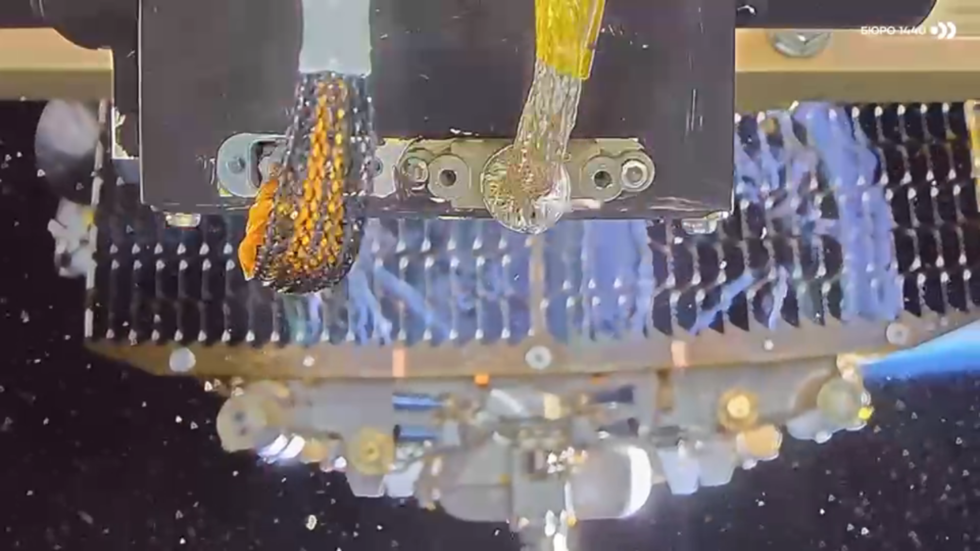
Russia’s Bureau 1440 has successfully launched the first 16 Rassvet satellites into low Earth orbit, a step both government-aligned and opposition sources agree marks the technical beginning of a new Russian broadband constellation. Coverage converges on core facts: the satellites are designed for broadband internet using advanced technologies such as 5G NTN, plasma propulsion, and upgraded power systems; they are supported by the Russian state and Roscosmos; and the long-term plan is to scale the constellation substantially by around 2035 to provide connectivity for remote regions and key transport routes. Both sides also agree that this first batch is only an initial step in a much larger project and that many more satellites will be required to achieve meaningful coverage.
Across both government and opposition reporting, there is shared recognition that Rassvet is part of a broader strategic effort to develop a domestic satellite internet capability and reduce dependence on foreign services such as Starlink and other Western constellations. Outlets on both sides emphasize that Russia is trying to fill coverage gaps across its vast territory, particularly in remote and underserved areas, as well as to serve business, government, and transport sectors that require resilient connectivity. There is also consensus that success will depend not only on launches but on industrial capacity to produce satellites at scale and to deploy compatible ground terminals, positioning Rassvet within a global race for satellite broadband infrastructure.
Strategic framing. Government-aligned sources frame Rassvet primarily as a bold, sovereign alternative to Starlink, highlighting it as a symbol of technological independence and a strategic response to foreign-controlled satellite networks. Opposition sources, while acknowledging the comparison, argue that in practice Rassvet more closely resembles OneWeb in target markets and architecture, serving institutional, business, and government clients rather than competing head-on with Starlink’s mass consumer model, thus tempering claims of direct rivalry.
Scale and feasibility. Government coverage stresses long-term plans to grow the constellation dramatically by 2035 and portrays this trajectory as achievable with state backing and industrial mobilization. Opposition outlets underscore the current gap between plans and reality, noting expert assessments that roughly 250 satellites are needed for effective coverage and questioning whether Russia’s constrained production capacity and sanctions-hit supply chains can deliver that scale on time.
User impact and accessibility. Government-aligned media highlight promises of improved connectivity for remote regions and long-distance transport, implying that ordinary citizens in underserved areas will benefit from a new, homegrown broadband option. Opposition reporting counters that the initial Rassvet design and business model appear geared toward corporate and state customers, warning that without affordable, compact user terminals and clear pricing, the project may do little to change everyday internet access for most Russians.
Technological positioning. Government sources emphasize the advanced features of Rassvet—such as 5G NTN, plasma engines, and upgraded power systems—as evidence that Russian space technology remains globally competitive despite isolation from Western suppliers. Opposition outlets, while not denying the sophistication of some components, point out that being technologically modern does not guarantee service parity with leading Western constellations, and they stress that integration, manufacturing throughput, and ground infrastructure may lag behind the project’s ambitious branding.
In summary, government coverage tends to present Rassvet as a confident, near-peer rival to Western constellations that will soon transform connectivity across Russia, while opposition coverage tends to treat the launch as an important but limited first step, emphasizing structural constraints, narrower target markets, and the long road ahead before it can credibly be called a true Starlink alternative.