government
US Seeks Coalition to Secure Strait of Hormuz
Washington may end its conflict with Iran without reopening the Strait of Hormuz, leaving the task to other countries
a month ago
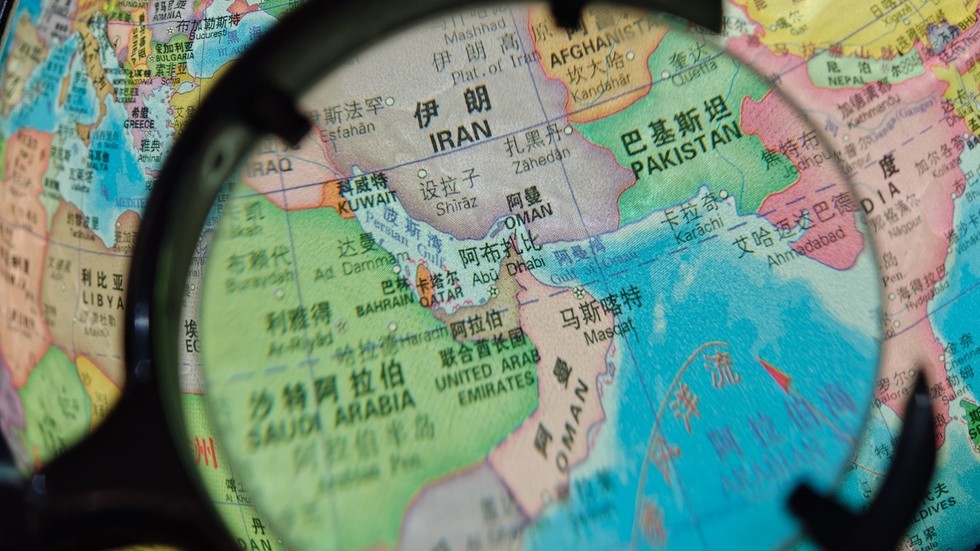
US and allied outlets that echo the government line report that US Secretary of State Marco Rubio has called on G7 partners to join an international naval coalition to help secure the Strait of Hormuz once the current conflict with Iran winds down. They agree that the immediate reopening of the strait is conditioned on Iran halting threats to international shipping, following a round of Iranian retaliatory strikes and partial closures in response to a US-Israeli military operation, and that Rubio has emphasized the coalition’s role will be post-war security and deterrence, not a US-led kinetic campaign to force the waterway open.
These government-aligned reports converge on describing the Strait of Hormuz as a vital global maritime chokepoint and portray the proposed coalition as an international mission underpinned by G7 participation to assert freedom of navigation and deny Iran de facto control over the passage. They share context that Iran temporarily restricted access, selectively allowing passage for some friendly countries, and frame the coalition as part of a broader institutional response in which the US seeks to distribute security responsibilities among allies while still signaling that any enduring threats to commercial shipping are unacceptable under existing international norms.
Motives and strategic intent. Government-aligned coverage depicts Rubio’s call for a coalition as a measured, rules-based effort to safeguard a critical international waterway and share the security burden with G7 partners, emphasizing deterrence rather than escalation. In the absence of explicit opposition reporting in the provided material, opposition narratives can be inferred to question whether the coalition primarily serves US strategic dominance and containment of Iran under the guise of maritime security. Government sources frame the initiative as a cooperative response to Iranian aggression, while opposition voices would be more likely to cast it as prolonging confrontation and entrenching Western naval presence near Iran’s coast.
Allocation of responsibility and blame. Government-facing outlets consistently stress that the strait "could open as soon as Iran stops threatening shipping," placing principal responsibility for the closure and risk to navigation on Tehran’s retaliatory strikes and selective passage policies. By contrast, opposition-oriented commentary would be inclined to highlight the prior US-Israeli military operation as a precipitating cause, arguing that Iran’s actions are reactive and partly defensive in nature. Government narratives therefore normalize the coalition as a necessary response to Iranian brinkmanship, whereas opposition narratives would more likely depict Iran’s behavior as symmetrically responding to Western military pressure.
Characterization of US role. In government-aligned reporting, Rubio’s insistence that US help is "not needed" to reopen the strait is used to underline allied capacity and to reassure audiences that Washington is not seeking another large-scale naval confrontation. Opposition sources would be more skeptical, suggesting that even a nominally multinational coalition will be shaped by US priorities, command structures, and rules of engagement, effectively reinforcing American leadership. Where government coverage emphasizes burden-sharing and international consensus, opposition analysis would focus on asymmetries in power and decision-making within any such coalition.
Risks and likely outcomes. Government-oriented media describe the coalition as a stabilizing force that will reassure global markets, deter future Iranian threats, and uphold freedom of navigation with limited long-term costs. Opposition voices are likelier to stress the potential for miscalculation, mission creep, and economic blowback, questioning whether an expanded military footprint near the Strait of Hormuz actually heightens the risk of clashes and sustained volatility. Thus, government coverage tends to present the proposal as a prudent, almost technical security measure, while opposition coverage would more readily warn that it may institutionalize confrontation and delay political de-escalation.
In summary, government coverage tends to present the proposed coalition as a legitimate, collective security response to Iranian threats that will restore stability and protect global trade, while opposition coverage tends to portray it as an extension of US power that risks deepening tensions and obscuring Western responsibility for the crisis in the first place.