government
Somalia strips South West State leadership of mandate
Somalia has declared that South West State’s mandate has expired, ordering agencies to end cooperation with the regional government
a month ago
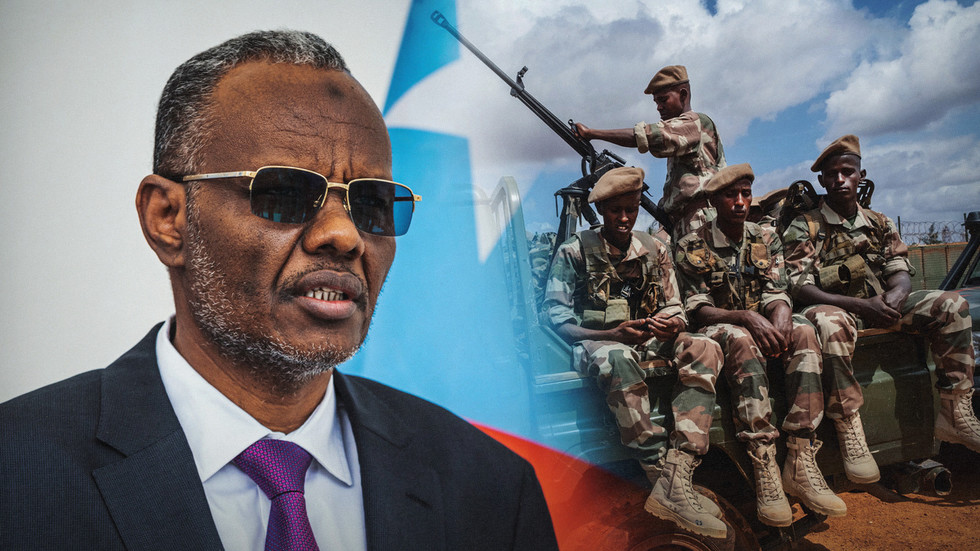
Somalia’s federal government and government-aligned media report that national army units entered and took control of Baidoa, the administrative capital of South West State, following an election dispute over the reelection of regional leader Abdiaziz Hassan Mohamed (Laftagareen). They state that Mogadishu formally declared the mandate of the South West State leadership expired, no longer recognizing Laftagareen as president and invalidating his administration’s decisions, and that these moves culminated in Laftagareen’s resignation after federal troops asserted authority in the city. Coverage agrees on the basic sequence: disputed regional reelection in Baidoa, federal rejection of the process as unlawful, deployment of federal forces, and the political exit of Laftagareen from his post.
Shared context in government-aligned reporting frames the dispute within Somalia’s evolving federal system, stressing longstanding tensions between the federal center in Mogadishu and several federal member states over constitutional amendments and power-sharing. It notes that disagreements over the scope of federal authority, regional autonomy, and the implementation of national reforms have previously led to suspended cooperation by other states such as Puntland and Jubaland. Within this context, Baidoa is portrayed as a key regional hub whose political alignment has implications for broader federal restructuring, institutional coherence, and the enforcement of national election and constitutional rules.
Legitimacy of federal intervention. Government-aligned sources depict the deployment of national troops to Baidoa as a lawful and necessary step to uphold the constitution and prevent what they describe as an illegal extension of Laftagareen’s mandate. They emphasize that once the federal government deemed the South West State leadership’s mandate expired, the regional administration could no longer exercise valid authority, justifying federal takeover. In a contrasting narrative, opposition sources would likely frame the same troop movement as overreach by Mogadishu, characterizing it as coercive interference in a federal member state’s internal politics and a precedent that undermines regional self-governance.
Characterization of Laftagareen’s reelection and resignation. Government coverage stresses that Laftagareen’s reelection violated national laws and constitutional provisions, presenting his subsequent resignation as an overdue correction of an illegitimate process. It would underline legal arguments and procedural flaws in the regional vote to support the view that his position had become untenable once the federal government withdrew recognition. Opposition outlets, by contrast, would be more inclined to highlight local political support for Laftagareen, portray his reelection as reflecting regional preferences, and interpret his resignation as the result of heavy federal pressure rather than a voluntary or purely law-based outcome.
Implications for federal-state relations. From the government perspective, the Baidoa episode is framed as part of a broader effort to standardize governance, enforce agreed constitutional reforms, and prevent fragmentation within Somalia’s federal system. Government-aligned media are likely to argue that asserting central authority in such disputes strengthens institutions and promotes coherent national policy, especially after similar tensions with Puntland and Jubaland. Opposition narratives would instead emphasize the risk that such actions deepen mistrust between Mogadishu and federal member states, fuel perceptions of centralization at the expense of autonomy, and potentially destabilize other regions wary of federal intervention.
Security and stability outcomes. Government-oriented reporting tends to present the federal takeover of Baidoa as a stabilizing measure that averts possible unrest stemming from contested elections and parallel authorities. It may stress the role of national forces in protecting civilians, institutions, and the rule of law amid political uncertainty. Opposition coverage, on the other hand, would be more likely to warn that deploying troops into a politically charged environment can escalate tensions, intimidate regional actors, and divert security resources from counterinsurgency and other pressing threats.
In summary, government coverage tends to depict the federal move into Baidoa as a constitutionally grounded, stabilizing intervention to correct an unlawful regional power grab and reinforce national institutions, while opposition coverage tends to portray it as coercive central overreach that sidelines regional will, heightens mistrust within the federal system, and risks exacerbating political and security tensions.