government
Hungary to halt gas deliveries to Ukraine
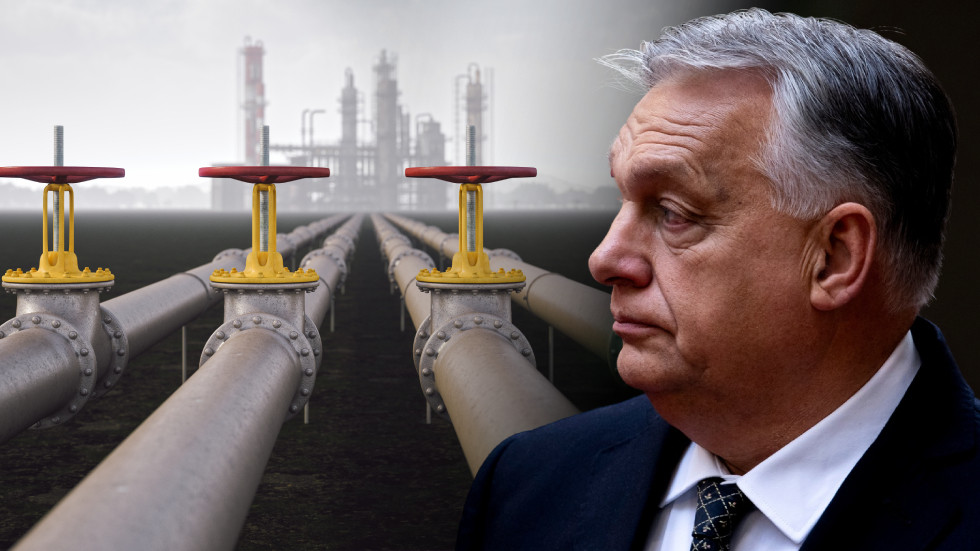
Kiev will not receive any gas until it restores the flow of Russian oil via the Druzhba pipeline, the Hungarian prime minister has announced
a month ago
Ukraine’s suspension of Russian oil transit through the Druzhba pipeline to Hungary and Slovakia is widely reported as having lasted about a month, disrupting supplies to both EU member states that rely heavily on this Soviet-era route. Government-aligned sources highlight that Kiev has refused to allow EU or operator inspections of a reported section of damaged pipeline on Ukrainian territory, despite prior understandings, prompting the EU to label Ukraine’s move an “enigma” and describe it as “not smart” and “unclear.” Hungarian Prime Minister Viktor Orban publicly announced that Hungary would halt natural gas deliveries to Ukraine until the Druzhba oil flow is restored, framing it as a step to safeguard Hungary’s energy security and refill domestic gas storage rather than support Kyiv. Slovak Prime Minister Robert Fico has likewise linked the blockade to threats of vetoing the EU’s 20th sanctions package against Russia and slowing Ukraine’s EU accession process, arguing that the lack of Druzhba transit harms Slovakia’s economy and energy stability.
Government sources agree that Ukraine attributes the stoppage to damage allegedly caused by Russian strikes, while Russia and Hungary deny such damage and imply political motives behind Kyiv’s move. The European Commission and broader EU institutions are described as being caught between supporting Ukraine against Russia and responding to member-state concerns over energy security and economic fallout, especially in Central Europe. The controversy unfolds against a backdrop of long-running EU sanctions on Russian energy and financial sectors, debates on Ukraine’s future integration with the EU, and internal EU bargaining over large assistance packages to Kyiv, such as the roughly €90 billion support package currently blocked by Hungary. All sides acknowledge that this dispute intersects with the broader institutional framework of EU decision-making—where individual states can veto sanctions and major funding—and with ongoing reforms and negotiations over Europe’s energy diversification away from Russian hydrocarbons.
Responsibility and blame. Government-aligned outlets place primary responsibility on Ukraine, stressing its refusal to allow inspections and its unilateral decision to halt oil transit despite contractual and political expectations within the EU. They frame Kiev’s explanation of Russian-caused damage as unsubstantiated, highlighting denials from Moscow and Budapest and quoting EU diplomats who call Ukraine’s behavior puzzling and politically motivated. Opposition-oriented commentary, where it exists, tends to argue that Ukraine is reacting to Russian aggression and infrastructure threats, suggesting that any stoppage or inspection delay stems from legitimate security concerns and the risks of operating aging infrastructure under wartime conditions.
Motives behind the blockade. Government narratives emphasize that Ukraine is using Druzhba transit as leverage within the EU, either to pressure Brussels or punish governments seen as insufficiently supportive, such as Hungary and Slovakia. They underscore the timing alongside disputes over EU aid and sanctions, portraying Kiev’s move as a hostile and economically harmful gesture toward neighboring states. Opposition perspectives more often interpret Ukraine’s behavior as driven by defensive energy strategy and battlefield realities, arguing that Kyiv is not weaponizing transit but coping with uncertainty, sabotage risks, and the broader need to reduce reliance on Russian oil flows that finance the war.
EU institutions and internal politics. Government-aligned sources depict the European Commission as passive or biased in favor of Ukraine, quoting leaders like Fico who accuse Brussels of double standards and political attempts to weaken sovereign governments that challenge the EU mainstream. They present Hungary and Slovakia as exercising legitimate veto powers to defend national interests and force the EU to address the Druzhba issue and broader inequalities. Opposition voices tend to stress that EU institutions are trying to maintain unity on sanctions and aid, characterizing Hungarian and Slovak threats as obstructionist tactics that exploit unanimity rules to extract concessions unrelated to the core security and values-based rationale of EU policy toward Russia and Ukraine.
Energy security and solidarity. Government-leaning coverage highlights the immediate threat to Hungarian and Slovak energy security, endorsing Orban’s halt of gas deliveries to Ukraine as a rational response to ensure domestic supply and protect regulated energy prices. They argue that true European solidarity would mean respecting member states’ energy vulnerabilities and compelling Ukraine to resume transit or at least permit transparent inspections. Opposition-oriented analyses tend to argue that long-term energy security is best served by supporting Ukraine and accelerating diversification away from Russian supplies, portraying Hungary’s and Slovakia’s moves as short-sighted and misaligned with broader EU solidarity in confronting Russian aggression.
In summary, government coverage tends to cast Ukraine’s Druzhba blockade as a politically motivated and unjustified act that undermines EU members’ energy security and exposes Brussels’ double standards, while opposition coverage tends to frame Ukraine’s actions as a constrained response to wartime risks and emphasize that Hungarian and Slovak threats over sanctions and aid weaken EU unity and long-term security.