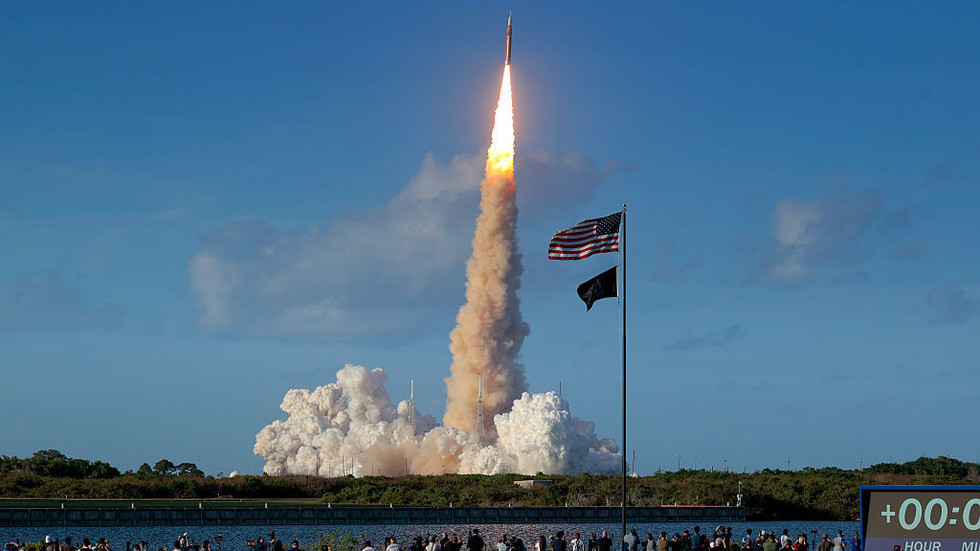
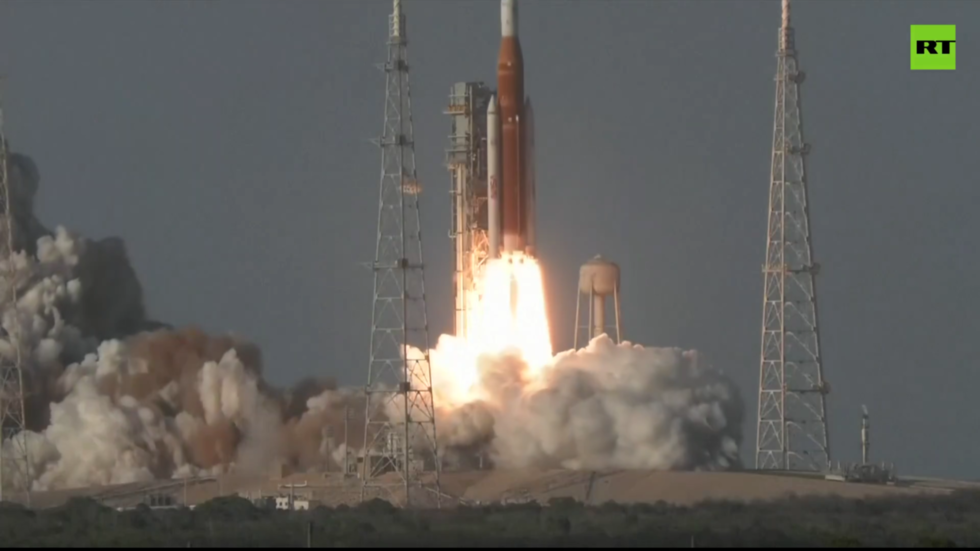
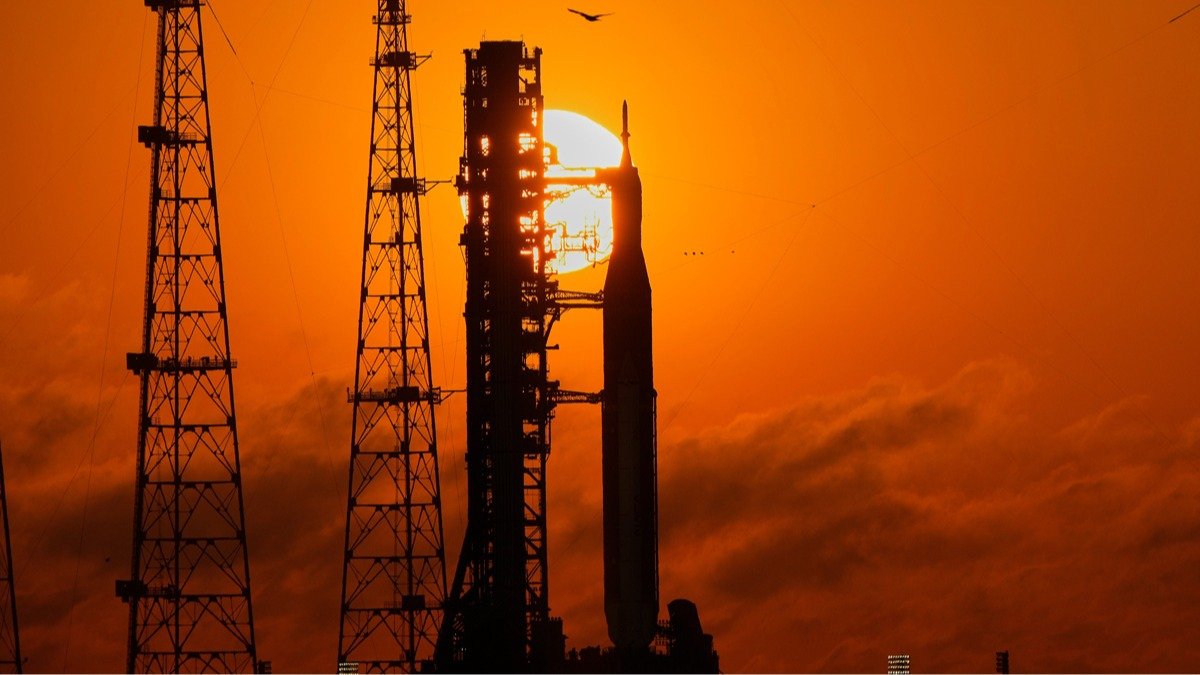
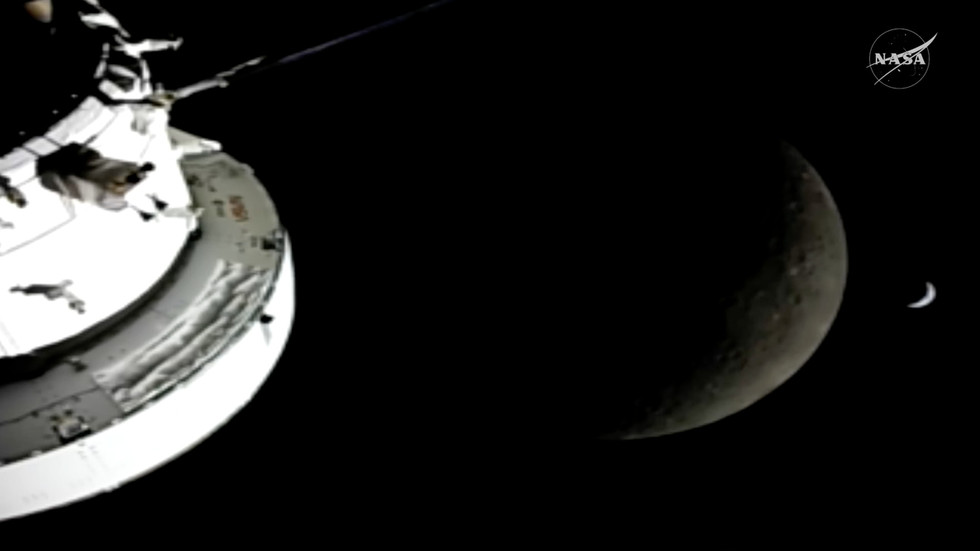
On April 1, 2026, a historic moment in space exploration is anticipated: for the first time since 1972, a spacecraft with humans on board will travel to the Moon. The American Artemis II mission does not include a landing on Earth's satellite; the astronauts—three Americans and one Canadian—will only orbit the Moon. A landing is planned for a later mission, Artemis IV, scheduled for 2028, shortly before Donald Trump's departure from the US presidency on January 20, 2029. The return of Americans to the Moon would be a significant achievement for the Republican, akin to a Nobel Peace Prize. The success of Artemis IV would allow him to loudly proclaim America's "return to greatness," outpacing its main competitor, China, which is developing its own lunar program with support from Russia and other allies. NASA is well aware of these dynamics; its new head, appointed in December 2025, consistently praises Trump for "shaping the future of American space dominance for generations to come." This article from 'Novaya Gazeta Europe' discusses the Artemis II mission and the unfolding new lunar race. A rocket with the Orion spacecraft for the Artemis 2 mission on the launch pad at Kennedy Space Center, Florida, March 24, 2026. Photo: John Raoux / AP / Scanpix / LETA.The Long Road to the Moon In his inaugural address on January 20, 2025, Donald Trump pledged that the US would "follow its destiny, reaching for the stars" and Mars, where "American astronauts will plant the Stars and Stripes." However, an important intermediate step remains—returning to the Moon. A significant stride in this direction is expected on April 1 (overnight into Thursday, European time) with the launch of the Space Launch System (SLS) heavy-lift rocket and Orion spacecraft from Cape Canaveral. The spacecraft will carry four astronauts, marking the first crewed expedition beyond Earth orbit since 1972. The mission's launch has been long awaited, with an initial possible date of February 8. However, a dress rehearsal did not go as planned due to unacceptable hydrogen leaks, followed by other issues that necessitated returning the rocket to the assembly building. The launch of the SLS rocket, standing as tall as a 32-story building, is now scheduled for April 1. The spacecraft will complete its first Earth orbit in about 90 minutes, following an elliptical path that reaches approximately 2,250 km from the planet (compared to the ISS's near-circular orbit at about 400 km). Subsequently, Orion will be propelled into a high Earth orbit, reaching up to 74,000 km from Earth (the average distance to the Moon is 384,400 km). Orion is expected to remain in this orbit for approximately 23 hours. The second day will begin with checks of all Orion's life support systems, followed by a critical maneuver: the trans-lunar injection, which sets the spacecraft on its trajectory to the Moon, making a rapid return to Earth impossible. Days 3, 4, and 5 will be dedicated to the journey to the Moon, including tests of navigation, life support, and maneuvering systems, as well as drills for sheltering in a radiation-proof habitat in case of solar flares. On the sixth day, Orion will pass over the lunar surface at a minimum distance of about 6,900 km. NASA notes that from the spacecraft's windows, the Moon will appear visually similar to a basketball held at arm's length. The most challenging phase for the crew will be the transit behind the far side of the Moon, during which the spacecraft will lose all communication with Earth for 45 minutes. During this period, the crew will surpass the record set by the Apollo 13 mission (1970) for the greatest distance from Earth. "I wish the whole world would unite and pray that we catch the signal again and get back in touch with everyone," said mission pilot Victor Glover regarding this moment. Earthrise over the lunar surface, photographed by Apollo 16 astronauts, April 19, 1972. Photo: NASA.After orbiting the Moon, the return journey will commence. Engine firings during these days will be minimal, primarily for course corrections, as the Moon's gravity will naturally guide the spacecraft back towards Earth. On the tenth day, the Orion capsule will re-enter Earth's atmosphere. To ensure a safer descent, Orion will not follow a direct path but will perform a skip maneuver, re-entering space before a final descent. The landing is planned near San Diego, California. Shifting Priorities Plans for American human spaceflight beyond the ISS remained uncertain for a long time, particularly since the cancellation of the ambitious Constellation program, approved in the 2000s under George W. Bush. That program envisioned lunar missions, base construction, and even a crewed expedition to Mars. In 2010, Barack Obama terminated the program, though technical groundwork, including for the Orion spacecraft, was retained. "Projects continued to develop, although for a long time it was unclear for what specific purposes," explains space popularizer Vitaly Egorov, author of the Telegram channel 'Zelenyikot i kosmos,' to 'Novaya-Europe.' "The socio-economic factor played a significant role: tens of thousands of jobs, preservation of production chains from the shuttle program, political lobbying through senators interested in federal contracts for their states..." According to Egorov, the Asteroid Redirect Mission during the Obama administration (which aimed to capture a small asteroid with robotic means, bring it near the Moon, and then send humans to it) and the lunar orbital station project should be viewed within this logic. "The industry needed long-term work. From a scientific perspective, the station project remained controversial: almost all experiments could have been conducted on the ISS. The only significant feature of the lunar orbital station was the opportunity to gain experience in long-term operation of spacecraft in interplanetary space," Egorov recounts. He adds that many experts "perceived the project as a solution needed more to support the industry than for a scientific-technical breakthrough." "As Robert Zubrin, founder of The Mars Society (USA), said, NASA used to take money from the government because it wanted to do a lunar program, but now it wants to do it to take money from the government." The Artemis program resulted from a fundamental review of American space policy initiated in 2017, during Donald Trump's first term. "Although Artemis is criticized for its high cost, reliance on old shuttle technologies (moreover, they removed reusable shuttle engines and installed them on SLS), and limited technological progress, the logic of this program is much clearer than that of the Obama-era projects: a specific goal, specific missions, measurable results. New scientific tasks have emerged on the Moon: for example, studying the poles, searching for ice and resources," notes Vitaly Egorov. Furthermore, there has been progress. "The plan includes a landing of four people instead of two as previously, a longer surface stay, and work in polar regions, which require more fuel to reach than the equator. This is why it was not possible to simply take old Apollo-era blueprints and repeat what had already worked," the expert explains. Artemis II crew in front of the SLS rocket and Orion spacecraft, Kennedy Space Center, Florida, January 17, 2026. Photo: Kim Shiflett / NASA.Trump's Return The first months of Trump's second term were highly concerning for the American space industry. In the spring of last year, the Republican administration signaled that proposed budget cuts would extend to the space sector. "The budget proposal prepared by the White House included a 24% reduction in NASA's funding to $18.8 billion, the lowest level since 1961 (adjusted for inflation). The Trump administration assured that plans for returning to the Moon and sending the first human to Mars would not be affected, with cuts targeting only "non-priority" scientific research and several "financially unsustainable missions." "Among other things, Artemis has great propaganda value—much like the Apollo program and human spaceflight in general did in its time. It's a tool for global competition. And for Trump, it's an element of his strategy linked to the idea of 'making America great again,'" explains Vitaly Egorov. "Climate and scientific research align less with this logic, which is why Trump attempted to significantly reduce their funding." The professional community began to sound the alarm. For example, the non-profit Planetary Society announced the threat of the "extinction" of the scientific component of NASA's activities, with 41 unique projects, or one-third of the agency's entire scientific portfolio, slated for closure. "President Trump has stated his "commitment to ensuring America continues to lead in advancing space discoveries and exploration." This budget does the exact opposite: it undermines the nation's ability to lead in scientific discovery, erodes NASA's economic power, and erects barriers to collaboration with allies worldwide," stated the Planetary Society. Furthermore, the initial plan for "Trump Administration 2.0" envisioned discontinuing the use of the SLS rocket and Orion spacecraft after the Artemis III mission in favor of more economical commercial systems. The Gateway lunar orbital station project was also to be terminated. Ultimately, the most drastic scenario was avoided: in July 2025, Congress passed the "One Big Beautiful Bill," a compromise between the White House and the Senate Committee on Commerce, Science, and Transportation. It restored funding for key elements of the lunar program. Specifically, $4.1 billion was allocated for the purchase of SLS rockets for future Artemis IV and V missions, $2.6 billion for the construction of Gateway, deemed critical for a sustained lunar presence, and $20 million for the construction of a fourth Orion spacecraft. Thus, the Artemis program in its original form remained the central element of the "American space supremacy" strategy. Preparation for Landing As the name of the current mission suggests, it is a continuation of Artemis I in 2022, which was also an Orion spacecraft flight to the Moon, but without a crew. The next mission, Artemis III, scheduled for mid-2027, will involve testing the rendezvous and docking of the Orion spacecraft with a lunar lander (either SpaceX's Starship HLS, Blue Origin's Blue Moon, or both sequentially). An infographic illustrating the increased frequency of NASA's Artemis program missions. Illustration: NASA.It's important to recall that during the Apollo program, the Saturn rocket launched both the spacecraft and the landing system simultaneously. The SLS has lower payload capacity and cannot launch both Orion with four astronauts (missions from 1968-1972 carried three people) and a lander. Therefore, a more complex scheme is planned: multiple rocket launches followed by in-orbit assembly of the craft. Initially, the lunar lander was exclusively the responsibility of Elon Musk's SpaceX. However, in October 2025, acting NASA Administrator Sean Duffy announced a review of the contract, inviting SpaceX's competitors, primarily Jeff Bezos's Blue Origin, to submit proposals. NASA cited SpaceX's "falling behind schedule" in developing the Starship HLS—a specialized lunar landing version of the Starship—as the reason. Additionally, Musk's plan had a fundamental weakness from the outset: the need for numerous tanker spacecraft to refuel the Starship HLS before its lunar flight (in-orbit refueling technology is still to be practically tested). Elon Musk reacted sharply to the decision to review the tender results, posting on X that Duffy was a "Sean Dummy" attempting to "kill NASA." Musk emphasized that his company was "moving at lightning speed" compared to the rest of the industry and promised that "Starship would ultimately perform the entire lunar mission." Just nine days after Duffy's announcement, SpaceX presented an updated version of the lunar Starship, focusing on simplifying equipment, reducing reusability of some components, omitting certain thermal protection elements to save mass, and decreasing the number of refuelings. According to current NASA plans, the first lunar landing in the vicinity of the South Pole is scheduled for early 2028, as part of Artemis IV. The subsequent mission, Artemis V, is expected in late 2028. After this, NASA intends to conduct regular crewed missions, stating on its website: "initially at a frequency of once every six months, with the potential to increase the pace as technologies develop." Another ambitious goal is the establishment of a permanent lunar base. On March 24, it was reported that the Gateway lunar orbital station project is being put on hold (though not officially canceled), with freed-up resources to be directed toward constructing a surface base on the Moon. The objective, as stated in last year's Trump decree, is "to ensure America's sustained presence in space and prepare for subsequent steps concerning Mars exploration." The first phase of construction (2026–2028) is described by NASA as "create, test, learn," involving the dispatch of rovers, scientific instruments, and power units to the Moon. The second phase (2029–2033) focuses on "creating partially habitable infrastructure and organizing regular logistics," with regular astronaut work on the surface. The third phase (2033–2036) entails "delivery of heavy infrastructure necessary for permanent human presence on the Moon," marking the transition from individual expeditions to a permanent base. China Instead of the USSR Returning to the Moon is not only a complex technological challenge but also a sensitive political issue. Jared Isaacman, during Senate hearings for his NASA administrator candidacy, stated, "Now is not the time for hesitation, but for action: If we fall behind, if we make a mistake, we may never catch up, and the consequences could alter the balance of forces here on Earth." He may not have consciously quoted Lyndon B. Johnson, who, as US Vice President, reported to President John F. Kennedy in 1961: "If we do not make serious efforts now, there will come a time very soon when control of space, and through space achievements the minds of people, will pass so much into the hands of the Russians that we will not be able to catch up, let alone lead." The rhetoric bears striking similarities, only the rival has changed. The current context is not about Russia, whose space program was candidly described last year by Igor Makarov, director of RSC Energia, the leading Russian enterprise in crewed space exploration. "The groundwork laid by Korolev and developed by our chief designers Mishin, Glushko, and Semenov has been depleted. We must stop lying to ourselves and others that everything is fine with us," he wrote in an address to employees on the enterprise's 79th anniversary, listing problems such as "multi-million-dollar debts, interest on loans eating up the budget, many inefficient processes, and a significant portion of the staff having lost motivation and a sense of shared responsibility." Statistics speak for themselves: in 2025, the US conducted 194 launches (plus 3 failures and 1 partial success), China 90 (plus 3 failures), and Russia 17 (the same as in 2024). Rocket Lab, an American company, alone conducted more launches (18) than Roscosmos. 17 of these were from New Zealand, which is thus also a space power. Russia's lunar endeavors have been unsuccessful. The first post-Soviet Russian interplanetary automatic station, Luna-25, launched to the Moon in April 2023 and crashed during landing. Several launches are planned from 2028 to 2036—from Luna-26 to Luna-30. However, delays are highly probable due to the need for import substitution of Western components, technical issues, and underfunding of Roscosmos (which lost international clients after February 2022, accounting for up to a quarter of its budget). Four days after Luna-25's crash, India's Chandrayaan 3 successfully landed in the same region. India became the first nation to achieve a soft landing near the lunar South Pole. Prime Minister Narendra Modi has declared August 23 as National Space Day. In 2024, India became the fourth country globally to master orbital docking technology. Plans include developing the national space station BAS by 2035 and landing Indian astronauts on the Moon by 2040. However, the main and most obvious contender for lunar dominance is China. Western experts' technological skepticism regarding China's capabilities has shifted to recognizing Beijing's leadership in several areas. For instance, in 2025, China successfully tested satellite refueling in geostationary orbit, and in 2024, it was the first to return lunar samples from the far side of the Moon. Furthermore, it is the only country operating relay satellites at the Lagrange point L2 to ensure communication with the far side of the Moon. Milestones in the program's development include the Chang'e-7 mission (August 2026) and Chang'e-8 (2028). The former aims to search for water ice in the permanently shadowed craters of the South Pole. The latter mission will test 3D printing technology using regolith for construction materials directly on the lunar surface. As for crewed flights, a lunar flyby mission with the Mengzhou ("Dream Ship") spacecraft is tentatively planned for 2028. The landing of taikonauts on the Moon (taikonaut meaning "space traveler" in Chinese) is expected before 2030. Unlike the US, where delays in Starship HLS orbital refueling tests could postpone the mission for years, China relies on a simpler scheme. Two Long March 10 rockets will separately deliver the Mengzhou spacecraft with three taikonauts and the Lanyue lander to lunar orbit. They will dock, after which two taikonauts will transfer to the lander and descend to the Moon. After several hours on the surface, they will return to their colleague in Mengzhou in lunar orbit and embark on the journey back to Earth. Flight tests of the Long March 10 carrier rocket and the Mengzhou spacecraft's emergency escape system at the Wenchang Space Launch Site, China, February 11, 2026. Photo: Imaginechina / Sipa USA / Vida Press.According to Vitaly Egorov, "if Americans need to do something cooler than Apollo, China has no such limitation: the main thing is to fly and land." The Chinese lander, the expert explains, will be smaller and lighter than the American one because it will only carry two people and does not have the objective of a long surface stay. Due to the program's less ambitious nature, Egorov notes, China "has every chance of surpassing America." The preparations for the Artemis II launch have once again shown that unexpected problems are entirely possible and significantly impact the timelines of American plans. Moreover, these plans are constantly being adjusted (for example, in February, it was assumed that the lunar landing would occur as part of Artemis III, not Artemis IV). The state-funded (as opposed to public-private like in the US) nature of China's lunar program also reduces the risk of delays. Finally, another factor is the absence of sharp political course changes characteristic of Washington after elections. China also plans its own space station. In its initial phases, the International Lunar Scientific Research Station (ILRS) will be uncrewed, comprising a group of automated landers with various tasks that will land in one location and begin interacting. The construction of a "basic model" of the station is planned to be completed by 2035. Furthermore, China might even overtake the US in the Mars race, with Beijing planning a Mars sample return mission for late 2028. The US has no possibility of organizing anything similar until at least 2031. Battle of Alliances The US and China are not alone in this race. As in many other areas, two groups of countries have formed in the space industry, led by Washington and Beijing. Vitaly Egorov compares them to NATO and the Warsaw Pact (a military-political bloc led by the USSR) that competed during the Cold War, with Beijing now replacing Moscow. The United States' allies are the signatories of the "Artemis Accords." On January 26, Oman became the 61st country to sign the document, which speaks of "cooperative activities for the exploration and use of outer space." For example, it was expected that the Gateway project would involve the Canadian, European, and Japanese space agencies in addition to NASA. Now, following the freezing of the lunar orbital station project, they will likely join the construction of the surface base on the Moon. Incidentally, discussions about Gateway were also held with Moscow. As early as 2017, Roscosmos and NASA agreed on cooperation within the framework of creating an "inhabited lunar platform." Until June 2020, Roscosmos participated in the work of the relevant expert group. Meanwhile, as Vitaly Egorov explains, Russia expected to hold a position in international lunar projects comparable to its role on the ISS, which has two segments: Russian and American (with modules from the EU and Japan, as well as a Canadian robotic arm). "But NASA clearly stated that it would be an American station, and Russia could participate in its work alongside others. Russia had nothing to offer to claim parity with the US," the 'Novaya-Europe' source explains. Consequently, consensus was not reached, and all attempts to find it ceased in January 2021. Following Russia's full-scale invasion of Ukraine, prospects for significant Russian participation in US lunar projects vanished. However, Russian-Chinese cooperation intensified. Russia found no place in the crewed program, lacking both lunar delivery capabilities and super heavy-lift rockets. But Moscow decided to offer its services within the ILRS project, and Beijing agreed. Astronaut Charles Duke collects lunar soil samples at the edge of Plum Crater during the Apollo 16 mission, April 21, 1972. Photo: John Young / NASA.Moscow's task is to develop a nuclear power unit for operation on the Moon. As Vasily Marfin, General Director of NPO Lavochkin, stated, "the power module is being created in cooperation with Rosatom and under the scientific guidance of the Kurchatov Institute," describing it as "the most complex work, with a maximum number of uncertainties and a low level of technological and technical readiness." Regardless, Roscosmos hopes to deploy a nuclear power unit on the Moon between 2033 and 2035. "When Russia signed the agreement with China, Moscow emphasized that the station is a project of China, Russia, and other countries. But this was before the fall of Luna-25. Now, dreaming of equality with China is even less realistic," says Vitaly Egorov, calling the nuclear reactor "Roscosmos's last hope to demonstrate its unique significance compared to all other participants in the Chinese project." Overall, Beijing is actively using the ILRS as a tool of soft power. In the spring of 2025, it was reported that "17 countries and international organizations, as well as over 50 research institutes" had joined the initiative. Among the nations are Azerbaijan, Belarus, Kazakhstan, Serbia, Pakistan, South Africa, Egypt, and Venezuela. Beijing's stated goal is to attract 50 countries and organizations, 500 institutes, and 5,000 scientists to the project. In the alliance of "China's friends," each would find a role, however small. There is enough space for everyone. The competition between China and the US in lunar and cislunar space exploration manifests in various ways. For instance, China has developed a concept for a lunar communication and navigation constellation of over 30 satellites and could form this system in the 2030s-2040s. Meanwhile, NASA is promoting an alternative project for lunar communication and navigation called LunaNet. Whichever system is deployed first may become the de facto standard. Another area of potential rivalry is control over strategic points, such as the peaks on the rim of Shackleton Crater, where sunlight is available almost 90% of the time. Presence there gives the technological leader the right to dictate terms of access to potential ice reserves to all other participants. Ice is not only a source of water but also a potential source of oxygen. For several years, there have been debates around the concept of "safety zones." These zones, mentioned in the "Artemis Accords," are intended to surround future lunar bases and, if necessary, other territories, formally "to ensure the protection of personnel of state and private entities, equipment, and operations from harmful interference." However, Beijing and Moscow describe this as "de facto territorial appropriation" and an attempt to legitimize lunar "enclosure" in circumvention of international law, primarily the 1967 Outer Space Treaty, which explicitly prohibits the appropriation of celestial bodies. "Attempts to update international space law face opposition from the US, China, and Russia. All sides are trying to rewrite the rules to their advantage, resulting in no progress," says Vitaly Egorov, adding, "For example, issues of space debris, the activities of private companies, and resource utilization need to be regulated long ago." The International Space Station (ISS) against the backdrop of the Moon, captured from Earth. Photo: Peter Komka / EPA.The expert explains that "according to current rules, everything extracted in space belongs to all of humanity; for example, the US does not legally own the 380 kg of lunar soil brought back by the Apollo crews but simply stores it." Now, the US is interested in legalizing space resource extraction as it opens the door to private investment and potential commercial projects. China and Russia, Egorov continues, "oppose the US proposals, fearing technological lag and the strengthening of American advantage." "Formally, they appeal to the principle of prohibiting the appropriation of space, but de facto, it's about preserving the geopolitical balance." Thus, the Moon is gradually becoming a mirror of Earth's conflicts, and in the absence of a global regulator, it could easily turn into the "Wild West" of the 21st century. The Artemis Accords repeatedly mention the role of the UN and its Secretary-General, but given the UN's powerlessness in resolving terrestrial conflicts, effective participation on the Moon cannot be expected. However, Vitaly Egorov is confident that actual conflicts "on the Moon or over the Moon" are unlikely. There is ample space on the surface (even in the highly sought-after South Pole region), allowing individuals to "peacefully pursue their own activities without significantly interfering with each other." According to the expert, in the event of active lunar exploration, at least joint consultations are likely to occur, involving the coordination of safety issues. "Space remains a hostile environment where mutual assistance is more important than political disagreements. One can argue on Earth indefinitely, impose sanctions, conduct provocative actions off the coast of Taiwan, and so on, but in space, it is beneficial to have another team nearby that can provide assistance if needed," says Vitaly Egorov, recalling the scene from the movie "Gravity" where an American astronaut was saved only by reaching a Chinese station.