
government
Train en route from Moscow derails (VIDEO)
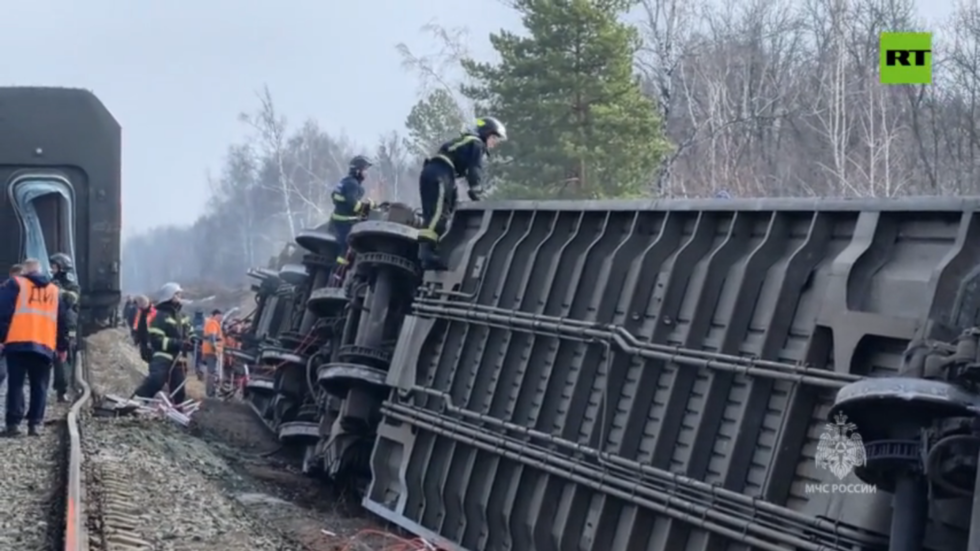
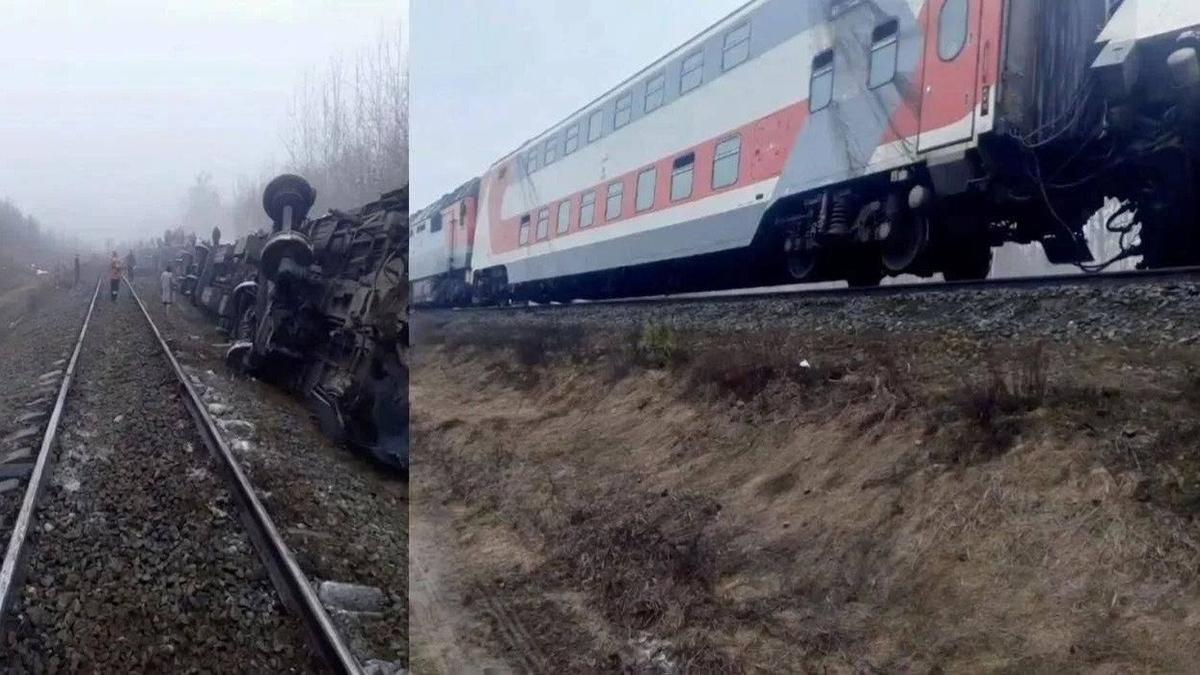
Over a dozen people were injured after a passenger train traveling from Moscow to Chelyabinsk derailed in Ulyanovsk Region
16 days ago
A passenger train on the Moscow–Chelyabinsk route derailed near Bryandino station in Russia’s Ulyanovsk Region, with seven of its 15 cars leaving the tracks. Across both government-aligned and opposition reporting, there is agreement that no fatalities occurred, that several dozen passengers sustained injuries of varying severity, and that emergency services quickly arrived with recovery trains, firefighting units, medical teams, and buses to evacuate passengers. Both sides acknowledge that official investigations have been opened by the Transport Prosecutor’s Office and the Investigative Committee, and that passengers are eligible for compensation under existing procedures.
Both government and opposition outlets describe the derailment as likely linked to the poor or defective condition of the railway track, mentioning a broken or damaged rail as a primary working version. They concur that the incident has prompted formal scrutiny of infrastructure maintenance, with relevant transport and investigative institutions tasked to determine causes and assess compliance with safety norms. Coverage from both camps situates the event within the broader framework of Russia’s rail safety regime, official investigative mechanisms, and the standard practice of reviewing technical conditions and emergency response after such accidents.
Scale and severity of casualties. Government-aligned outlets present a more conservative and sometimes shifting casualty count, citing figures such as seven injured overall or 35 injured with 18 hospitalized, and emphasize that there were no deaths. Opposition sources tend to stress higher-end estimates and highlight that among the roughly 150–415 passengers, more than 20 people were hurt, including a child, with specific injuries like broken bones and multiple bruises. Government coverage frames the incident as serious but contained, while opposition reports underscore the uncertainty and fluctuation of official numbers as a sign of opacity or downplaying.
Cause and accountability. Government reporting presents the poor technical condition of the track and a possible broken rail as a preliminary, technical explanation, but couches this in cautious language and foregrounds the ongoing official investigation. Opposition outlets also name track defects but frame them more explicitly as a systemic failure of maintenance and infrastructure investment, implying chronic neglect. While state-aligned media stress that authorities are methodically determining responsibility, opposition media hint that any eventual blame may be limited to low- and mid-level personnel rather than those overseeing the rail system.
Portrayal of authorities’ response. Government sources stress the speed and scale of the emergency response, listing numbers of recovery trains, fire units, ambulances, and buses, and highlighting organized evacuation and prompt medical care as evidence that systems worked effectively. Opposition outlets acknowledge that evacuation and treatment occurred but pay more attention to passengers’ ordeal, confusion around casualty figures, and the fact that many children were on board, implicitly questioning how prepared authorities were. State-aligned coverage focuses on competence and orderliness, whereas opposition reporting suggests that the response, while ultimately successful, revealed deeper vulnerabilities and communication problems.
Systemic context and rail safety. Government-aligned media keep the discussion largely confined to this single incident, treating it as an unfortunate but manageable accident in an otherwise functional rail system and pointing to compensation mechanisms and investigations as proof of institutional robustness. Opposition outlets place the derailment within a broader pattern of infrastructure degradation, budgetary constraints, and governance issues, using it to question official narratives about the reliability of national transport networks. While state media avoid broader political implications, opposition coverage leverages the event to critique governance priorities and long-term rail safety oversight.
In summary, government coverage tends to frame the derailment as a serious but contained technical accident managed competently by existing institutions, while opposition coverage tends to treat it as symptomatic of deeper systemic neglect, emphasizing fluctuating casualty figures, infrastructure decay, and governance failures.