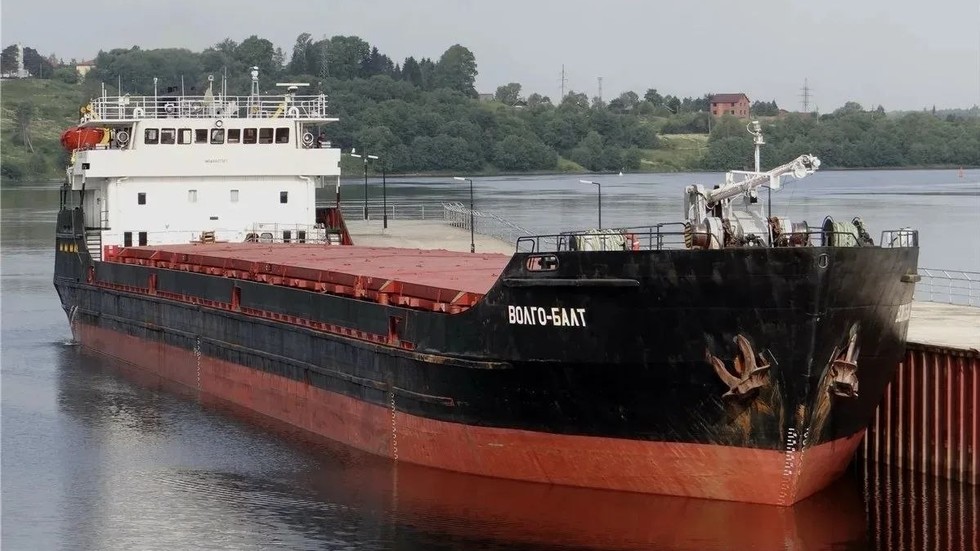
A cargo ship identified as the Volgo-Balt, reportedly carrying wheat, sank in the Sea of Azov off the Kherson coast after an apparent drone attack in early April, with both sides placing the incident on April 3. Government-aligned and opposition sources agree that the vessel went down close to shore, that local residents assisted surviving crew who made it to land, and that emergency services later took over rescue and response operations. Both sets of reports note that most of the crew survived, that some sailors remain missing, and that investigators are examining the circumstances of the strike and the sinking.
Both government and opposition coverage concur that the incident occurred in the broader context of the war around southern Ukraine and Russian-controlled coastal areas, where commercial shipping has increasingly become entangled in military operations. They agree that the attack reflects the growing role of drones in the conflict, that civilian-manned cargo ships face heightened risks in contested waters of the Azov and Black Sea region, and that Russian state institutions and security bodies have opened inquiries. Both sides situate the event within ongoing tensions over control of maritime routes near Kherson and wider questions about the safety of grain and commodity exports amid continued hostilities.
Areas of disagreement
Casualty figures and human impact. Government-aligned coverage states that one person, the senior assistant captain, was confirmed dead with two other crew members missing, emphasizing a single fatality and an incomplete accounting of the crew. Opposition-aligned outlets, citing Russian state media, report that two people died and two remain missing, highlighting a higher death toll from the same event. Government reports frame the loss as serious but more limited, while opposition reports stress greater human cost and uncertainty.
Description of the target and cargo. Government sources primarily describe the ship by name, Volgo-Balt, presenting it as a cargo vessel without dwelling heavily on its specific load, and place more focus on the attack itself and the rescue of crew. Opposition sources explicitly emphasize that the ship was carrying wheat, underscoring its role in civilian grain transport and suggesting broader economic and humanitarian implications. As a result, government coverage treats it mainly as a ship struck in a combat zone, while opposition coverage underscores its status as a food-related cargo vessel.
Framing of responsibility and evidence. Government-aligned reporting presents the incident as a Ukrainian drone strike but tends to portray this within a broader narrative of ongoing hostilities, without elaborating on forensic detail or alternative scenarios. Opposition outlets lean on Russian state media and unnamed sources to assert that a drone attack is to blame, implicitly reinforcing Russian official claims while pointing to ongoing investigations as necessary to confirm the exact circumstances. Government coverage conveys the attack as a battlefield event with presumed Ukrainian authorship, while opposition coverage places more weight on Russian institutional narratives and the need for investigative follow-up.
Emphasis on local and institutional response. Government sources highlight how local residents and emergency services cooperated to rescue sailors, depicting an efficient and coordinated response within Russian-controlled territory. Opposition outlets also mention local residents’ assistance but devote relatively more attention to the role of Russian investigative bodies and state media, stressing formal probes and official messaging. Government coverage uses the response to show resilience and community support, while opposition coverage uses it to underline the central role of Russian state structures in shaping the public account of the incident.
In summary, government coverage tends to stress a controlled narrative with lower reported casualties, a focus on the ship as a generic cargo vessel, and an emphasis on orderly rescue efforts, while opposition coverage tends to highlight higher fatalities, the civilian wheat cargo, and the prominence of Russian state media and investigators in defining what happened.