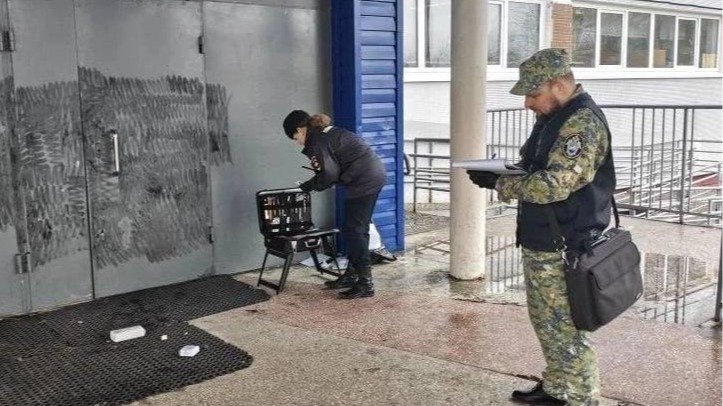
A 17-year-old student stabbed Russian language and literature teacher Olesya Baguta near the entrance of School No. 5 in Dobryanka, in Russia’s Perm Region. Both government-aligned and opposition outlets agree that the attack occurred at or near the school entrance, that the teacher was hospitalized in critical condition, and that she later died in the hospital despite efforts by doctors and emergency services, including an air ambulance. The attacker, described as a ninth-grader, was detained by police shortly after the incident, and investigative authorities have opened a criminal case into the killing.
Coverage from both sides notes that Baguta was not only a teacher but also held an administrative role at the school, identified in opposition reports as deputy principal. They agree that the motive remains officially unclear and that investigators are working to establish the reasons for the attack. Both government and opposition sources highlight that the regional governor publicly acknowledged the tragedy and expressed condolences, and they concur that law enforcement structures and medical services were rapidly mobilized in response.
Areas of disagreement
Characterization of the incident. Government-aligned coverage presents the stabbing primarily as a shocking but isolated criminal act, focusing on the sequence of events, the teacher’s injuries, and the rapid medical and law-enforcement response. Opposition outlets frame it more explicitly as a student-on-teacher killing, stressing that the teacher died despite medical intervention and directly labeling it a fatal attack outside a school, which underscores the gravity and symbolism of violence in an educational setting.
Perpetrator background and motive. Government sources largely avoid details about the student’s history or potential motives, stating only his age and the fact of his detention while emphasizing the ongoing investigation. Opposition media, by contrast, highlight that the attacker was known to police, had repeated grades, and is believed to have had a personal grudge, thereby suggesting systemic failures in monitoring at-risk students and hinting at deeper social or school-related tensions behind the attack.
Institutional focus and accountability. Government-aligned reports concentrate on official reactions, particularly the governor’s condolences and the professionalism of doctors and emergency services, framing institutions as responsive and compassionate under tragic circumstances. Opposition reports, while acknowledging the investigation, give more space to the school context and the teacher’s dual role as class teacher and deputy principal, implicitly raising questions about school management, safety, and whether existing institutional mechanisms were sufficient to prevent such violence.
Broader framing and implications. Government coverage tends to limit the narrative to immediate facts and the humanitarian dimension, avoiding broader commentary on social conditions or educational policy. Opposition coverage more readily connects the event to patterns of youth trouble and previous contact with police, implicitly situating the stabbing within a broader critique of how authorities handle vulnerable or problematic teenagers and the adequacy of preventive measures in Russian schools.
In summary, government coverage tends to frame the stabbing as a tragic but contained criminal incident managed by responsive authorities, while opposition coverage tends to portray it as a symptom of deeper systemic and social problems in the school and law-enforcement environment.