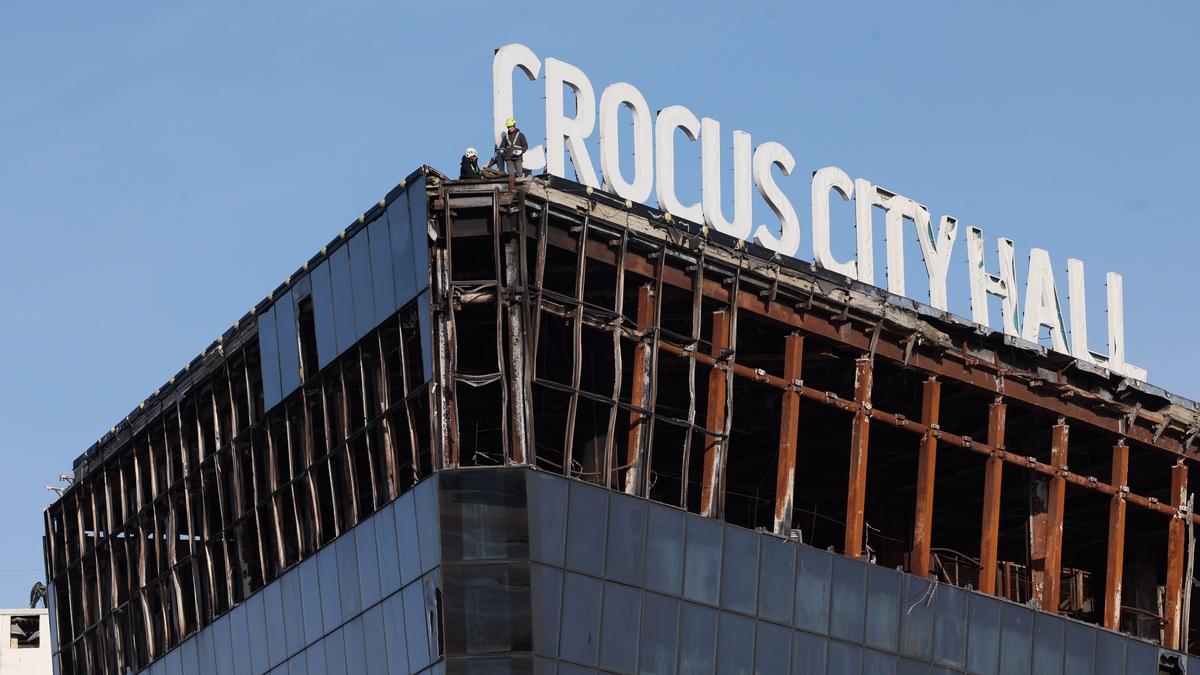
Investigative accounts from both government-aligned and opposition-linked outlets agree that the Crocus City Hall terrorist attack in the Moscow region was part of a broader plan involving two coordinated strikes in the Russian capital on the same day. They concur that the attackers operated under the direction of an overseas handler or curator referred to as Saifullo (or similarly transliterated), who oversaw training and target selection. Both sides report that the original plan included another major site in Moscow—initially a tower in the Moscow City business district—that was ultimately rejected as unsuitable, leading the group to settle on Crocus City Hall as the primary target for a mass-casualty assault. They also agree that the Crocus operation was carried out by a larger group of militants within the wider network involved in the planned dual attacks.

Coverage from both camps notes that Russian investigative bodies and courts have moved swiftly, with the four direct perpetrators receiving life sentences and eleven identified accomplices also handed long prison terms for their roles in providing logistics, support, and other resources. Both describe the plot as being coordinated from abroad rather than conceived spontaneously inside Russia, highlighting the structured nature of training, reconnaissance, and mission changes dictated by the foreign handler. They present the attack as a major test for Russia’s counterterrorism and security institutions, drawing attention to the role of intelligence services, courts, and law enforcement in piecing together the planning timeline and uncovering the intention to inflict mass casualties at multiple sites. There is also agreement that the discovery of the abandoned second-attack plan has become a central element in the official case narrative and sentencing rationale, underscoring the scale and premeditation of the operation.

Areas of disagreement

Nature of the second attack plan. Government-aligned sources emphasize that investigators uncovered a concrete, fully formed plan for a second mass-casualty assault in Moscow, portraying it as a narrowly averted catastrophe that validated the effectiveness of ongoing counterterrorism efforts. Opposition outlets, while acknowledging the dual-attack concept, focus more on the attackers’ indecision and target changes, stressing that Moscow City was initially considered but then rejected, which they depict as evidence of evolving plans rather than a fully operational second strike. Government narratives tend to frame the foiled second attack as proof of a sophisticated, foreign-directed conspiracy, whereas opposition coverage presents it more as a shifting plot that only partially materialized.

Role and identity of the foreign handler. Government coverage highlights the figure of Saifullo as a foreign-based organizer who personally planned, trained, and directed the militants, reinforcing a storyline of external orchestration and international terrorism networks targeting Russia. Opposition sources also reference an overseas curator directing target changes, but they are generally less detailed about his identity and affiliations, sometimes presenting him more as a shadowy facilitator than a clearly defined mastermind. Government outlets use this characterization to justify a harder security stance and stress external enemies, while opposition reporting tends to leave more ambiguity about who exactly stood behind the handler and what geopolitical aims were involved.

Framing of the investigation and judiciary. Government narratives underscore the investigation as thorough and decisive, highlighting the life sentences for the four gunmen and significant prison terms for eleven accomplices as evidence that justice has been delivered and the network dismantled. Opposition outlets, though reporting the same sentences, are more inclined to stress the breadth of the dragnet and the severity of punishments, implicitly raising questions about due process, the scope of "accomplice" definitions, and whether the judicial response serves as much a political as a security purpose. Government media describe the court outcomes as a stabilizing measure that strengthens public safety, while opposition coverage tends to imply a more repressive edge to the proceedings, even when not openly challenging the verdicts.

Implications for domestic security policy. Government-aligned sources use the revelation of the planned second attack to argue for intensified surveillance, expanded counterterror powers, and closer monitoring of suspected extremist networks, presenting these steps as a necessary shield against foreign-directed terror. Opposition outlets, while not disputing the seriousness of the attack, more often hint that authorities may leverage the threat to justify broader crackdowns and restrictions that extend beyond genuine terrorists, potentially affecting dissent and civil liberties. Thus, where government coverage sees the case as a catalyst for legitimate security reinforcement, opposition reporting cautions that the same narrative can be used to normalize a permanent state of heightened control.

In summary, government coverage tends to portray the uncovered second-attack plan as proof of a highly organized, foreign-directed terror threat that justifies tough security measures and validates the state’s investigative response, while opposition coverage tends to accept the basic facts of the plot but frame the evolving plans, opaque foreign handlers, and sweeping judicial outcomes as elements that merit scrutiny and could be used to expand political and security control at home.

Story coverage

opposition

17 days ago

Made withNostr