government
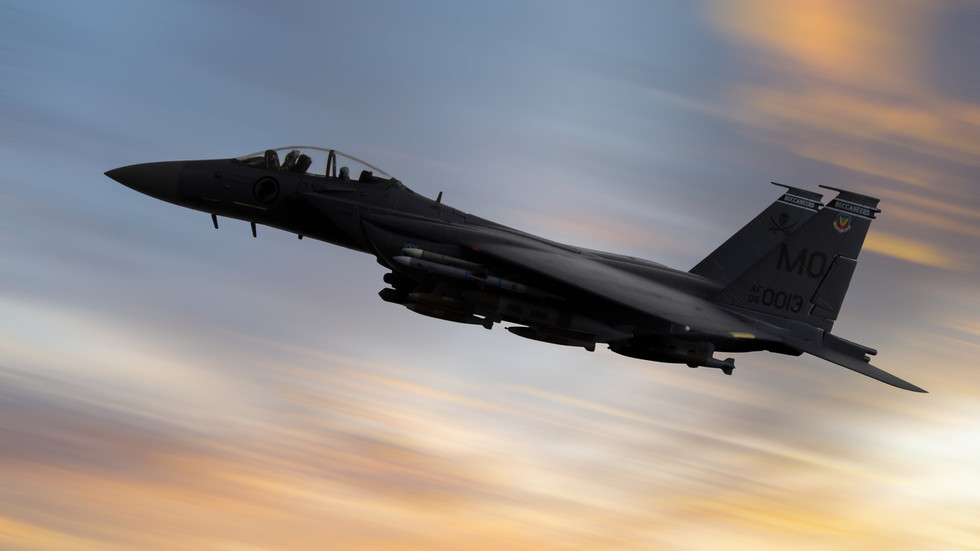
US Air Force fighter jet downed in Iran was F-15E
This information was confirmed to CBS News by sources among US officials
23 days ago
Two US Air Force aircraft, an F-15E Strike Eagle and an A-10 Thunderbolt II, were lost during operations linked to combat activity involving Iranian territory and air defenses. Government-aligned reports agree that the two-seat F-15E was downed over central Iran during a combat mission, that at least one crew member has been rescued while another remains missing, and that extensive search-and-rescue efforts involving a C-130 and multiple UH-60 Black Hawk helicopters are under way. They also concur that an A-10 supporting these missions was hit by Iranian fire, that its pilot ejected safely after reaching or entering Kuwaiti airspace, and that the aircraft ultimately crashed, with additional reports of UH-60 helicopters coming under Iranian fire and sustaining only minor injuries among those on board.
Government-aligned coverage similarly agrees that Iran has publicly claimed responsibility for engaging the US aircraft and is portraying the incident as a major setback for the United States and Israel, including rhetoric such as calling the day a "black day" for its adversaries and allegedly offering rewards for the capture of surviving US crew members. These reports place the events within the broader context of US-Iran tensions and ongoing US air operations in the region, referencing recent US presidential claims that Iran lacked significant anti-aircraft capabilities, which are now contrasted with demonstrated Iranian air defense activity. They also situate the incidents within established institutional frameworks of US combat search-and-rescue doctrine, the deployment of supporting aircraft from regional bases such as those in Kuwait, and long-standing patterns of Iranian efforts to leverage such confrontations for domestic and regional propaganda.
Responsibility and blame. Government-aligned sources emphasize that while Iran claims responsibility for shooting down the F-15E and hitting the A-10, Washington has not fully detailed the precise circumstances and is still "assessing" the engagement, implying possible issues such as miscalculation, escalation by Iranian forces, or the fog of war. Opposition outlets, by contrast, are more likely to accept and amplify Iran's narrative that its air defenses deliberately and successfully engaged clearly identified US military targets operating near or within Iranian airspace, framing this as a direct consequence of US aggression and regional overreach.
Military capability and competence. Government-aligned reporting tends to downplay the broader implications for US air superiority, presenting the incidents as isolated losses in inherently risky combat operations and stressing the professionalism of US crews and the complexity of contested air defense environments. Opposition coverage, however, would frame these events as exposing vulnerabilities in US planning, intelligence, and assumptions about Iranian air defenses, often contrasting the shoot-downs with earlier political claims that Iran lacked meaningful anti-aircraft systems and suggesting this reflects poor strategic judgment by US leadership.
Legal and strategic framing. Government sources usually describe the missions in terms of legitimate combat or support operations tied to ongoing security objectives, implying that any incursions near Iranian territory are part of broader efforts to counter threats and uphold regional stability. Opposition media are more apt to question the legality and prudence of operating so close to or inside Iranian airspace, arguing that such actions amount to provocation or even violation of sovereignty, and portraying Iran’s military response as predictable self-defense rather than unprovoked aggression.
Human impact and propaganda use. Government-aligned coverage foregrounds the status and safety of downed US aircrew, highlighting rescue efforts, medical care for the lightly injured, and the moral obligation to recover personnel while condemning Iran’s reported bounty offers for captured crew as outrageous and inhumane. Opposition outlets, in contrast, pay more attention to how Iran leverages the incident domestically and regionally, depicting Tehran’s rhetoric, reward offers, and "black day" language as effective information warfare that undercuts US prestige, while casting US concern for its pilots as selective compared to its treatment of civilians affected by broader military campaigns.
In summary, government coverage tends to frame the downing of the F-15E and the loss of the A-10 as isolated but serious incidents within legitimate US operations, emphasizing crew recovery, professionalism, and Iranian opportunism, while opposition coverage tends to portray them as emblematic of flawed US strategy, underestimated Iranian capabilities, and predictable blowback from provocative or unlawful military actions.