government
Plane carrying Russian soldiers who returned from captivity lands in Moscow Region
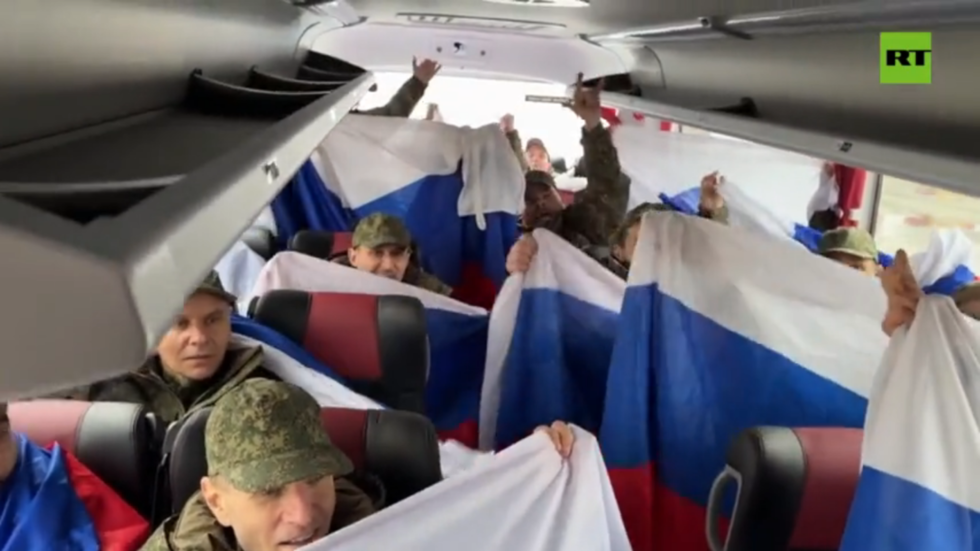
According to the Russian Defense Ministry, 175 Russian servicemen were returned from the territory controlled by the Kiev regime
12 days ago
Russia and Ukraine conducted a major prisoner exchange in which 350 people were swapped, with 175 servicemen from each side returned across the front lines, according to government-aligned reporting. The exchange took place just hours before a temporary Orthodox Easter ceasefire announced by Russia was due to start, and involved an Ilyushin Il‑76MD transport plane carrying the freed Russian servicemen back to the Moscow Region via Belarus, where initial medical checks and care were provided. Government sources also consistently note that the United Arab Emirates acted as mediator in the negotiations and logistics, and that Russian Human Rights Commissioner Tatyana Moskalkova was directly involved in coordinating aspects of the return.
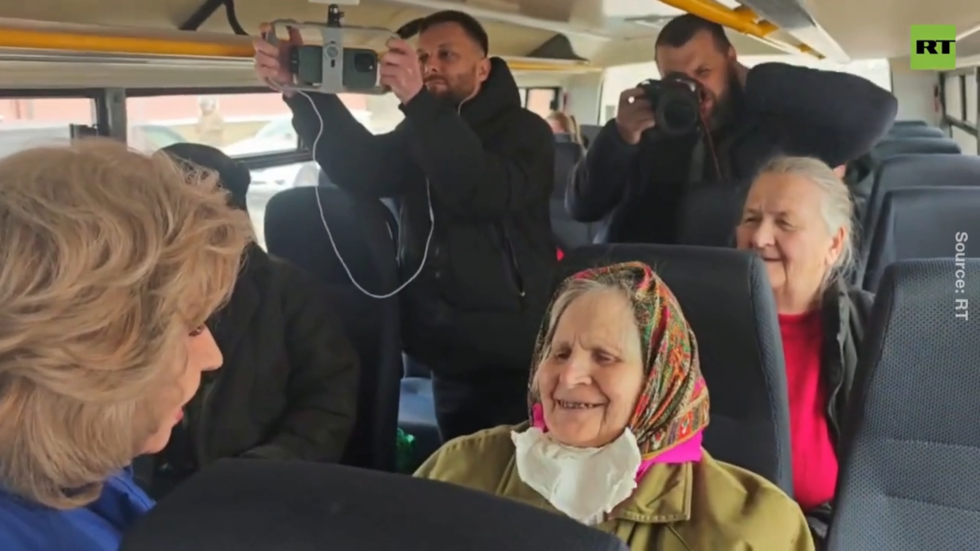
Government-aligned outlets further highlight that, in parallel with the military POW swap, seven Russian civilians from the Kursk Region—described as the last group of residents abducted during the 2024 Ukrainian incursion and held in Ukraine’s Sumy Region—were released and returned home after around 500 days in captivity. They stress that a total of 165 Kursk border residents were seized during that incursion, that some of the freed civilians suffer from serious health conditions, and that they are now undergoing rehabilitation and assistance on Russian territory. These outlets underscore that consultations and negotiations over these civilians have been long-running and difficult, with an explicit aim to secure the return of all those detained.
Framing of the exchange. Government-aligned sources present the swap as a balanced and carefully negotiated humanitarian operation in which equal numbers of Russian and Ukrainian servicemen were exchanged, alongside the release of Russian civilians, emphasizing symmetry and lawful procedure. Opposition sources are more likely to frame the event as driven by battlefield realities, political pressure, or propaganda needs on both sides, questioning the extent to which the exchange reflects genuine humanitarian priorities rather than image management.
Characterization of detainees. Government outlets consistently describe the returned Russian civilians from the Kursk Region as hostages or kidnapped residents, stressing their non-combatant status and the illegality of their detention, while portraying Russian POWs as defenders of the homeland. Opposition outlets would be more inclined to scrutinize the status of some detainees on both sides, suggesting that political prisoners, irregular fighters, or individuals in legal gray zones may be included, and might challenge the simplicity of the victim–aggressor narrative advanced by state media.
Responsibility and legality. In government coverage, Ukraine is blamed for the original abductions in the Kursk border area and for holding civilians for nearly 500 days, while Russia is cast as operating within international norms and making difficult but lawful arrangements through mediation by the UAE and official human rights channels. Opposition coverage would more likely question Russia’s own adherence to international humanitarian law, potentially highlighting reports of mistreatment of Ukrainian prisoners or opaque detention practices, and arguing that both states selectively invoke legality to suit their narratives.
Political significance. Government-aligned media tie the exchange to Russia’s broader narrative of protecting its citizens and regions like Kursk, using the timing before the Orthodox Easter ceasefire and the involvement of senior officials as evidence of the state’s moral and spiritual responsibility. Opposition sources would more often interpret the timing and official choreography as an attempt to score domestic political points, shore up support in border regions, and present a controlled image of competence, while downplaying or questioning whether the exchange signals any real de-escalation or policy shift.
In summary, government coverage tends to depict the prisoner swap as a symmetric, legally grounded humanitarian success that vindicates Russia’s protective role toward its soldiers and civilians, while opposition coverage tends to cast it as a politically choreographed event in which both sides’ legal and moral claims deserve skepticism and closer scrutiny.