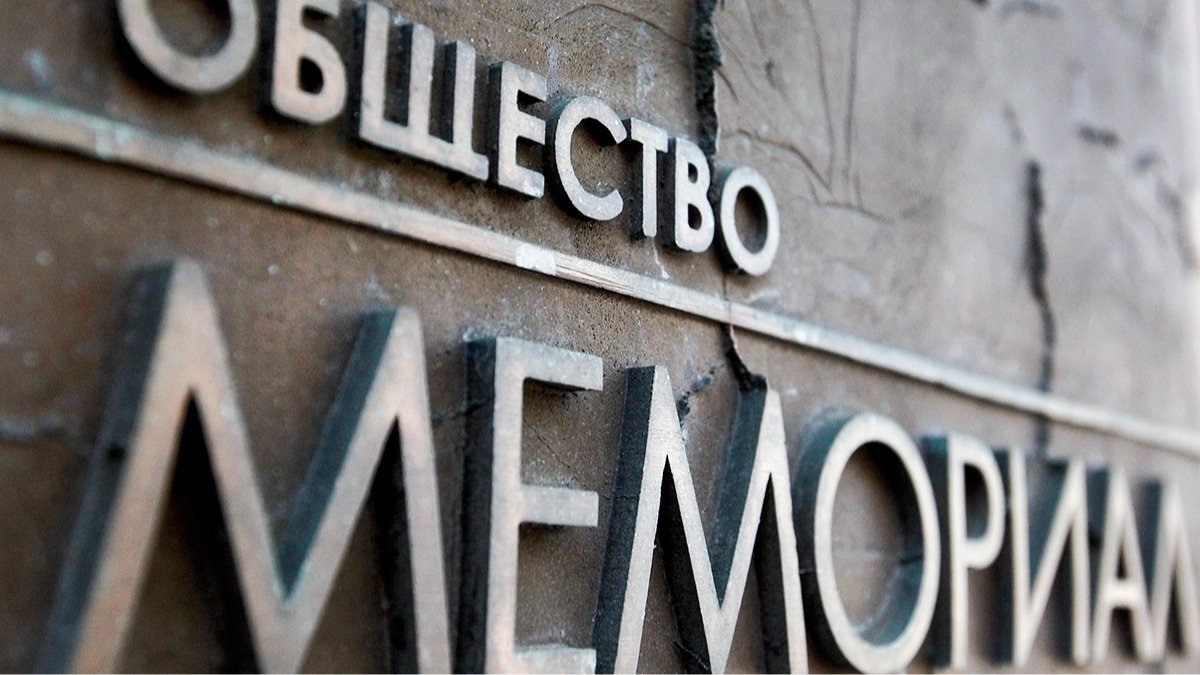
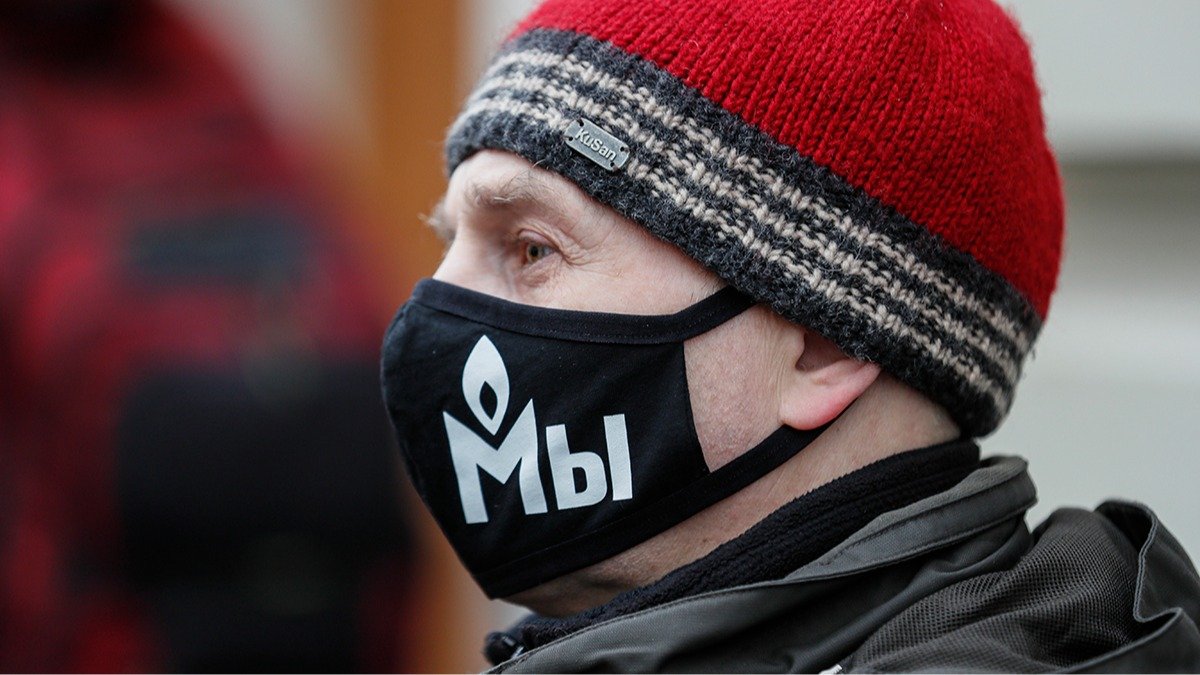
The Supreme Court on April 9 declared the 'international public movement Memorial' an 'extremist' organization and banned its activities in the country. The lawsuit was initiated by the Ministry of Justice. The hearing was held in camera, and the case was classified. Lawyer Leonid Solovyov was supposed to defend the organization, but he was not allowed to familiarize himself with the lawsuit in advance, and then was not admitted to participate in the process and was removed from the hall. Formally, the court banned a legal structure that does not exist. Nevertheless, the decision will affect Memorial's real projects, created to replace those previously liquidated, and those who cooperate with them. Novaya Gazeta Europe reports on a new stage of repression against human rights defenders. Outside the Russian Supreme Court building during the hearing on the 'International Memorial' case in Moscow, Russia, December 14, 2021. Photo: Yuri Kochetkov / EPA. 'The Organization Does Not Exist' 'It is difficult to imagine a greater absurdity than an accusation of extremism,' stated the Memorial Human Rights Center after the Russian Supreme Court's decision. Memorial, one of Russia's oldest human rights and research communities, recounts Soviet repressions, assists political prisoners, and documents human rights violations. Since 2022, it has been a Nobel Peace Prize laureate. In Russia, human rights defenders are persecuted: in recent years, Russian courts have liquidated key Memorial structures, and the Ministry of Justice has included them in the registers of 'foreign agents' and 'undesirable' organizations. 'Somewhere in June 2021, in a circle of Security Council members and in the presence of [Vladimir] Putin, there was a conversation that the 'foreign agent' legislation was not working because 'Memorial' was continuing its activities. Oleg Orlov (a human rights defender sentenced to 2.5 years in prison for repeated 'discreditation of the army,' and later released in an exchange. - Ed.) and I in 2021 traveled extensively to Grozny, suing [Chechen leader Ramzan] Kadyrov over further threats to [Novaya Gazeta journalist working in Chechnya] Elena Milashina,' Alexander Cherkasov, a human rights defender and member of the Memorial Center council, who has been living and working in France since 2022, told Novaya-Europe. " 'The liquidation of Memorial literally on the eve of the [full-scale] war [with Ukraine] is part of the preparation for war. It was a blow to the society that would have been the pillar of the anti-war movement in the first weeks of the full-scale invasion. The closure of Memorial may have reduced the coordination of anti-war actions. All of Russian life retrospectively to 2022 was preparation for war. Just as preparations for direct repression are now underway,' Cherkasov notes. In February 2026, foreign non-profit organizations of Memorial, created in 2023 in Germany and Switzerland, were declared undesirable. The activities of human rights defenders have generally never been limited only to the post-Soviet space; a representative of the liquidated International Memorial told Novaya-Europe on condition of anonymity: 'For many years, quite effective organizations have been created in various European countries. And they were created not only by people who left Russia but also by locals: local professors, historians, slavicists, writers, students, local activists. Since the history of dictatorships on the continent in the last century was quite long, the same 'Last Address' plaques [about victims of repression] can be installed in Paris: there are already two there now. Employees of the foreign department of OGPU NKVD abducted and liquidated people in France, the Czech Republic, Poland, Germany, and Italy.' Installation of 'Last Address' plaques, St. Petersburg, December 18, 2022. Photo: Novaya Gazeta Europe. In general, Memorial's complex structure implies a multi-level movement, parts of which act independently of each other. Thus, while the 'Civic Assistance' committee was engaged in supporting labor migrants, and the 'Memorial' Scientific and Educational Center studied state terror in the USSR, the 'Memorial' Human Rights Center (which received the Nobel Prize) monitored human rights violations and norms of international humanitarian law in mass conflict zones. As for the work in Russia, until 2022, it was coordinated by Irina Shcherbakova's 'Russian Historical-Educational and Human Rights Society Memorial' (she left Russia). Now, during the full-scale war, it is impossible to openly talk about the organization's clear structure and Russian 'daughters.' After the liquidation of the Human Rights Center, assistance to political prisoners was provided through the created 'Memorial' Human Rights Center, which no longer had a legal entity. In total, Memorial has dozens of separate projects, but none of them were called the 'international public movement' banned today. 'An organization with such a name does not exist. We don't even know what this fiction is accused of,' stated the Memorial Human Rights Center, commenting on the Supreme Court's decision. The Russian Ministry of Justice, however, thought otherwise and even, as it turned out after the hearing, counted 196 participants in the non-existent organization. Nevertheless, it did not become clear even after the Supreme Court's decision what physical or legal entities were part of the 'international public movement.' The department only stated that, according to its version, the movement's activities threaten 'the foundations of the constitutional system, the provision of integrity and security' and are aimed at 'leveling historical, cultural, spiritual, and moral values, inciting social and religious discord.' In addition, the Ministry of Justice noted that Memorial recognizes those convicted in Russia for involvement in terrorist organizations as political prisoners. In conversation with Novaya-Europe, Cherkasov explained in detail what this means, citing the case of 'Hizb ut-Tahrir,' and also recalled what else 'Memorial' displeased the Russian authorities with. '[The countdown to Memorial's destruction can be traced] from the school competition 'Man in History. The 20th Century,' organized by International Memorial. There was dissatisfaction that we worked with schoolchildren and supported such a genuine historical memory. The dissatisfaction about this, I think, was definitely greater than the dissatisfaction related to us dealing with Chechnya, counter-terrorism, civil control over special services, and so on. Even then, the most important thing for the state was the shift towards the militarization of society, the militarization of Russia, and preparation for a new war. There was also dissatisfaction with the work on political prisoners. For example, the fact that 'Memorial' recognizes 'Hizb ut-Tahrir' as political prisoners, for whom there were no terrorist acts, greatly нервировало the special services. This case provided security forces with the opportunity to easily create full-fledged terrorist criminal cases from the perspective of Russian legislation and receive stars on their epaulets for it. I remember that after an interrogation at the Investigative Department in Moscow in the case of the death of [journalist] Andrey Mironov in Sloviansk, the investigator asked me with such pain in his voice: 'Why did you include [Ukrainian pilot accused of killing Russian journalists] Nadiya Savchenko in the lists of political prisoners?!' Cherkasov said. Alexander Cherkasov at the Yeltsin Center, December 9, 2019. Photo: Wikimedia. For repression, 'belonging to a structure' is sufficient Human rights defenders warn: the Supreme Court's decision may mean not only the ban of a specific structure but also the expansion of repression to everything related to Memorial. The Memorial Human Rights Center emphasized: 'Knowing the repressive practices of the Putin regime, there is no doubt: the 'defendant' in the lawsuit was designated so vaguely and indistinctly not out of negligence, but quite intentionally. This will create preconditions for subsequent repressions in Russia against any 'Memorial-related' organizations, their participants, and supporters.' In practice, the Supreme Court's decision allows Russian legislation to be applied to the widest range of structures and people. In this logic, any initiative where the word 'Memorial' is heard may fall under the ban - regardless of the country of registration and even the real connection between projects. This model makes it possible to initiate cases without needing to prove specific actions, Cherkasov noted. 'Belonging to a structure declared terrorist or extremist is sufficient, and that's it. Actually, this is a trend of the entire Putin era. This is how they fought the North Caucasian underground at one time. I will emphasize again: this categorical repression based on belonging to a group, community, or movement is the 'hallmark' of Putin's government,' Cherkasov reflects in conversation with Novaya-Europe. Further work only 'outside Putin's Russia' After the court's decision, the Memorial Human Rights Center announced the cessation of its work in Russia. The organization stated that it currently has no employees or volunteers in the country, and donations from Russian cards are not accepted. Memorial recommends considering that almost any interaction with the organization may be under threat. Formally, responsibility may arise only after the Supreme Court's decision comes into force. But human rights defenders advise those who live or visit Russia to minimize risks now: do not donate to any Memorial organizations; do not make transfers to accounts of people associated with Memorial; do not repost Memorial's publications and do not publish images with their symbols; do not comment on or like Memorial's posts; do not refer to Memorial in your publications and texts; unsubscribe from social networks and newsletters. The 'Memorial' sign at the entrance to the head office in Moscow, October 7, 2022. Photo: Maxim Shipenkov / EPA. Those who live in Russia or visit the country can still read Memorial's materials, the organization notes. In addition, lawyers offer consultations and even assistance with unsubscribing from resources. Those who do not intend to return to the Russian Federation are asked by human rights defenders to donate from secure cards. At the same time, human rights defenders' activities will not cease abroad, the organization promised: 'Outside of Putin's Russia, the Memorial Human Rights Center will continue its work, regardless of any repressive decisions by Russian state bodies.' *** In his comment to Novaya-Europe, Cherkasov summarizes: 'This fits perfectly with the idea that in the process of fighting against the wrong memory, something must be done with one of the carriers of this wrong memory. The authorities' toolkit, it must be said, is very poor. They declared us 'foreign agents' - it yielded no result. This circumstance (lack of result) initiated liquidation through the court. They liquidated it, but it turned out that there was also no particular result here. It's like eating jelly with knitting needles. The 'Memorial' community still exists. They declared other organizations undesirable - and again, not enough. Beyond that, there are only two options left - declaring the community an 'extremist' or 'terrorist organization.' [...] I wouldn't say that 'Memorial' was declared extremist due to personal dislike of the victim, although the authorities certainly feel it towards 'Memorial.' They simply don't know how else.' With the participation of Mira Livadina