government
Xi Jinping stresses peaceful relations in talks with Taiwan’s Kuomintang leader amid tensions
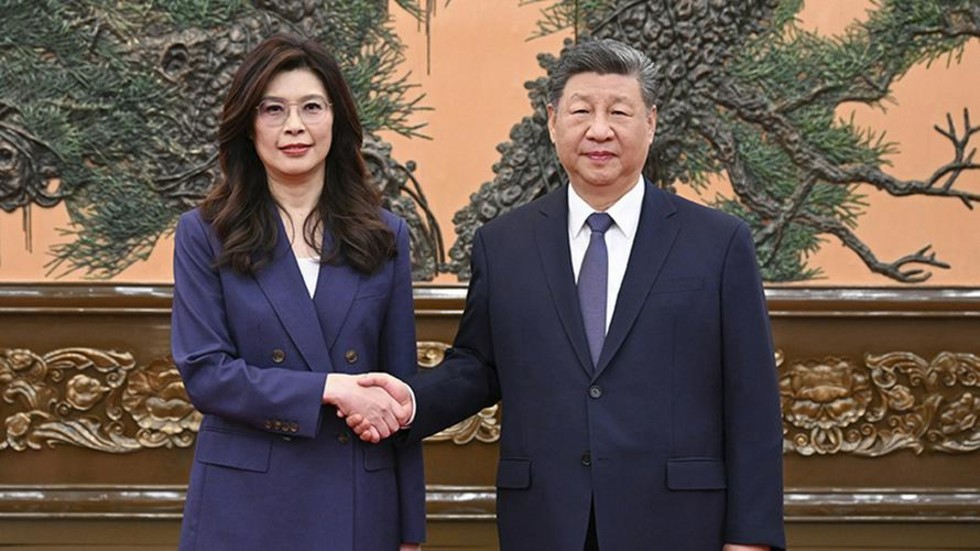
Xi Jinping held a rare meeting with Taiwan’s opposition Kuomintang leader and called for peaceful cross-Strait relations
13 days ago
China’s state-aligned coverage reports that Chinese President Xi Jinping met with the Kuomintang (KMT) chair in Beijing, framing the trip as a peace-building mission amid heightened cross-Strait tensions. Both sides of reporting agree that following the visit, Beijing unveiled a 10-point economic incentive package targeting Taiwanese businesses and sectors, including proposals to resume and expand direct cross-Strait flights, ease market entry for Taiwanese food and agricultural products, and provide various preferential measures. It is also consistently noted that Taiwan’s official government reacted with skepticism, publicly expressing mistrust of the offer and citing prior episodes where similar incentives were rolled out unevenly or suspended.
Across outlets, there is shared context that the initiative is part of China’s broader cross-Strait strategy centered on the “1992 Consensus,” which affirms a single China but allows differing interpretations. The KMT is portrayed as advocating engagement under this framework, while Taiwan’s ruling Democratic Progressive Party (DPP) rejects it as constraining Taiwan’s autonomy and international space. Coverage from all sides also agrees that these incentives are not underpinned by formal, enforceable bilateral agreements or multilateral oversight, and that long-running political disputes, military posturing, and questions of sovereignty and security form the backdrop to the latest economic overture.
Nature of the incentives. Government-aligned outlets frame the 10-point package as a goodwill gesture aimed at promoting mutually beneficial economic integration and easing tensions through practical cooperation. Opposition-leaning coverage, by contrast, characterizes the same measures as politically motivated tools of economic leverage designed to increase Taiwan’s dependence on the mainland. While state media highlights opportunities for Taiwanese farmers, airlines, and exporters, critical voices emphasize the conditional and reversible nature of these offers and warn that they can be withdrawn to punish Taipei for political positions Beijing dislikes.
Political framing of the KMT visit. Government-aligned sources present the KMT leader’s trip as a responsible, peace-focused initiative that keeps communication channels open and reflects the will of many Taiwanese who seek stability and prosperity. Opposition narratives depict the visit as undercutting Taiwan’s elected government, giving Beijing a platform to claim cross-Strait consensus without Taipei’s formal participation. While state media casts the KMT as a bridge-builder advancing national rejuvenation, opponents cast it as enabling Beijing’s united front strategy and weakening Taiwan’s bargaining position and international support.
Interpretation of risk and security. In government-aligned reporting, the emphasis is on reducing miscalculation and military tension through dialogue and economic interdependence, suggesting that closer trade and travel links will stabilize the situation. Opposition coverage stresses that parallel military pressure, such as drills and incursions around Taiwan, undermines the credibility of Beijing’s “peaceful” narrative and turns economic ties into potential vulnerabilities. One side portrays economic incentives as confidence-building measures, while the other warns they can mask or facilitate long-term coercion.
Representation of Taiwan’s official stance. Government-aligned media tend to play down or selectively quote Taipei’s skepticism, often portraying the central government as ideologically rigid and obstructing benefits that ordinary Taiwanese might enjoy. Opposition sources foreground the DPP administration’s concerns about the lack of legal safeguards and past episodes of abrupt cancellations or embargoes, treating them as evidence of systemic risk rather than partisan obstruction. Where state outlets describe resistance as politicized and out of step with public interest, critical outlets portray it as prudent defense of sovereignty, regulatory standards, and democratic decision-making.
In summary, government coverage tends to emphasize goodwill, economic opportunity, and the KMT’s role as a stabilizing interlocutor within a one-China framework, while opposition coverage tends to stress political coercion, security risks, and the undermining of Taiwan’s elected government and autonomy.