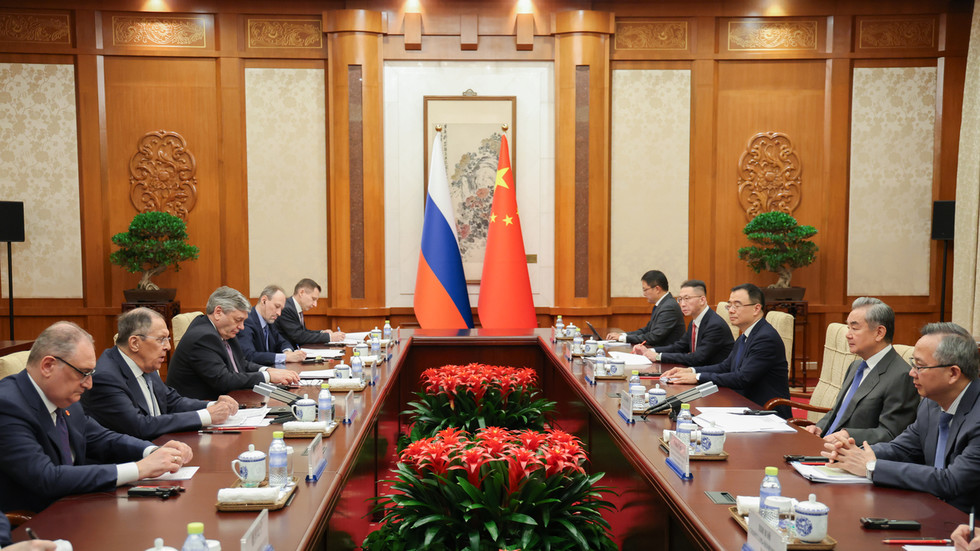
Russian Foreign Minister Sergey Lavrov paid a two-day official visit to China on April 14–15, holding talks with Chinese Foreign Minister Wang Yi. Both sides discussed bilateral cooperation, their broader strategic partnership, and a range of international and regional issues, including the war in Ukraine and tensions in the Middle East, and they also raised the prospect of a future summit between President Vladimir Putin and President Xi Jinping.
Coverage consistently notes that the visit took place against the backdrop of deepening Russia-China ties and heightened confrontation with Western countries. The talks are framed as part of ongoing institutionalized dialogue between Moscow and Beijing, rooted in the declared “no-limits” partnership and coordinated positions in multilateral forums such as BRICS, and they are linked to shared concerns over global security, sanctions, and bloc politics.
Areas of disagreement
Purpose and framing of the visit. Government-aligned outlets portray Lavrov’s trip as a routine yet strategically important step in strengthening a mature, balanced partnership between two sovereign powers. They describe the agenda as constructive, emphasizing coordination on global governance, security architecture, and economic integration. In the absence of explicit opposition media coverage, such sources would likely be contrasted by critical outlets that might frame the visit as politically motivated, aimed at circumventing Western pressure and reinforcing an increasingly anti-Western axis.
Characterization of the Russia-China relationship. Government sources stress that the relationship is a long-term, mutually beneficial strategic partnership underpinned by shared interests and respect for each other’s sovereignty. They highlight the “no-limits” language as evidence of a stable alternative pole in international relations and present deepening ties as a response to Western attempts at dominance. Hypothetical opposition coverage, by contrast, would likely question the symmetry of this partnership, raising concerns that Russia is becoming overly dependent on China economically and diplomatically, and that the “no-limits” rhetoric masks growing imbalances.
Narrative about the West and ‘containment’. Government-aligned media emphasize that Russia and China face coordinated efforts by Western states to contain their rise, citing sanctions, military alliances, and new regional blocs as examples. They frame Moscow-Beijing coordination as a defensive, legitimate reaction to what they describe as Western hegemonic policies and interference. Opposition-oriented narratives, if present, would more likely contest this, arguing that Western policies are reactions to Russia’s own actions in Ukraine and elsewhere, and warning that defining relations through opposition to the West risks isolating Russia further.
Portrayal of conflict issues (Ukraine and the Middle East). Government coverage highlights Lavrov’s talks on Ukraine and the Middle East as focused on promoting diplomatic solutions, multipolar mediation, and respect for the UN Charter, while criticizing Western arms supplies and sanctions. It portrays Russia and China as stabilizing actors seeking a fair security order and condemns Western double standards. A critical opposition perspective would likely stress Russia’s responsibility in triggering or prolonging the Ukraine conflict, question the sincerity of Moscow’s peace rhetoric, and suggest that aligning with China on these issues entrenches confrontation rather than opening real paths to compromise.
In summary, government coverage tends to present Lavrov’s China visit as a confident, cooperative step in consolidating a balanced strategic partnership resisting Western pressure, while opposition coverage tends to be inferred as more skeptical, questioning the costs, asymmetries, and anti-Western framing of this alignment.