
opposition
Kremlin says Russia’s internet restrictions will be lifted once the need for them disappears
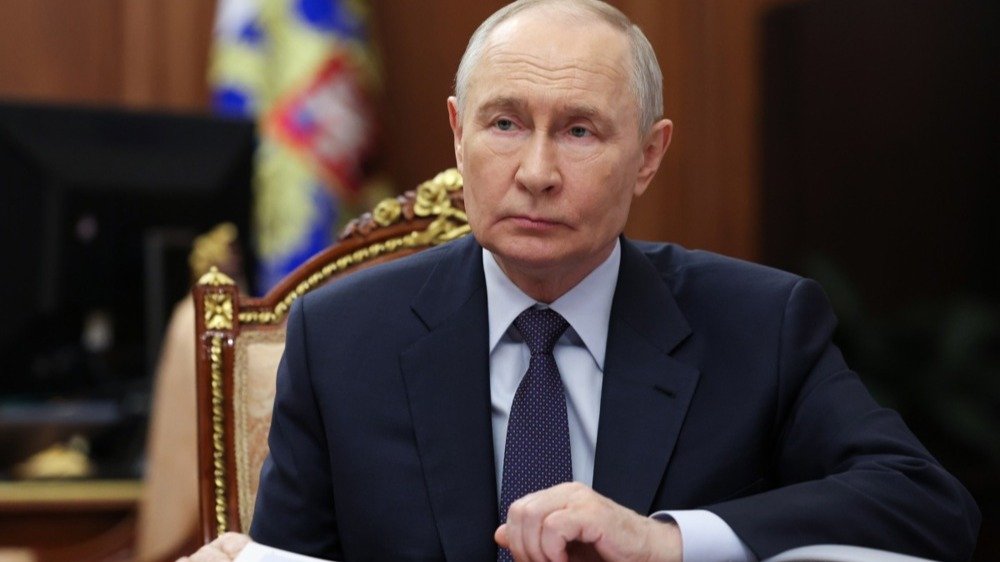
Kremlin spokesman Dmitry Peskov said Russia’s internet restrictions would be lifted once the “necessity” for them disappears.
9 days ago
Kremlin spokesman Dmitry Peskov has publicly acknowledged that Russian authorities are imposing various internet and digital restrictions across the country, including on messaging apps such as Telegram, and that these measures cause inconvenience for users. Both government-aligned and opposition outlets report that Peskov insists the restrictions are temporary and will be lifted once the security or legal need for them disappears, and that he links some of the measures to threats such as drone attacks and to platforms’ alleged non‑compliance with Russian law. They also agree that Peskov, in the same briefing context, underscored broader foreign-policy themes such as a readiness for pragmatic dialogue with Hungary, the possibility of resuming economic cooperation with the United States without waiting for the end of the war in Ukraine, and the importance of involving the United Kingdom and France in arms control talks.
Coverage from both sides situates the internet restrictions within Russia’s evolving internal security regime and legal framework, noting that the state increasingly uses regulatory and technical tools to control information flows and digital platforms. Both acknowledge that the measures are part of a broader tightening of state oversight over online communication, framed officially around combating external threats, maintaining public order, and enforcing domestic legislation. They also concur that these policies intersect with electoral politics and Russia’s international isolation since the invasion of Ukraine, and that any easing or tightening of digital controls is now read against the backdrop of public opinion, economic performance, and the Kremlin’s strategic calculations at home and abroad.
Motivation for restrictions. Government-aligned coverage emphasizes that the primary drivers of internet and messaging-app restrictions are objective security concerns, such as drone threats, and the need to enforce existing Russian laws against non‑compliant platforms. It presents Peskov’s assurances about eventual normalization of access as a straightforward security timeline: once risks subside and legal requirements are met, restrictions will be lifted. Opposition outlets, by contrast, foreground political motivations, arguing that the same security and legal justifications serve as cover for broader censorship and social control, and that decisions about easing blocks on services like Telegram are timed to mitigate political backlash rather than to reflect changes in the threat environment.
Public perception and consent. Government sources highlight Peskov’s claim that most Russians understand and accept the necessity of the internet restrictions despite temporary inconvenience, suggesting a broad societal consensus in favor of security and legal order. They tend to portray discontent as marginal and outweighed by citizens’ willingness to sacrifice convenience for national security. Opposition reporting disputes this, pointing to mounting user frustration, widespread disruption in major cities, and polling data suggesting that the restrictions are contributing to declining approval ratings for Vladimir Putin, thereby framing public consent as far more fragile and contested than the Kremlin admits.
Political impact and polling. In government-aligned accounts, Peskov’s comments on digital policy are largely decoupled from domestic political vulnerability, and there is little or no discussion of opinion polls or electoral risk; the narrative stresses continuity and confidence in state policy. Opposition outlets instead tie the internet restrictions directly to a reported drop in Putin’s approval ratings to their lowest levels since the start of the Ukraine war, arguing that this has spurred internal warnings about political and economic damage. They present the reported decision to ease blocks on Telegram as an example of the Kremlin adjusting its stance under pressure, suggesting that digital controls are calibrated in response to polling and elite concern ahead of elections.
Framing of temporariness and end conditions. Government coverage treats Peskov’s promise that restrictions will be lifted once “the need disappears” as credible and self‑explanatory, implying that the state will objectively assess when security and legal conditions have improved sufficiently. It frames the temporariness of measures as evidence that Russia is not seeking a permanently closed internet but a safeguarded one. Opposition outlets question these open‑ended criteria, arguing that because the government itself defines the level of “need,” the promise is effectively indefinite and subject to political convenience, and they warn that what is presented as temporary emergency regulation risks becoming a normalized architecture of control.
In summary, government coverage tends to present the internet restrictions as a reluctantly imposed but broadly understood security and legal necessity that will naturally recede when objective risks decline, while opposition coverage tends to frame them as politically driven tools of control that are already eroding public support and are adjusted mainly in response to ratings, discontent, and electoral calculations.