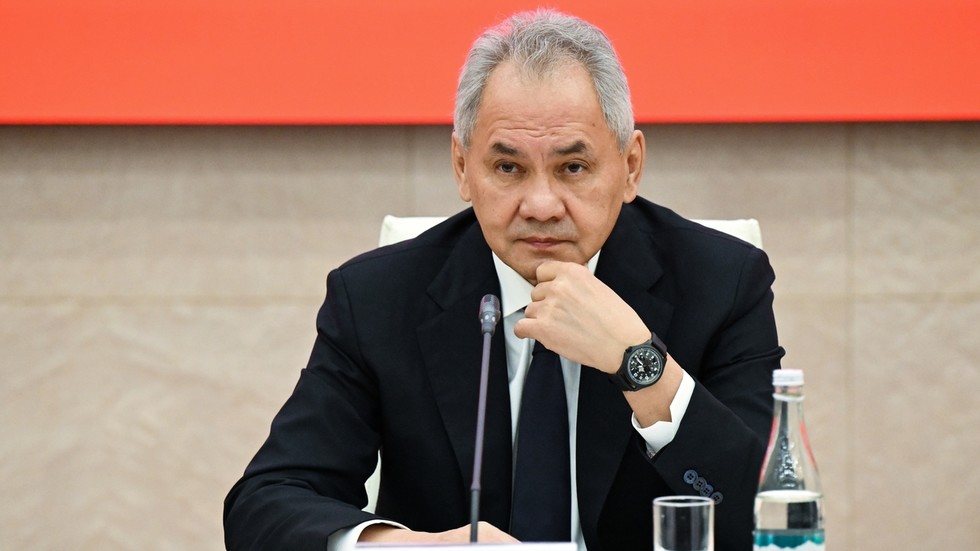
Russian and international coverage agree that Russian Security Council Secretary Sergey Shoigu has publicly warned Finland and the Baltic states that Russia may view them as responsible if Ukrainian drones use their airspace to attack targets in Russia. Across accounts, Shoigu frames the issue in terms of international law and the UN Charter, specifically referencing the right to self-defense under Article 51 if those countries are found to be deliberately allowing or failing to prevent such drone flights. Reports consistently note that Russian officials claim several Ukrainian drones have crossed or used EU and NATO member airspace, citing examples of drones reportedly downed over Russia’s Leningrad Region and crashes on Finnish territory, with the stated target set including civilian and critical infrastructure inside Russia.
Coverage also converges on the broader context that these warnings occur amid Russia’s ongoing war in Ukraine, heightened tensions between Moscow and NATO, and disputes over cross-border drone warfare and responsibility for attacks. Both sides acknowledge the relevance of institutions such as the UN, the European Commission, and NATO, and recognize that questions of airspace control, air-defense effectiveness, and attribution of drone launches are central to the dispute. Reports further agree that European officials, including from Finland, Estonia, and the European Parliament, have publicly commented on drone incidents and that the European Commission has previously said it had no confirmed evidence that Ukrainian drones were using EU airspace, a stance directly challenged by Russia’s Security Council through its list of alleged cases.
Areas of disagreement
Characterization of the threat. Government-aligned outlets portray Shoigu’s statement as a sober, legally grounded warning that Russia faces cross-border attacks facilitated by EU and NATO states, emphasizing the possibility of invoking Article 51 if these states are found complicit. Opposition-oriented commentary, where it exists, tends to frame the same remarks as escalatory signaling or intimidation toward smaller neighbors, suggesting Moscow is inflating or instrumentalizing the drone issue to pressure Finland and the Baltics and to deter their support for Ukraine. While government media stress the defensive nature of Russia’s posture, opposition voices question whether the threat narrative is proportionate to the evidence presented.
Evidence and attribution. Government sources assert that the Russian Security Council has compiled concrete proof that Ukrainian drones have either originated from or transited EU airspace, treating downings in Leningrad Region and crashes in Finland as strong indications of Western involvement or negligence. Opposition-aligned analyses frequently cast doubt on the conclusiveness of this evidence, highlighting the technical difficulty of tracing precise launch points and flight paths and noting that proximity alone does not prove state complicity. Government coverage underscores statements from select Finnish, Estonian, and European figures as corroboration, while opposition sources often interpret those same references as circumstantial or politically cherry-picked.
Legal framing and international law. Government media lean heavily on the language of the UN Charter, arguing that repeated drone strikes on Russian territory amount to armed attacks that justify anticipatory or retaliatory measures against states deemed to be assisting or enabling them. Opposition coverage generally acknowledges the legal rhetoric but questions its application, arguing that Russia itself is the aggressor in Ukraine and therefore has limited credibility in claiming self-defense against Ukrainian actions or alleged Western facilitation. For government outlets, Article 51 is a shield legitimizing potential countermeasures; for opposition voices, it is seen as a selective legal justification that ignores Russia’s prior breach of international norms.
Role and agency of EU/NATO neighbors. Government narratives depict Finland and the Baltic states as either failing to control their airspace or actively collaborating with Ukraine and its Western backers in conducting hostile operations against Russia, thereby becoming potential parties to the conflict. Opposition-leaning commentary tends to cast these countries more as vulnerable frontline states reacting to Russian pressure, emphasizing their right to support Ukraine and their reliance on NATO frameworks for collective defense. Government outlets highlight their alleged agency in enabling drone routes, while opposition sources stress their constrained choices under perceived Russian coercion and the broader context of deterrence.
In summary, government coverage tends to present Shoigu’s warning as a justified, law-based response to documented cross-border threats and potential complicity by Finland and the Baltic states, while opposition coverage tends to portray the same messaging as legally selective, politically motivated, and aimed at escalating pressure on EU and NATO neighbors rather than addressing clearly proven drone attacks.