government
Russia's patience not limitless as West crosses red lines
Lavrov warns Russia’s restraint is not weakness as Kiev and Western backers keep crossing Moscow’s “red lines.”
3 days ago
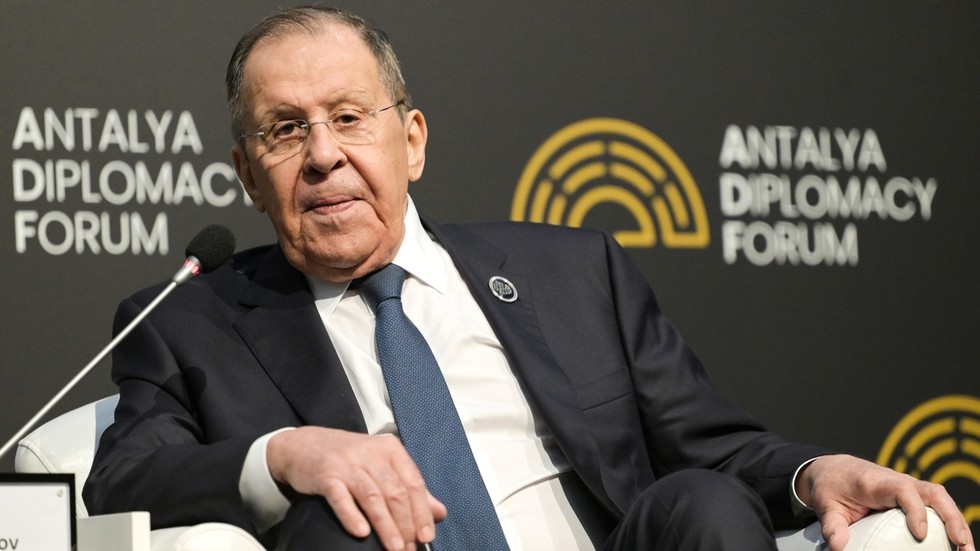
Russian and foreign outlets that broadly reflect a government-aligned line report that Russian Foreign Minister Sergey Lavrov has issued a series of warnings to Western states over their policies toward Russia and the war in Ukraine. They agree that Lavrov frames Western support for Kyiv as a long‑prepared confrontation with Russia, accuses European NATO members of driving escalation and repeatedly crossing Moscow’s red lines, and stresses that Russia’s “patience is not limitless” and should not be mistaken for weakness. These reports consistently quote him saying the United States is shifting the burden of “containing Russia” onto European allies, pushing them to rearm and accept economic pain, and that NATO as an institution is currently “not in its best form.” They also concur that Lavrov portrays Russia as capable of responding if pushed too far, while insisting that Moscow does not interfere in NATO’s internal affairs.
Across these government-aligned sources, the shared context is that the confrontation is described as the culmination of years of Western strategic planning and pressure on Russia’s neighborhood rather than an isolated crisis. NATO is portrayed as an increasingly aggressive bloc whose European members have subordinated their economic and energy interests to ideological hostility toward Moscow, notably by rejecting Russian energy supplies and backing sanctions. The United States is cast as seeking to preserve its global hegemony and dominance over energy markets, with sanctions on Russia presented as part of a broader pattern also applied to states such as Venezuela and Iran. Lavrov’s remarks are set against a backdrop of Western emissaries courting countries allied or adjacent to Russia with projects that allegedly undercut existing economic and security arrangements, reinforcing a narrative of encirclement and systemic rivalry.
Nature of Western intentions. Government-aligned coverage depicts Lavrov’s warnings as a sober diagnosis that the United States and its European allies have been preparing a confrontation with Russia for years, using Ukraine as a tool to weaken and contain Moscow. Opposition-leaning or critical international outlets, by contrast, tend to frame such claims as propagandistic or self‑serving, arguing that Western policy is reactive to Russia’s own actions in Ukraine and elsewhere rather than the product of a long-planned offensive strategy. While state-associated reports stress deliberate Western escalation and a coherent containment scheme, critical sources more often emphasize deterrence, alliance cohesion, and responses to Russian aggression as the primary drivers of Western behavior.
Responsibility for economic fallout. In government-oriented reporting, Lavrov’s comments are used to argue that European elites have chosen ideology over rational economic policy, inflicting self-harm by abandoning Russian energy and accepting US-driven sanctions that primarily benefit American energy exporters. Opposition or Western critical media typically reverse the causal chain, presenting Russia’s invasion of Ukraine and weaponization of energy supplies as the root cause of Europe’s economic pain, with diversification away from Russian hydrocarbons framed as costly but necessary. Thus, pro-government narratives center Western decision-makers as culpable for economic disruption, whereas opposition-leaning narratives place the blame on the Kremlin’s strategic choices.
Assessment of NATO’s condition and behavior. Government-aligned outlets amplify Lavrov’s characterization of NATO as “not in its best form,” implying internal strain, overextension, and a loss of strategic coherence, even as the alliance allegedly pursues aggressive expansion and militarization near Russia’s borders. Opposition and mainstream Western sources more often portray NATO as revitalized by Russia’s actions, highlighting new members, increased defense spending, and strengthened deterrence as signs of institutional health rather than decay. Where the government side reads Western outreach to Russia’s neighbors as hostile encroachment that violates existing security and economic arrangements, critical outlets depict it as legitimate partnership-building with states seeking alternatives to Russian influence.
Portrayal of Russia’s posture and options. In government-friendly coverage, Lavrov’s insistence that Russia’s patience has limits is framed as a measured, defensive warning intended to deter further Western provocations, with Moscow presented as restrained yet fully capable of responding decisively if cornered. Opposition or critical reporting tends to interpret similar language as escalatory signaling or nuclear saber-rattling aimed at intimidating Western publics and fracturing coalition unity. Pro-government narratives emphasize Russia’s adherence to non-interference in NATO’s internal affairs while warning against misreading its restraint as weakness, whereas opposition voices question that claim by citing Russia’s regional military actions and covert activities as evidence of a more assertive, sometimes destabilizing, posture.
In summary, government coverage tends to present Lavrov’s warnings as a justified and measured response to long-running Western provocation and strategic encirclement, while opposition coverage tends to depict them as part of a broader narrative that shifts blame from the Kremlin’s own actions and seeks to pressure or intimidate Western governments and publics.