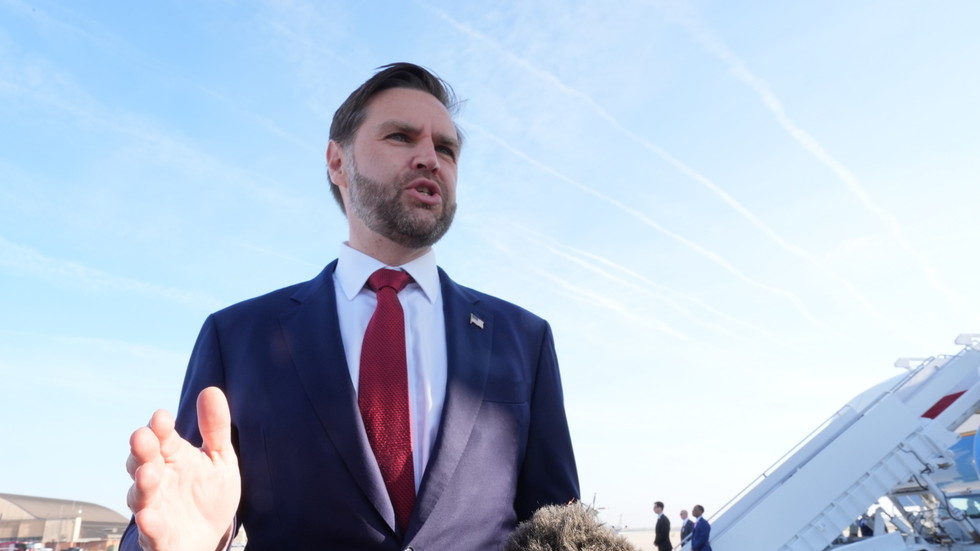
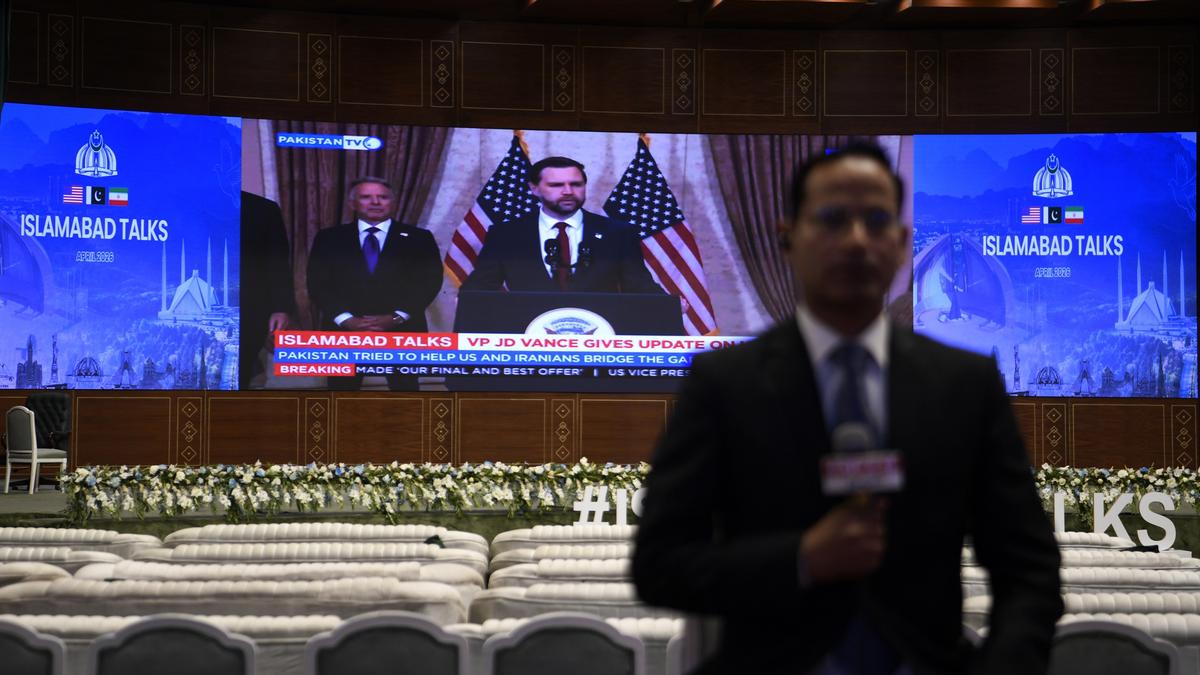
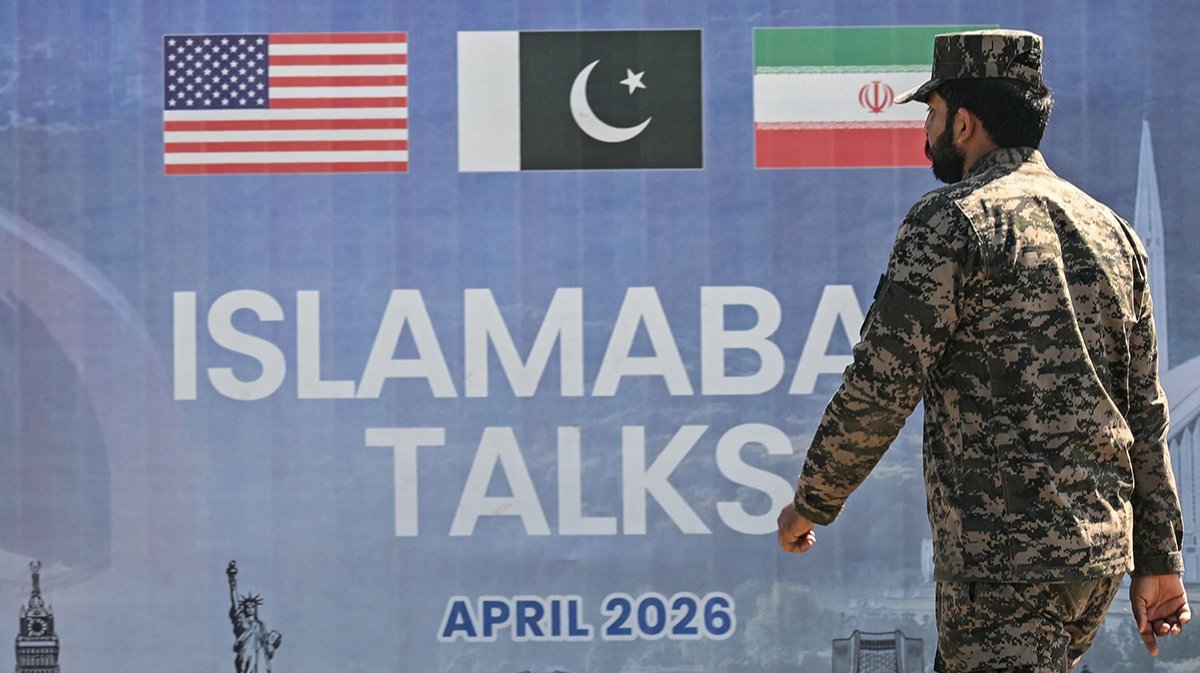
Iranian Parliament Speaker Mohammad-Bagher Ghalibaf and US Vice President JD Vance met in person on April 11 in Islamabad. The talks lasted almost a day in the presence of Pakistani Prime Minister Shehbaz Sharif. This meeting was historic: the last time high-level officials from Iran and the US interacted was in 1979. However, the parties, full of mutual distrust, failed to reach a consensus on several issues. This jeopardizes the two-week ceasefire announced by US President Donald Trump on April 8. More details about the negotiations are in the material of "Novaya Gazeta Europe." A billboard dedicated to the negotiations between the US and Iran in Islamabad, April 12, 2026. Photo: Farooq Naeem / AFP / Scanpix / LETA. Atmosphere of Distrust The US delegation included special envoy Steve Witkoff and Trump's son-in-law Jared Kushner. The Iranian delegation included Parliament Speaker Mohammad-Bagher Ghalibaf and Foreign Minister Abbas Araghchi. Upon arrival in the Pakistani capital, Ghalibaf told reporters that Iran had "good intentions" but did not "trust" the US. After the talks, he wrote on X that "in this round of negotiations, the other side failed to win the trust of the Iranian delegation." He also announced that his negotiating group had put forward "promising initiatives" but did not specify what they were. "America understood our logic and principles, and now it is up to her to decide whether she can earn our trust or not?" he wrote on social media, thanking Pakistan for its mediation efforts. A representative of the Iranian Foreign Ministry said: "Naturally, we should not have expected to reach an agreement in just one session." The US and Iranian delegations held several rounds of negotiations in various formats. The talks began on Saturday and concluded early Sunday morning local time. Pakistani Prime Minister Shehbaz Sharif and Iranian Parliament Speaker Mohammad Bagher-Ghalibaf before meeting with the United States delegation during negotiations in Islamabad, Pakistan, April 11, 2026. Photo: REUTERS / Scanpix / LETA. What Prevented an Agreement The key issues on which the parties cannot agree remain the same: the US insists on the resumption of operations in the Strait of Hormuz, through which Tehran has been blocking about 20% of global energy supplies since the beginning of the war. The Issue of Control over the Strait of Hormuz Last month, Iran mined the Strait of Hormuz after the US and Israel declared war on the country. Iran is not opening the Strait of Hormuz for increased shipping because it cannot detect and neutralize all the mines laid in the waterway, US officials told The New York Times. Mines, as well as the threat of Iranian drones and missile strikes, have almost completely halted the flow of oil tankers and other vessels passing through the strait, leading to rising energy prices and giving Iran leverage. After announcing a two-week truce, Iran stated that vessels must obtain its permission to pass through the strait, otherwise they could be attacked. In addition, Iran decided to charge tolls for safe passage. "We are astonished that this has apparently become one of the starting points for negotiations," Philip Belcher of Intertanko, which represents tanker companies, told the BBC. "We do not consider the strait safe until there is a final cessation of conflict, when all attacks on ships cease, and when there is some form of coalition control over passage, under which Iran has sovereignty over the strait. Charging passage fees contradicts the very idea of international law and free passage on international waterways." The day before, Trump wrote on Truth Social that the US was beginning the process of clearing the Strait of Hormuz of mines. According to the US President, the media are lying when they claim Iran's "victory," while he, in his words, is "suffering a serious defeat." Trump claims that Iran's key military capabilities have been destroyed: its navy, air force, air defense systems, radars, as well as its missile and drone production. "The only thing they have left is the threat that some ship might hit one of their naval mines, although, by the way, all 28 of their mine layers are also at the bottom of the sea. We are now beginning the process of clearing the Strait of Hormuz (of mines) as a favor to countries around the world, including China, Japan, South Korea, France, Germany, and many others. Amazingly, they lack the courage or desire to do this work themselves," he added. Become a co-participant of "Novaya Gazeta" Become a co-participant of "Novaya Gazeta," subscribe to the newsletter and receive letters from the editorial office. Subscribe Meanwhile, two US Navy guided-missile destroyers passed through the Strait of Hormuz on Saturday - the first time since the start of the war with Tehran, the Wall Street Journal reported, citing three US officials. The publication Axios reported the same, citing sources. According to Iranian state media, the government called the border crossing a violation of the ceasefire and threatened to attack ships. However, a US official noted that the US had not received such warnings. The resumption of operations in the strait was one of the key provisions of the agreement between the US and Iran. "Soon after the conclusion of the temporary truce on April 8, according to "Novaya-Europe" estimates, 10 tankers passed through the Strait of Hormuz - almost three times the average daily throughput during the blockade of the strait. But hundreds of tankers are still stuck in the Persian Gulf, waiting for an opportunity to exit it during the two-week ceasefire period. However, Iran quickly closed the passage, stating that the truce conditions included a ceasefire in Lebanon: in the south of the country, according to Israel, attacks were carried out on Hezbollah military targets. Israel and the US stated that Lebanon was not included in the agreement terms. Nevertheless, the next day, Israeli Prime Minister Benjamin Netanyahu announced negotiations with Lebanon, which, according to media reports, were scheduled to take place on April 14 at the US State Department. Trump said he asked Netanyahu to abandon the military campaign in Lebanon, which threatened to derail the deal with Iran. Anti-American mural in Tehran, Iran, April 8, 2026. Photo: Abedin Taherkenareh / EPA. Iran's Nuclear Program The second issue that deadlocked the parties during the negotiations was Iran's nuclear program. The US insists on guarantees that Tehran will not attempt to create nuclear weapons in the future. In addition, before the talks began, a high-ranking Iranian source told Reuters that the US had agreed to unfreeze assets in Qatar and other foreign banks. A source from the Iranian agency "Tasnim" also said that the American side had agreed to unfreeze Iranian assets. However, in a conversation with The New York Times, a US official denied this, stating that nothing had been agreed upon or officially formalized yet. The day before, Kalibaf stated that before the start of negotiations, Iranian assets should be unfrozen and a ceasefire established in Lebanon. "Iran emerged from this phase of the war with a strategic advantage, as it has effectively established its authority over the Strait of Hormuz," Burcu Ozcelik, senior research fellow for Middle East security at the Royal United Services Institute, told NBC News. She also suggested that Trump was unlikely to agree to some of Iran's most controversial demands, including the issue of its nuclear program. Statements from the Parties Following the talks, JD Vance stated that he had failed to reach an agreement with his Iranian counterparts after 21 hours of negotiations. "We are returning to the United States without reaching an agreement. They decided not to accept our terms," he said. Vance added that Iran had been offered to permanently cease its nuclear program, and they rejected it. "We need to see a firm commitment that they will not seek to possess nuclear weapons and will not seek the tools that would allow them to quickly create them. This is the main goal of the President of the United States, and this is what we were trying to achieve in these negotiations," said the US Vice President. US Vice President JD Vance and participants of the negotiations with Iran before boarding a US Air Force plane, Islamabad, Pakistan, April 12, 2026. Photo: Jacquelyn Martin / REUTERS / Scanpix / LETA. In February 2026, a series of tense negotiations between the US and Iran on the nuclear program took place in Geneva, mediated by Oman. At that time, US Presidential envoys Steve Witkoff and Jared Kushner demanded that Iran destroy three nuclear facilities - in Fordo, Natanz, and Isfahan - and transfer all remaining enriched uranium to Washington. In addition, US officials stated that any nuclear agreement must be permanent and non-revocable. However, Iran rejected these US demands, and the next day Trump announced a joint attack with Israel on Iran, targeting missile depots, military bases, and industrial facilities within the country that produce new weapons. Vance specified that during the negotiations on April 11-12, he consulted with President Trump six to twelve times, as well as with Secretary of State Marco Rubio, Secretary of Defense Pete Hegseth, Secretary of the Treasury Scott Bessant, and Commander of US Central Command General Brad Cooper. "We negotiated in good faith," Vance said, speaking from the podium surrounded by Witkoff and Kushner. "As Axios notes, no one expected a final agreement to be reached on Saturday, but the US side hoped for a more optimistic mood for continued negotiations. Nevertheless, despite the formal failure, Vance did not announce the US withdrawal from discussions. The Iranian side also noted the failure of the negotiations. According to the spokesman for the Iranian Foreign Ministry, Esmail Baghaei, the meeting did not end with an agreement "due to the excessive demands made by the American side." He specified that Iran and the US "reached an understanding on a number of issues," but there are "disagreements on two or three important" points. Baghaei added that the success of the negotiations depends on the "seriousness and good faith of the opposing side," as well as on the recognition of Iran's legitimate rights and interests. Pakistani Foreign Minister Ishaq Dar stated at the end that it is crucial to observe the two-week truce agreed upon on Tuesday, as both sides try to end the war. A man reads a newspaper after negotiations between the US and Iran in Karachi, Pakistan, April 12, 2026. Photo: Shahzaib Akber / EPA. Israel did not participate in the negotiations, as the host country, Pakistan, does not have diplomatic relations with it and does not recognize its sovereignty. Israeli Prime Minister Benjamin Netanyahu said that the "campaign" in Iran "is not yet over." "Iran wanted to destroy us. Now it is fighting for survival. We still have a lot to do. We were the first to overcome the barrier of fear and started acting in Iran. [...] The Iranian regime is begging for a ceasefire; there are conflicts within the country's leadership. They have a missile arsenal that is steadily depleting. Our goal was to weaken the Iranian regime to the lowest level since 1979. I will list the many targets we have eliminated: the steel industry, gas production, fuel, bridges, and railways." During a phone call today, UK Prime Minister Keir Starmer and Sultan Haitham bin Tariq Al Said of Oman concluded that the US, Israel, and Iran must avoid "any further escalation" of the war.