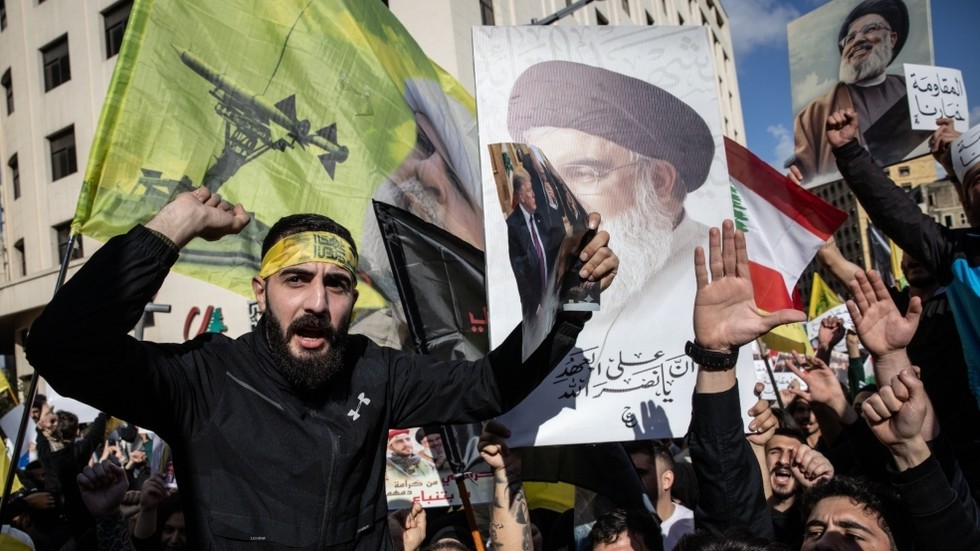
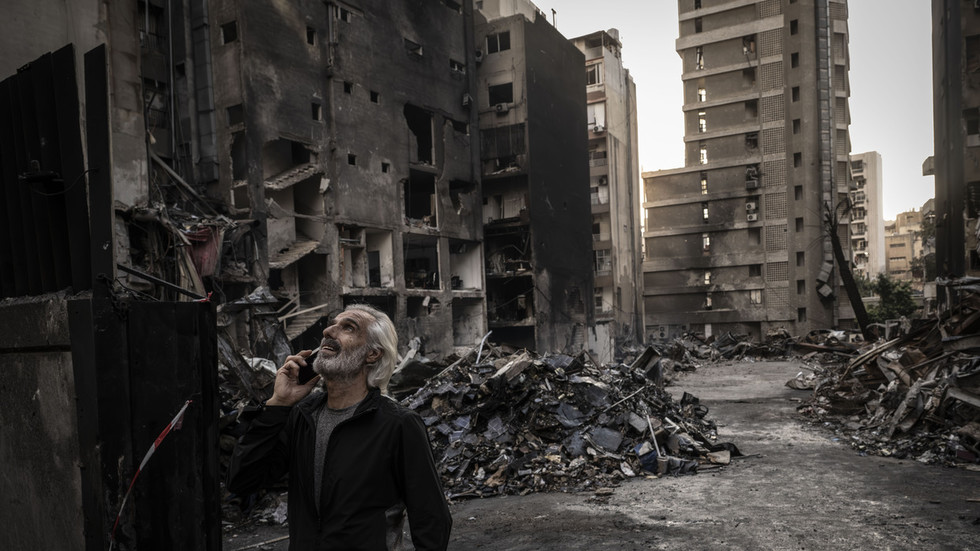
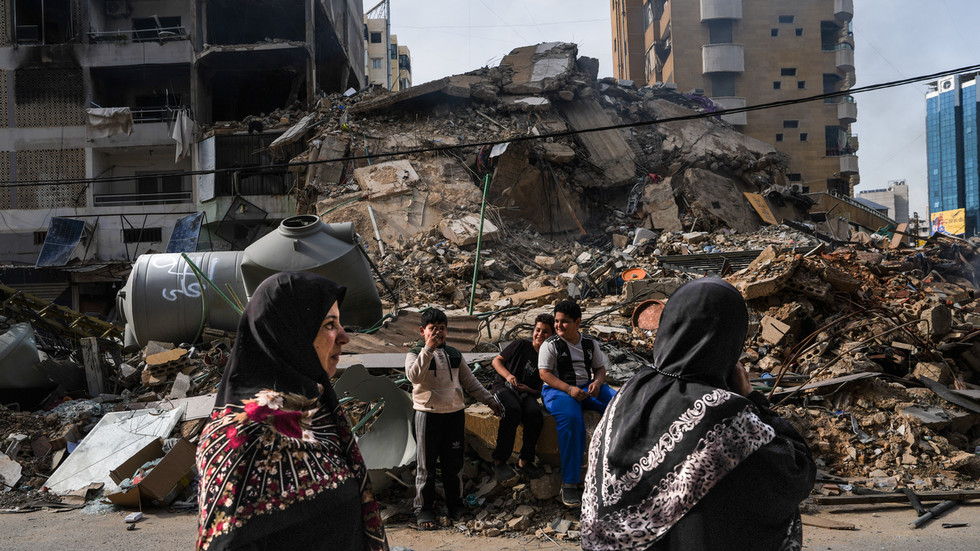
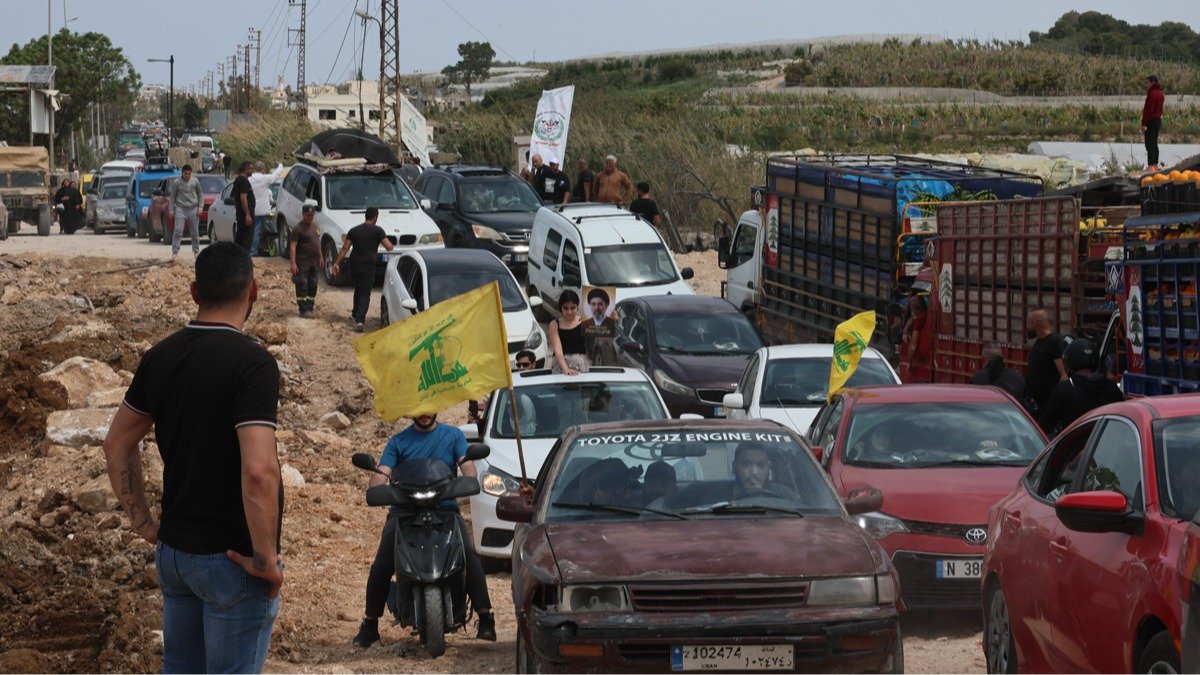
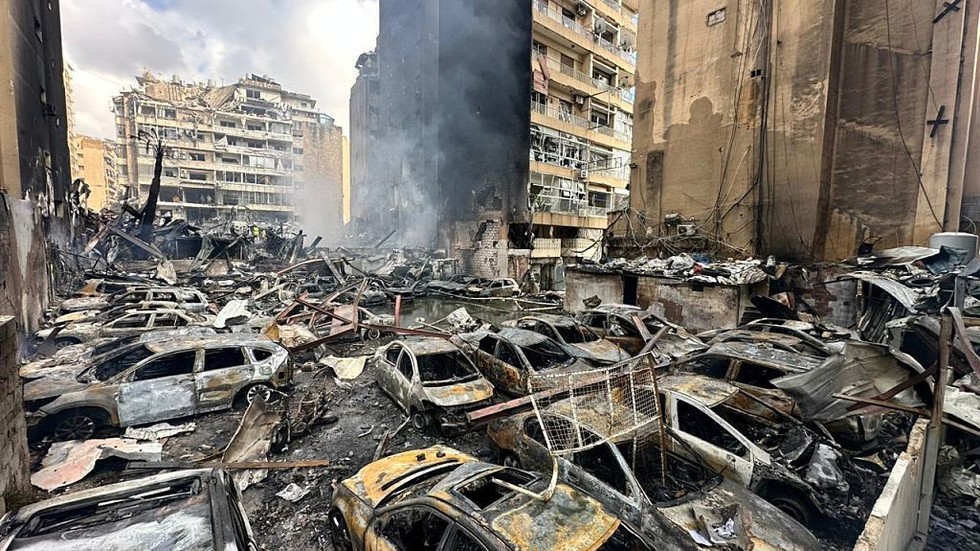
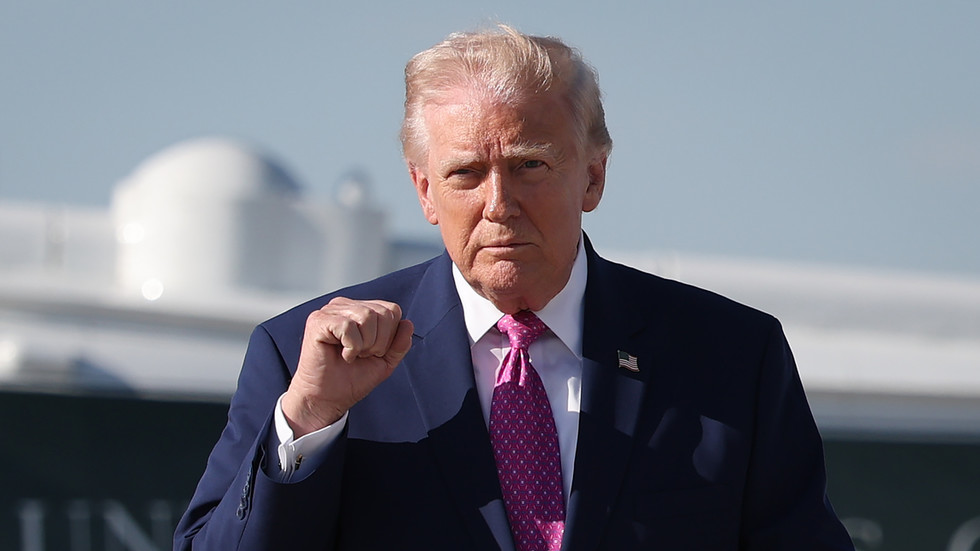
US President Donald Trump announced that Israel and Lebanon have reached an agreement for a 10-day ceasefire. It is assumed that the Lebanese government will take control of non-state armed groups, primarily Hezbollah, while Israel will retain the right to self-defense. Despite the diplomatic success—inviting leaders to the White House and the first direct negotiations since 1993—key issues remain unresolved: Hezbollah is not disarmed, Israeli troops have not withdrawn from southern Lebanon, and the real fate of the ceasefire depends on whether the US reaches an agreement with Iran. Moreover, in the first few hours, both sides accused each other of violations. "Novaya-Evropa" discusses the terms of the ceasefire, what it means for the parties involved, and what to expect next. A line of cars on the Kasmiya bridge. Residents of Lebanon return to their homes along the coast in the Tyre region, after the ceasefire agreement came into effect on April 17, 2026. Photo: Wael Hamzeh / EPA. On April 16, after talks with Lebanese President Joseph Aoun and Israeli Prime Minister Bibi Netanyahu, Trump announced that Israel and Lebanon had agreed to a ceasefire. The 10-day truce came into effect on the night of April 17. Trump's statement did not mention the Iran-backed Lebanese group Hezbollah, with which Israel has been fighting for the past six weeks. However, Trump later addressed them directly, urging them to observe the ceasefire. Following this, the American president also invited Netanyahu and Aoun to the White House for further negotiations. What the parties agreed on. The US State Department, following Trump's statement, published the text of the agreement. It notes that on April 14, direct negotiations were held between Lebanon and Israel with US mediation—the first since 1993. According to the agreements, Israel and Lebanon are working to create conditions for lasting peace, full recognition of each other's sovereignty and territorial integrity, and real security on the common border. Israel retains the right to self-defense. Both sides recognize that non-state armed groups (primarily Hezbollah) undermine Lebanon's sovereignty and threaten regional stability. Israel and Lebanon confirm that they are not at war and commit to conducting good-faith direct negotiations with US mediation to conclude a comprehensive agreement. Specific terms of the ceasefire: The cessation of hostilities takes effect on April 16 at 17:00 US Eastern Time (which is the night of April 17 in Middle Eastern time) for an initial period of 10 days. This is a "gesture of goodwill" by Israel to allow for negotiations on a permanent peace agreement. The term may be extended by mutual consent if Lebanon demonstrates its ability to assert its sovereignty. Israel "reserves the right at any time to take all necessary measures for self-defense against planned, imminent, or ongoing attacks," and the cessation of hostilities must not hinder this. With international support, the Lebanese government will take significant steps to prevent Hezbollah and all other non-state armed groups in Lebanon from attacking Israeli targets. What happened during the hostilities. The operation by the US and Israel, which began with strikes on Iran on February 28, led to a major escalation in the Middle East. In response, on March 2, the Iran-backed Hezbollah group fired on Israel. Israel then launched a military offensive in Lebanon. Thus, the conflict between Israel and Hezbollah flared up again. This occurred 15 months after the last major conflict between the two sides. Israeli Defense Minister Israel Katz spoke of his intention to occupy southern Lebanon up to the Litani River, about 30 kilometers from its border—fighting continued there until the ceasefire began. He also stated that all houses in Lebanese villages near the Israeli border would be demolished. " As a BBC Verify investigation showed, Israel has destroyed over 1400 buildings in southern Lebanon since the start of the war. As The Guardian notes, Lebanon will likely demand the complete withdrawal of Israeli troops, but Israel will not comply until it is confident in the guaranteed security of its northern regions. During the hostilities, the IDF caused great damage to Lebanon, Israeli journalist Vitaly Novoselov told "Novaya-Evropa." The Israeli army reported destroying over 1700 Hezbollah militants, including senior and mid-level commanders, as well as hitting the group's facilities throughout Lebanon: headquarters, strongholds, weapons and missile depots, launch sites, and workshops for producing rockets and explosive devices. Israel destroyed infrastructure in the frontline villages, i.e., at a distance of 3–4 km from the border. Israeli troops also claimed that a major Hezbollah stronghold in the town of Bint Jbeil, three kilometers from the border, was completely surrounded by forces of the 98th Division of the IDF. The IDF forces remain in their positions and continue to destroy Shiite villages in southern Lebanon, military expert Sergey Migdal told "Novaya-Evropa." As "BBC" reminds us, on Thursday, the Israeli military destroyed the last bridge between southern Lebanon and the rest of the country: this further cut off the region from the outside world and again raised fears among many Lebanese that Israel might occupy some areas for a long time. Israeli military equipment on the Lebanese side of the border, viewed from Upper Galilee, April 17, 2026. Photo: Atef Safadi / EPA. "In turn, before the ceasefire, Hezbollah launched dozens of rockets into Israel daily, peaking at about 200 rockets a day, averaging about 100 rockets and drones per day. Northern Israel was under constant rocket fire during this time. Border towns suffered serious damage, many buildings were destroyed, and dozens were injured," says Novoselov. Hezbollah, as the journalist emphasizes, still has tens of thousands of rockets and can continue shelling, even attempting to launch rockets at central Israel periodically. According to Israeli journalist Novoselov, it seems the parties agreed that Israel would cease hostilities in Lebanon. However, he noted in a conversation with "Novaya-Evropa" that it is not entirely clear what obligations the Lebanese side has, as negotiations were conducted with the Israeli government, while Hezbollah is conducting military operations against Israel. It is likely that the agreement was actually made with Hezbollah, mediated by the Lebanese government, he says. "Very fragile" truce Despite the ceasefire, the situation remains unstable, Reuters notes. As Frank Gardner, BBC's security correspondent, writes, the ceasefire between Israel and Lebanon is more of a "relief mixed with a healthy dose of skepticism." He characterizes the truce as "very fragile," even more fragile than the truce between Iran and the US, and emphasizes that "these two agreements are inextricably linked." At midnight, fireworks were launched in Beirut, the capital of Lebanon, to celebrate the beginning of the ceasefire, reported BBC correspondent Hugo Bachega. He notes that complex issues remain unresolved: Hezbollah retains its weapons, Israeli troops remain in Lebanon, and the timeline for their withdrawal is not defined. "This may be a pause, but not an end," he writes. On Thursday, both the IDF and Hezbollah continued to carry out attacks until the ceasefire came into effect. According to the Lebanese state news agency NNA, Israeli artillery continued to shell areas in southern Lebanon about half an hour after the ceasefire began; machine-gun fire was also heard. The Israeli military stated that the army remains "on high alert and will act in accordance with the directives of the political leadership." Meanwhile, as Al Jazeera writes, the ceasefire in Lebanon is "largely holding," and people are beginning to return home. A building destroyed by an Israeli Air Force airstrike on the coast near Tyre in southern Lebanon, April 17, 2026. Photo: Wael Hamzeh / EPA. Official reactions to the ceasefire. Prime Minister Benjamin Netanyahu stated in a video address that the ceasefire provides an opportunity for a "historic peace agreement" but noted that Israel had not agreed to Hezbollah's demand to withdraw its forces from southern Lebanon back to the international border. According to Netanyahu, Israel will remain in Lebanon with an extensive security zone up to the Syrian border. Lebanese Prime Minister Nawaf Salam expressed hope that the agreement would allow those forced to leave their homes due to the conflict to return. Hezbollah stated that it would "cautiously" observe the ceasefire if Israeli attacks on the organization ceased. Iran welcomed the ceasefire, calling it part of an agreement with the US mediated by Pakistan. Iranian Parliament Speaker Mohammad Bagher Ghalibaf wrote on X that the ceasefire is the result of Hezbollah's "resilience" and the unity of the "axis of resistance." He thanked Pakistan and its army general Asim Munir for their mediation. Furthermore, Iran called for the complete withdrawal of Israeli troops from southern Lebanon and the return of displaced residents. " Lebanese authorities reported that since the start of the war a month ago, over 2100 people have died, and 1.2 million people have been forced to leave their homes, which is one in five residents of the country. Israel reported the deaths of two of its civilians and 13 soldiers. Pakistani Prime Minister Shehbaz Sharif welcomed the ceasefire in Lebanon, expressing hope for lasting peace. In a post on X, Sharif stated that the deal was made possible by Trump's "bold" diplomatic efforts. Pakistan "reaffirms its unwavering support for Lebanon's sovereignty and territorial integrity" and declares that Islamabad will continue to support efforts to ensure lasting peace in the region. What to expect next? The development of events may depend on the results of US-Iran negotiations, Novoselov told "Novaya-Evropa." If an agreement to cease hostilities is reached, it will likely include Lebanon. This, in turn, would solidify Iran's patronage over Hezbollah and Lebanon as a whole. In this case, Hezbollah will survive, and Iran will find a way to help it recover, the journalist reasons. According to him, Israel may, in return, achieve normalization of relations with the Lebanese government, i.e., de facto with part of the country. Meanwhile, an army independent of the government will remain in Lebanon, which will continue to pose a threat to Israel, a "Novaya-Evropa" interlocutor says. Therefore, Novoselov believes, Israel will seek to retain freedom of action against Hezbollah, for example, the right to strike in case of any threat. The journalist believes that Lebanon will officially object but will implicitly tolerate it. Columns of cars on the highway leading to the southern outskirts of Beirut: residents return to their homes in Kfar Badda and other settlements in southern Lebanon, April 17, 2026. Photo: Wael Hamzeh / EPA. According to Novoselov, Israel wants to create a security zone in southern Lebanon—at least up to the Litani River; possibly further, to Zahrani—to reduce the risk of rocket attacks on its territory. Simultaneously, Israel aims to weaken Hezbollah as much as possible: destroy its military potential, eliminate its command, and cut off its funding. This, as the journalist notes, should reduce Hezbollah's influence in Lebanon and help the local government establish control over all armed forces in the country. "Hezbollah is about a quarter of Lebanon. And still the strongest army in the country. Therefore, the Lebanese government cannot disarm it, although it wants to. A practical attempt to disarm Hezbollah could lead to a military coup and the murder of leaders who decide on this step," said the "Novaya-Evropa" interlocutor. If the US-Iran war resumes, it will also resume in Lebanon, and Israel will use all the time allotted for it to inflict maximum damage on Hezbollah, Novoselov concluded. Few in Israel believe in the possibility of peacefully disarming Hezbollah, military expert, former Israeli intelligence and police officer Sergey Migdal told "Novaya-Evropa." He believes Israel has achieved its goals: Hezbollah cannot exist without relying on Shiite settlements, and now only Druze and Christian villages that do not cooperate with militants remain within 7–10 kilometers of the Israeli border. " According to Migdal, Hezbollah currently has thousands of various rockets that it can launch at Israel, and the Lebanese army "has neither the strength, nor the motivation, nor the morale to disarm Hezbollah." Israel agrees to a cessation of hostilities to begin a process of a long-term peace agreement with Lebanon, says Migdal. One of the ceasefire conditions is a meeting between the Prime Minister of Israel and the President of Lebanon in Washington: the heads of state are to discuss the terms of a long-term treaty. However, a real ceasefire depends on a truce between Iran and the US: "A new outbreak of fire could mess up all the cards," he says. Military commentator David Sharp, in conversation with "Novaya-Evropa," expressed the opinion that the ceasefire in the war with Hezbollah was directly imposed on Israel by the United States: apparently, Prime Minister Benjamin Netanyahu underestimated the pressure the Donald Trump administration would exert on him. "If there is no progress in disarming Hezbollah, Israel will face a difficult choice: whether to resume military action. It is clear that this situation is generally tied to US-Iran negotiations. If war breaks out in Iran, Israel may resume fighting in Lebanon at its own discretion," says the expert. Ruins of buildings destroyed by an Israeli airstrike on the coast near Tyre in southern Lebanon, April 17, 2026. Photo: Wael Hamzeh / EPA.