government
Belarus ready for big deal with US, but it needs to be prepared
Alexander Lukashenko emphasized that Western sanctions had not played their part
2 days ago
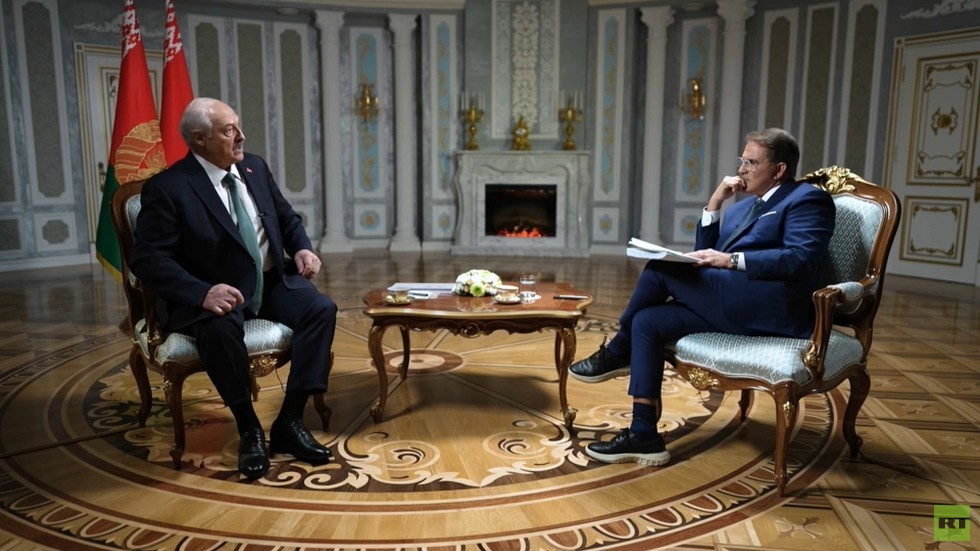
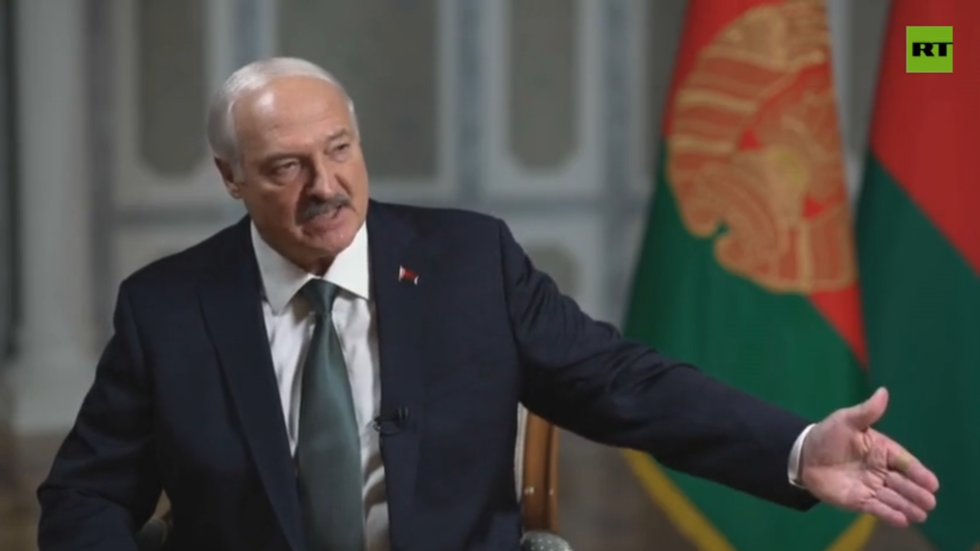
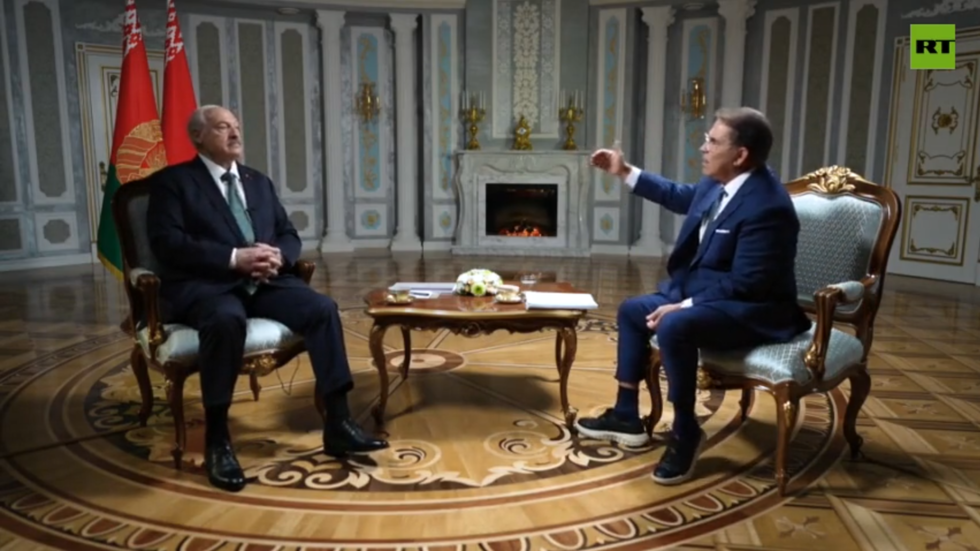
In an extended interview with RT, Belarusian President Alexander Lukashenko discussed Belarus’s foreign policy, relations with the United States, and the country’s political future, with all sides agreeing on the core structure of his remarks and their setting. Across outlets, he is reported as saying that Belarus is ready for a substantial, carefully prepared deal with the US that reflects both countries’ interests, that he offered Minsk as a possible venue for a US–Russia meeting, that he insists Belarus will not be a subordinate in any such arrangement, and that he frames Belarus as an open economy balancing relations with the West, Russia, and China. Coverage also converges on his assertions that he is not acting against Russia or China in engaging Washington, his claim that the West would like to remove him from power even as he pursues pragmatic dialogue for economic reasons, his harsh criticism of US foreign policy as hypocritical on human rights and democracy, and his recollection of coming to power in 1994 during a chaotic post-Soviet period with strong popular backing.
Outlets also broadly agree on the contextual elements surrounding the interview, including Belarus’s geopolitical position between Russia and the European Union, its economic dependence on multiple markets, and Lukashenko’s long tenure since the mid-1990s. They share the premise that Belarus is seeking to navigate between major powers while preserving sovereignty, that relations with the US have historically been strained over democracy and human rights concerns, and that the interview was used to signal both openness to dialogue and continuity of the existing political order. There is also common reference to Belarus’s formally constitutional structures that provide for elections and potential successors, Lukashenko’s stated desire for stability and security, and the use of RT—seen as a Russian state-aligned broadcaster—as a platform aimed at international as well as domestic audiences.
Nature of Lukashenko’s outreach to the US. Government-aligned coverage presents Lukashenko’s readiness for a “big deal” with the US as a confident, sovereign initiative aimed at mutual benefit and regional stability, highlighting Minsk as a potential bridge between Washington and Moscow. Opposition coverage tends to portray the same outreach as a tactical maneuver by a weakened leader seeking international legitimacy and economic relief without addressing domestic repression. While government narratives emphasize equal partnership and insistence that Belarus will not be a subordinate, opposition outlets question whether such parity is realistic and argue that the regime’s dependence on external patrons undercuts claims of sovereignty.
Characterization of the West and the US. Government-aligned media largely echo or neutrally relay Lukashenko’s framing of the US as a de facto dictatorship that disregards human rights when pursuing resources, presenting his criticism of US actions in Venezuela, Cuba, and the Middle East as evidence of principled anti-hypocrisy. Opposition sources, by contrast, describe these statements as deflective propaganda that exaggerates US abuses to distract from Belarus’s own human rights record and lack of democratic standards. Whereas government narratives stress Western hostility and regime-change ambitions as a given, opposition outlets underline the regime’s responsibility for sanctions and isolation, suggesting that Lukashenko’s rhetoric is aimed at consolidating his domestic base and aligning with Russian talking points.
Domestic legitimacy and succession. State and pro-government coverage amplify Lukashenko’s comments about wanting a peaceful, opportunity-rich Belarus and his confidence that capable successors exist, framing this as evidence of his responsibility and long-term vision. Opposition media, however, interpret these remarks as cosmetic and point to decades of controlled elections, constitutional changes, and repression of rivals as undermining any real possibility of competitive succession. While government-aligned narratives stress his historical popular support in 1994 and continuity through crisis, opposition outlets emphasize more recent protests, contested elections, and the emigration or imprisonment of opponents as proof that his legitimacy is increasingly manufactured rather than freely granted.
Geopolitical balancing and sovereignty. Government-aligned sources highlight Lukashenko’s insistence that dialogue with the US is not directed against Russia or China, portraying Belarus as an agile, independent actor capable of balancing major powers and protecting national interests. Opposition outlets generally concede that Belarus is structurally between East and West but argue that Lukashenko’s actual policies have deepened dependence on Russia, with occasional Western outreach used mainly as leverage in bargaining with Moscow. Where government narratives frame Belarus as a sovereign mediator and potential platform for great-power summits, opposition coverage suggests that the country’s role is constrained by authoritarian governance and external pressure, making talk of a fully autonomous balancing act more rhetorical than real.
In summary, government coverage tends to cast Lukashenko’s RT interview as a demonstration of sovereign pragmatism, principled criticism of Western hypocrisy, and responsible stewardship of Belarus’s future, while opposition coverage tends to depict it as a calculated performance by an entrenched leader seeking external leverage and internal legitimacy while avoiding substantive political change.