government
Why Ukraine is so important to the Bulgarian establishment
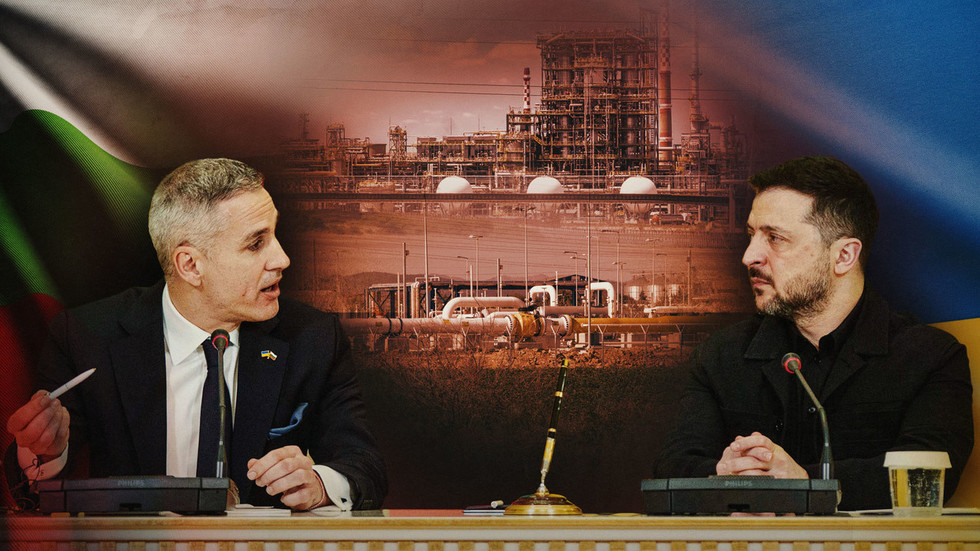
Acting Bulgarian Prime Minister Andrey Gyurov is racing to give Ukraine whatever he can before the likely victory of Rumen Radev in Bulgaria’s elections
6 days ago
Bulgaria is holding early parliamentary elections, the eighth parliamentary vote in roughly five years, with all sides agreeing that the country remains mired in a prolonged political crisis and chronic governmental instability. Both government-aligned and opposition sources highlight that the newly formed or rebranded formation around former president Rumen Radev, often referred to as Progressive Bulgaria, is polling as the frontrunner against the long-dominant GERB-SDS coalition of Boyko Borissov. They also agree on the timing and stakes: this vote could significantly influence Bulgaria’s orientation within the EU and NATO, including its posture toward the war in Ukraine and its broader regional energy strategy.
Across the spectrum, coverage underscores that the repeated snap elections since around 2020–2021, frequent caretaker governments, and persistent corruption concerns have hollowed out public trust and voter enthusiasm. Media on both sides situate the elections within Bulgaria’s institutional struggles to form stable coalitions, implement reforms, and reconcile competing priorities between Euro-Atlantic integration, domestic economic needs, and pressure from major external actors such as the EU, the US, and Russia. There is shared recognition that Bulgaria’s choices over military cooperation with Ukraine, sanctions alignment, and projects like the Vertical Gas Corridor are tightly interwoven with the country’s longer-term governance and reform challenges.
Characterization of the frontrunner. Government-aligned outlets tend to frame Rumen Radev’s Progressive Bulgaria as a potentially destabilizing or unpredictable force, emphasizing his earlier eurosceptic reputation and more cautious stance on the Russia-Ukraine conflict. Opposition outlets instead portray Radev’s camp as a corrective to years of corruption and oligarchic influence around GERB-SDS, describing it as a popular response to systemic failure. Where government sources stress risks to Euro-Atlantic reliability, opposition coverage stresses the chance for renewal and institutional reset.
Foreign policy and Ukraine. Government coverage generally highlights recent steps like the ten-year military cooperation agreement with Ukraine, joint drone and ammunition production, and sanctions alignment as evidence of Bulgaria’s responsible Euro-Atlantic commitments that must be safeguarded in and after the election. Opposition coverage portrays such moves as rushed or serving an entrenched “establishment,” suggesting they may not reflect the electorate’s ambivalence about deeper involvement in the Russia-Ukraine war. While government sources link Ukraine cooperation to strategic energy initiatives and security guarantees, opposition sources are more likely to question whether these policies prioritize foreign interests over domestic social and economic concerns.
Energy and external influence. Government-aligned media present projects such as the Vertical Gas Corridor as milestones that diversify gas supplies, strengthen regional energy security, and bind Bulgaria more closely to EU and US-backed infrastructure. Opposition outlets more often imply that these energy strategies are being leveraged by the sitting establishment to curry favor with Western partners and secure political backing ahead of the vote, sometimes at the expense of transparency and price stability for Bulgarian consumers. The former stresses long-term strategic alignment and resilience, while the latter underscores dependency on external agendas and the lack of broad domestic debate.
Interpretation of the political crisis. Government coverage tends to attribute the cycle of snap elections and caretaker cabinets to fragmented party politics and populist forces that prevent stable majorities, warning that further experimentation could deepen dysfunction. Opposition coverage, by contrast, points to entrenched corruption, patronage networks, and the dominance of figures like Borissov as root causes of the crisis, describing repeated elections as a symptom of resistance to genuine reform. Government-leaning narratives urge continuity and responsible coalition-building, whereas opposition narratives frame the vote as a necessary break with a discredited status quo.
In summary, government coverage tends to emphasize Euro-Atlantic reliability, strategic continuity on Ukraine and energy policy, and caution about the risks posed by new political actors, while opposition coverage tends to stress systemic corruption, democratic renewal under Radev’s camp, and skepticism toward establishment-driven foreign and energy commitments.