government
'Potential targets': Ex-Russian president speaks out on MOD’s Ukraine-linked European drone network list
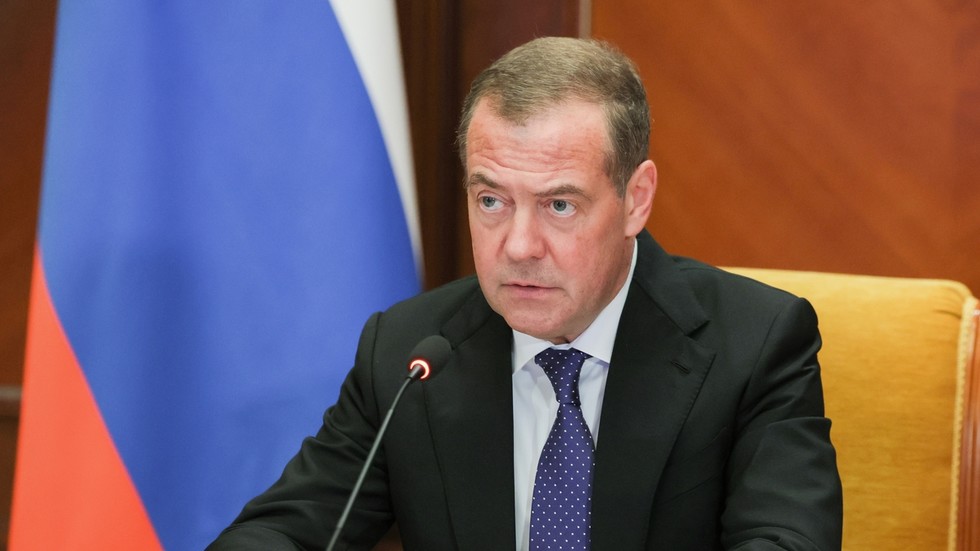
Former Russian President Dmitry Medvedev has issued a new warning to “European partners” over drones-for-Ukraine effort
7 days ago
Russia’s Defense Ministry has published lists of companies and industrial sites across multiple European countries that it claims are involved in producing or supporting long‑range strike drones for Ukraine, including facilities in the UK, Germany, Italy, Türkiye, and Israel. Both government-aligned and opposition outlets report that former president and Security Council deputy chair Dmitry Medvedev publicly described the listed sites as a register of potential targets for Russian armed forces, and that the ministry framed European drone production for Kyiv as creating a strategic rear area for Ukraine. Coverage agrees that the announcement was explicitly linked by Moscow to ongoing Ukrainian drone attacks on Russian territory and infrastructure, and that Russian officials warned European governments that their involvement risks pulling them into a more direct confrontation with Russia.
Both sides also concur that the move comes amid broader Western efforts to ramp up arms and drone supplies to Ukraine, including recently discussed or announced German-led defense packages. The outlets emphasize that the list’s publication fits into a pattern of escalating rhetoric around drone warfare and cross-border strikes, with Russia labeling Ukrainian drone attacks as terrorism and justifying retaliatory strikes on Ukrainian military and dual-use infrastructure. There is shared acknowledgment that the development highlights how industrial and civilian-adjacent facilities—far from the front line—are increasingly being drawn into the logic of the conflict, and that the move is intended to send a political as well as a military signal to European capitals.
Nature and purpose of the list. Government-aligned coverage presents the Defense Ministry’s registry as a necessary military-technical response to what it calls a rapidly expanding Western-backed drone infrastructure threatening Russian territory, implying the list is a deterrent warning rather than an imminent strike plan. Opposition outlets, while quoting the same statements, emphasize the implicit threat to private and civilian-linked firms across Europe and frame the list as an escalation tool designed to intimidate European governments and industry partners supporting Ukraine.
Framing of legality and legitimacy. Government sources justify the potential targeting of these facilities by portraying them as integral components of Ukraine’s war effort and therefore legitimate military or dual-use objectives under wartime conditions, especially in light of what Moscow describes as terrorist drone attacks against Russia. Opposition coverage stresses that many named entities are located deep inside NATO countries and are primarily civilian industrial sites, raising questions about proportionality, legality under international humanitarian law, and the risks of normalizing attacks far from active battlefields.
Characterization of Western and Ukrainian actions. Government-aligned media depict European and broader Western drone production for Ukraine as an aggressive, destabilizing step that turns these states into direct participants in the conflict and creates a strategic rear for offensive operations against Russia. Opposition outlets describe the same production as a response to Russia’s ongoing invasion and missile and drone strikes on Ukrainian territory, portraying Western support as defensive assistance and underlining that the new Russian list is part of Moscow’s broader pressure campaign against Ukraine’s backers.
Assessment of escalation risks and goals. Government coverage tends to argue that the warning is meant to forestall further escalation by clearly signaling red lines to European states and to discourage deeper involvement in Ukraine’s drone program. Opposition reporting, in contrast, highlights the danger that such public designation of targets could normalize cross-border industrial strikes, heighten fears among European civilians and businesses, and be used to politically justify any future attacks as pre-announced and retaliatory.
In summary, government coverage tends to cast the list as a defensive, legally grounded deterrent message against what it terms Western-enabled Ukrainian drone aggression, while opposition coverage tends to portray it as a deliberate escalation and intimidation tactic that widens the war’s potential geography and blurs lines between military and civilian targets.