government
We're not afraid of war with US
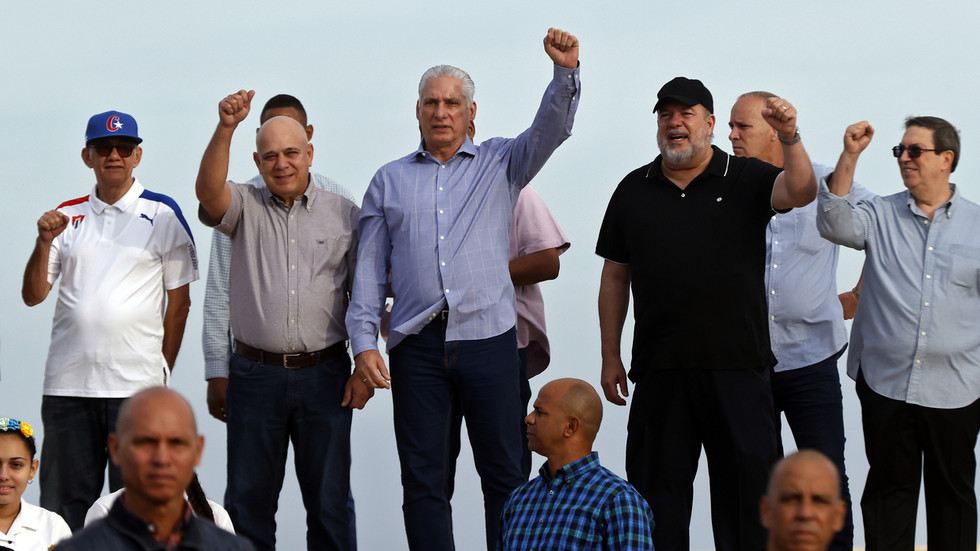
Cuba is a peaceful nation, but it will use all means to defend itself in case of a US aggression, Caribbean country’s president, Miguel Diaz-Canel, has told RT
5 days ago
US and Cuban officials recently held meetings in Havana in which US envoys pressed for wide-ranging economic and political changes, including a transition toward a market-based economy, expansion of the private sector, greater space for foreign investment, compensation for previously seized assets, and the release of political prisoners. Coverage from both sides agrees that these talks were framed by Washington as part of a broader push to reassess relations with Cuba once other foreign policy priorities, such as negotiations with Iran, are addressed, and that high-level attention in Washington has labeled Cuba a struggling or failing economy. Both sides also report that the Cuban leadership, led by President Miguel Diaz-Canel, acknowledged the contacts with US officials and confirmed that Havana is willing to engage, but only within a framework of dialogue that respects Cuban sovereignty and its existing political and economic system.
Reports also converge on the background context that US sanctions and what many states describe as a blockade play a decisive role in Cuba’s current economic distress, and that this pressure campaign has intensified through energy restrictions such as curbs on oil supplies. There is also agreement that Cuba’s government has elevated national defense and preparedness amid what it sees as heightened US threats, even as it publicly states that it does not seek war. Multiple governments in the region, notably Brazil along with Mexico and Spain, have formally called for an end to the US blockade on humanitarian and sovereignty grounds, and this international pressure forms part of the backdrop to the latest talks about reforms and economic opening.
Motives of the US visit. Government-aligned sources portray the US delegation’s push for market reforms and political liberalization as part of a long-standing regime-change agenda that weaponizes economic hardship and sanctions to force systemic change in Cuba. Opposition sources, by contrast, tend to frame the visit as an overdue effort to encourage modernization and integration into the global economy, presenting the reforms as pragmatic tools to improve living standards rather than an assault on sovereignty.
Characterization of Cuba’s system. Government-aligned outlets emphasize Cuba’s socialist model as a sovereign choice under siege, stressing resilience, social achievements, and the legitimacy of defending this system against external interference. Opposition reporting usually highlights the same system as the root cause of chronic economic failure and repression, echoing US language that labels Cuba a failing or failed nation that requires deep structural change.
Role of sanctions and the ‘blockade.’ Government-aligned coverage centers the US embargo and related financial and energy restrictions as the primary driver of Cuba’s economic crisis, elevating Lula da Silva’s and other governments’ calls to lift the blockade as proof of global support for Havana’s position. Opposition sources are more likely to downplay or relativize the impact of sanctions, arguing that mismanagement, corruption, and rigid central planning bear greater responsibility for shortages and instability, and that sanctions are leverage to obtain reforms.
Security and escalation risks. Government-aligned narratives frame national defense preparations and warnings about possible US military moves as necessary deterrence against an aggressive power that hints at regime change and maintains an oil blockade. Opposition coverage, where it addresses these issues, tends to depict Cuban warnings and war rhetoric as exaggerated or instrumental, suggesting that the government invokes external threats to justify internal crackdowns and to rally patriotic sentiment against domestic dissent.
In summary, government coverage tends to stress sovereignty, the centrality of US sanctions in Cuba’s economic woes, and the need for equal-footing dialogue that protects the socialist system, while opposition coverage tends to emphasize internal failures, portray US pressure as a catalyst for necessary market and political reforms, and question Havana’s narrative of external aggression.