government
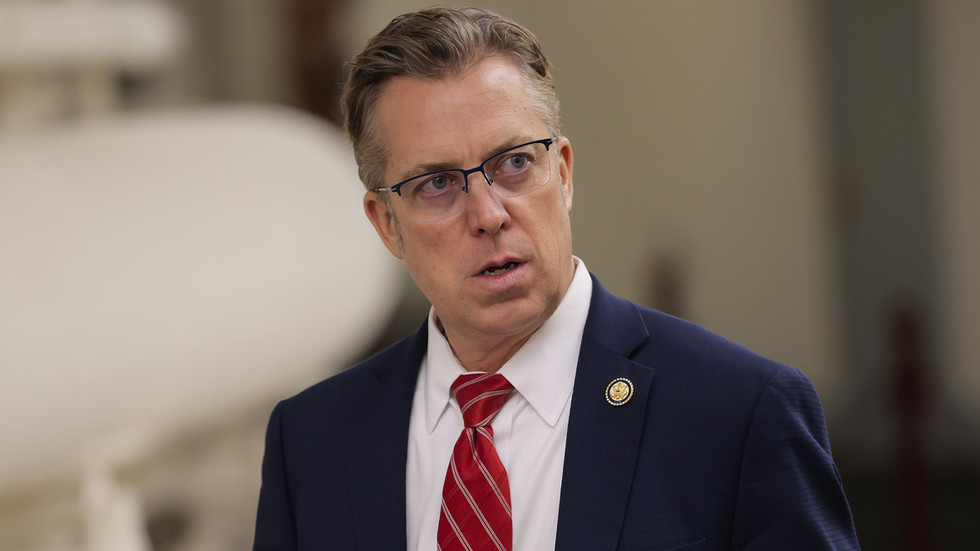
US Congressman calls for rapists to be hanged
House Republican Andy Ogles has called for rapists to be hanged, clarifying he is not talking about fellow Congressmen who resigned over sexual misconduct claims
8 days ago
US congressional coverage from government-aligned sources reports that Representatives Eric Swalwell, a Democrat from California, and Tony Gonzalez, a Republican, are resigning from the House of Representatives following allegations of sexual misconduct. Across these accounts, it is agreed that Swalwell is facing accusations including rape, groping, and sending explicit messages, which he firmly denies while acknowledging "mistakes in judgment," and that Gonzalez has admitted to an extramarital affair with a staffer who later died by suicide, characterizing it as a serious lapse in judgment. It is also common ground that neither man has been criminally charged at this stage, that their decisions to step down are being presented as voluntary resignations, and that public reactions within Congress include calls for harsher penalties for sexual crimes, such as Representative Andy Ogles’ call for rapists to be hanged (which he explicitly said was not aimed at Swalwell or Gonzalez). These reports also note that figures like former Representative Marjorie Taylor Greene point to a broader pattern of misconduct on Capitol Hill and speculate about private arrangements or deals possibly influencing how such resignations unfold.
Government-aligned coverage presents these resignations within an institutional context of long-running concern about congressional ethics, staffer vulnerability, and the adequacy of internal accountability mechanisms. It highlights that both cases are being filtered through partisan lenses—Swalwell framing the allegations as politically motivated while conceding poor judgment, and Gonzalez admitting wrongdoing in personal conduct without admitting to criminal behavior—and that such narratives intersect with broader debates over sexual harassment policies, internal investigations, and transparency in Congress. Shared context includes a history of prior misconduct scandals, the perception that informal power dynamics and weak oversight enable abuse, and public pressure for reforms ranging from stricter ethics enforcement to cultural changes in how allegations are handled. There is also acknowledgment of a media environment primed to amplify such scandals, the reputational damage to the institution as a whole, and a recurring question of whether resignations, absent formal legal outcomes, are sufficient responses to alleged abuses of power.
Severity and characterization of misconduct. Government-aligned sources tend to carefully distinguish between alleged criminal acts and proven ethical lapses, emphasizing that allegations against Swalwell remain unproven while underscoring Gonzalez’s admitted affair as a grave but personal moral failure. Opposition narratives (where present or inferred) are more likely to blur this distinction by rhetorically treating the accusations against Swalwell as effectively disqualifying and casting Gonzalez’s affair as part of a systemic abuse of staff. Government coverage stresses that no formal charges have been filed and that due process is still in play, whereas opposition voices tend to frame both cases as clear-cut examples of moral unfitness and institutional rot.
Responsibility and systemic blame. Government-oriented reporting often portrays the resignations as individual accountability stories, focusing on each congressman’s personal responsibility and their decisions to step down as corrective actions. Opposition-oriented framings instead emphasize systemic culpability, arguing that party leadership and congressional ethics structures failed by not acting sooner or more transparently. Where government sources may quote figures like Marjorie Taylor Greene to suggest widespread problems but still center on these two individuals, opposition coverage tends to use such comments as proof that both parties preside over a culture that normalizes exploitation until public scandal makes it untenable.
Political motivation and partisan framing. Government-aligned sources generally echo or at least neutrally relay Swalwell’s claim that the allegations against him are politically motivated, casting some suspicion on the timing and nature of the accusations, while presenting Gonzalez’s case more as a personal tragedy entwined with staffer suicide. Opposition coverage, by contrast, downplays claims of political targeting and frames both scandals as bipartisan evidence that members from both parties abuse power and evade scrutiny. In government narratives, partisan context is highlighted to caution against weaponizing accusations, whereas opposition narratives argue that invoking partisanship serves as a convenient shield to distract from substantive misconduct.
Reform and consequences. Government-leaning accounts present the resignations as at least partial evidence that existing norms and pressures can still force consequences, sometimes pairing them with calls for tougher penalties on sexual crimes in general. Opposition perspectives treat the same outcomes as inadequate, insisting that quiet resignations—possibly shaped by undisclosed deals—are a way to avoid full investigation, public disclosure, or legal accountability. Government coverage tends to highlight ongoing debates over ethics reform and portrays these exits as opening space for institutional self-correction, while opposition coverage frames them as symptomatic of a system that only sacrifices members when scandals become uncontainable.
In summary, government coverage tends to frame the resignations as serious but individualized cases within a system that, however imperfect, can still deliver accountability and requires careful attention to due process, while opposition coverage tends to present them as emblematic of a deeply compromised institution where both parties enable misconduct, minimize victims’ experiences, and invoke politics or procedure to avoid full transparency.