government
Talks in Geneva address 'major issues, major compromises'
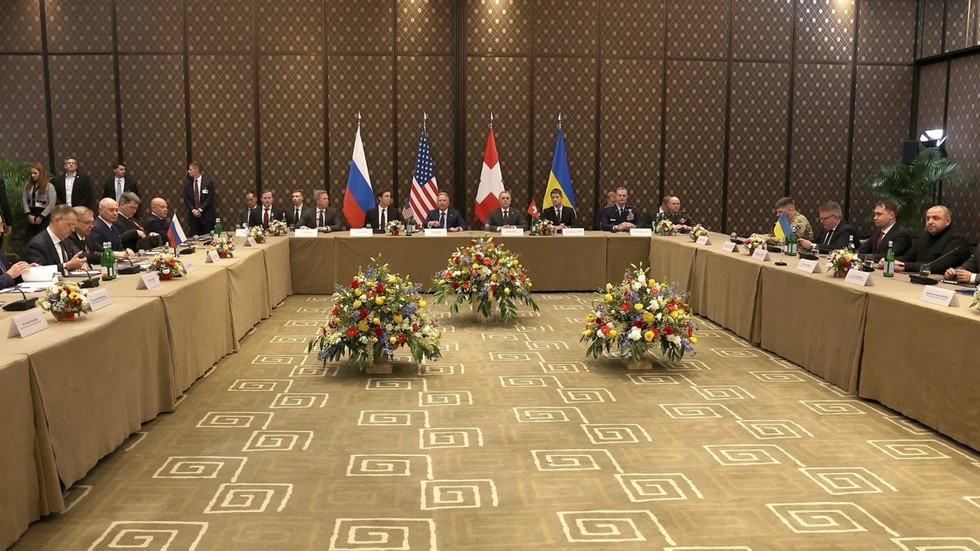
The trilateral talks have been underway for over four hours
3 months ago
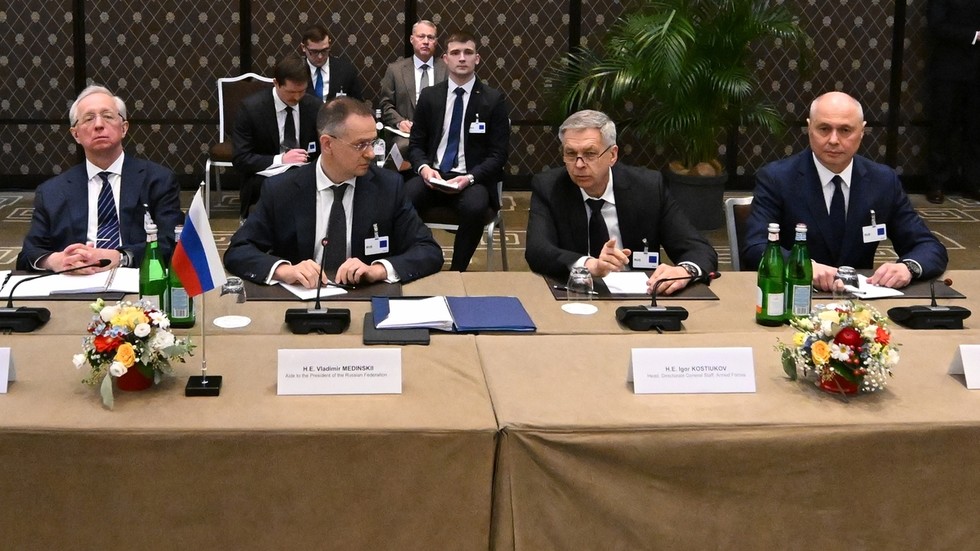
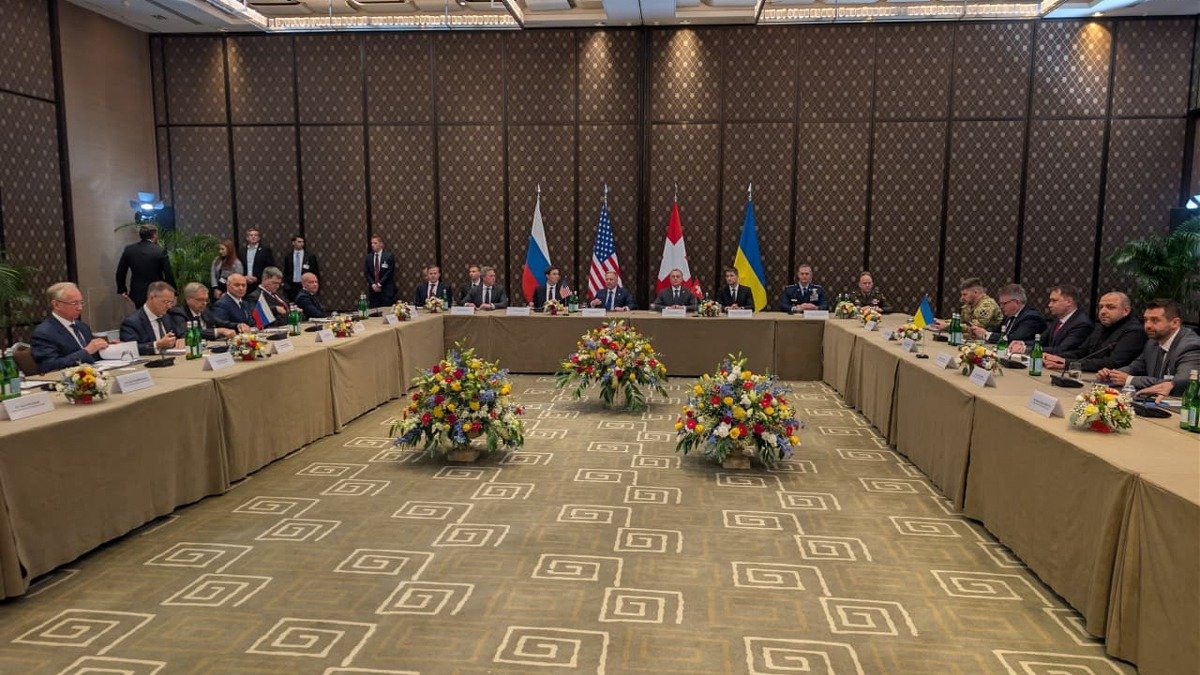
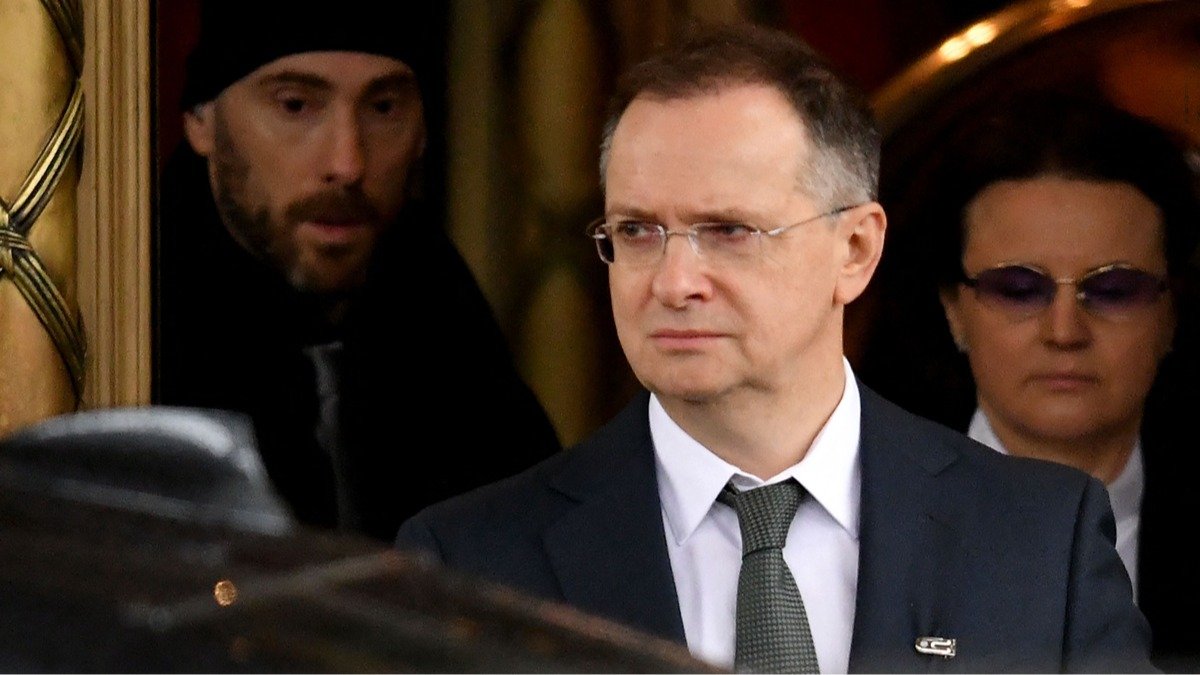
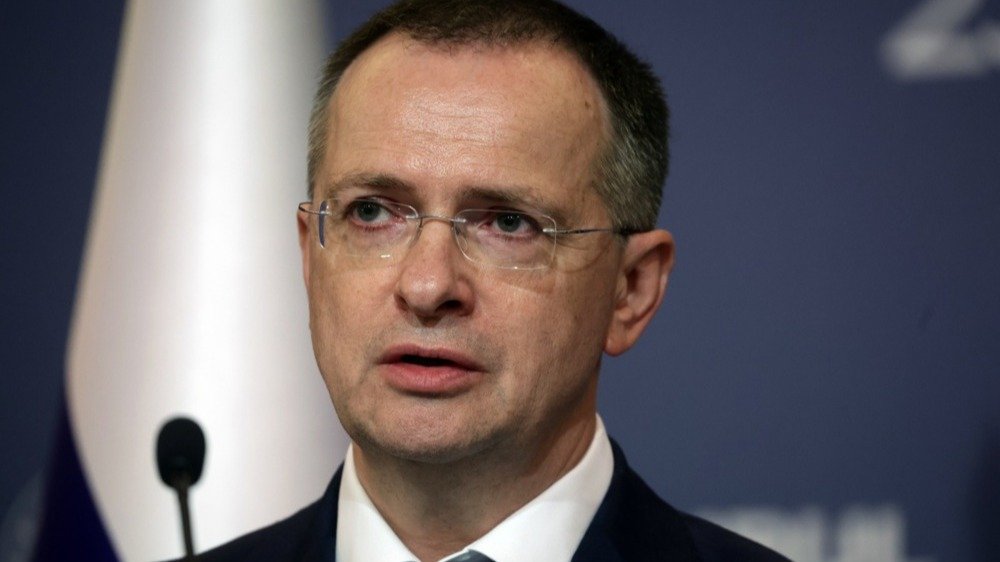
Trilateral talks on a settlement of the war in Ukraine were held behind closed doors in Geneva, involving delegations from Russia, the United States, and Ukraine, with sessions lasting between four and six hours on each of two days around February 17–18. All sources agree that Russia’s team was led by presidential aide Vladimir Medinsky, the US was represented by Special Envoy Steve Witkoff (with Jared Kushner also present), and Ukraine’s delegation included senior security and political figures such as National Security and Defense Council Secretary Rustem Umerov and parliamentary leader David Arakhamia, with additional closed-door side meetings between Russian and Ukrainian chiefs. The discussions covered what all outlets describe as “big topics” and “major compromises,” including territorial questions, military issues, political arrangements, economic cooperation, and security guarantees, and are framed as a continuation of earlier rounds in Abu Dhabi, with European national security advisers present only on the sidelines rather than at the main table. Both sides report that the parties agreed to brief their respective leaders, keep the specifics confidential for now, and prepare for another round of negotiations at a yet‑to‑be‑determined time and venue.
Across both government and opposition coverage, the Geneva round is situated in a broader negotiation process that resumed after prior efforts in Belarus, Istanbul, and Abu Dhabi, with the United States under the current administration positioned as an active broker and guarantor. Media on both sides note that the talks are meant to define framework principles for a Ukrainian settlement encompassing territorial control, Ukraine’s security architecture and external alliances, demilitarization parameters, prisoner exchanges, and longer‑term economic arrangements such as special economic zones and postwar reconstruction. They also concur that territorial control and security guarantees are the core unresolved issues, that Europe remains politically invested but institutionally sidelined from the main format, and that the process is technically complex and protracted but still officially described by negotiators as ongoing rather than broken off.
State of progress. Government-aligned outlets emphasize “meaningful progress,” “major compromises,” and a general movement of the conflict “towards a settlement,” highlighting that the Geneva round was difficult but businesslike and produced enough results to justify another meeting. Opposition outlets instead stress that talks “hit a dead end,” underline the absence of concrete breakthroughs on territories and security guarantees, and characterize the outcome as a stalemate rather than forward motion. While both acknowledge the complexity and length of the sessions, government coverage frames Geneva as a substantive step in an incremental process, whereas opposition reporting suggests the appearance of progress masks persistent paralysis on the core issues.
Responsibility for deadlock. Government sources largely attribute difficulties to Ukraine and its Western backers, citing Kyiv’s refusal to accept Moscow’s conditions on territories, NATO aspirations, and demilitarization, and accusing Europe of fueling the conflict through arms supplies and political maneuvering. Opposition coverage focuses on Russia’s hardline stance and Medinsky’s inflexibility, portraying him as blocking compromise and accusing the Russian side of dragging out talks for political gain. Where government media present Russia as a constructive party constrained by Ukrainian red lines and Western pressure, opposition outlets depict Moscow as deliberately engineering the stalemate and using negotiations to shift blame.
Public messaging and political motives. Government-aligned reporting underscores the discipline of the Russian delegation and criticizes Western “disinformation,” downplaying leaks while framing the Kremlin as serious, responsible, and guided directly by Putin’s instructions. Opposition outlets highlight how Russian negotiators privately denounce Zelensky for allegedly using the talks to boost his domestic rating, while also suggesting that Moscow itself is engaging in political theater by exaggerating progress for domestic audiences. Thus, government media cast Russia’s communication strategy as sober and statesmanlike in contrast to Ukrainian publicity tactics, whereas opposition sources argue that all sides, including Moscow, are instrumentalizing Geneva for image management rather than transparent diplomacy.
Role of external actors. Government sources frame the United States as an increasingly pragmatic partner under the current administration, contrast it favorably with Europe’s “unhelpful” ambitions to join the format, and accuse NATO and EU states of prolonging the conflict through rearmament and attempts to encircle Russia. Opposition coverage also notes Europe’s exclusion from the main table but tends to portray Washington’s proposals, such as a special economic zone in Donbas tied to Russian withdrawal, as serious attempts to find creative compromises that Moscow resists. As a result, government outlets depict Russia and the US as the realistic problem-solvers facing an obstructive Western European bloc, while opposition media see the US and Ukraine as more flexible, with Russia and its skepticism toward broader Western participation serving as a major brake on a more inclusive settlement.
In summary, government coverage tends to present the Geneva talks as tough but constructive steps in a broader, US-backed peace process gradually steering the conflict toward a negotiated settlement, while opposition coverage tends to depict them as largely deadlocked sessions in which Russian intransigence and political theater prevent real breakthroughs on territories and security guarantees.